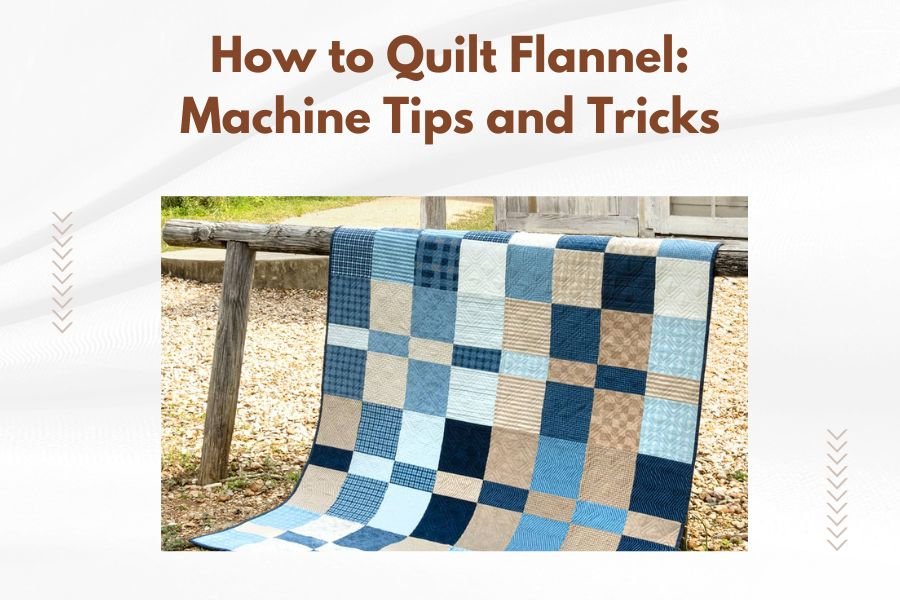
Quilting flannel requires reducing your machine’s presser foot pressure and using a longer stitch length to prevent puckering and distortion.
The key to successful flannel quilting is managing the fabric’s stretch and thickness through proper tension adjustments and specialized techniques.
Why Flannel Quilts Need Special Attention
Flannel behaves differently than cotton when you quilt it. The brushed surface creates more friction. The loose weave stretches easily. These traits make flannel tricky to handle on your sewing machine.
You might notice your flannel bunching up or creating waves. This happens because flannel has more give than regular quilting cotton. Your machine needs different settings to work with this fabric properly.
Machine Setup for Flannel Success
Presser Foot Pressure Adjustments
Start by lowering your presser foot pressure. Most machines have a dial or lever for this adjustment. Reduce the pressure by about half from your normal cotton setting.
Light pressure lets the flannel feed through without getting compressed too much. Too much pressure squishes the fluffy fibers and causes uneven stitching.
Stitch Length Settings
Use a longer stitch length for flannel quilts. I found that 3.0 to 3.5 mm works well for most flannel projects. This longer stitch helps prevent the fabric from bunching.
Short stitches can perforate the loose flannel weave. Longer stitches distribute the stress better across the fabric.
Thread Tension Fine-Tuning
Lower your upper thread tension slightly. Start with one number down from your usual cotton setting. Test on scraps first to find the sweet spot.
Flannel’s thickness can affect how threads lock together. Slightly loose tension prevents thread breakage and puckering.
Needle Selection for Flannel Quilting
Size Recommendations
Use a size 90/14 or 100/16 needle for flannel quilts. The larger needle punches through the thick layers without dragging fibers.
A too-small needle struggles with flannel’s density. You’ll get skipped stitches and thread breaks. Go bigger than you might think.
Needle Type Choices
Universal needles work fine for most flannel projects. If you’re using thick batting too, consider a quilting needle with its tapered point.
Sharp needles can snag flannel’s brushed surface. Universal needles have a slightly rounded tip that glides through better.
Thread Selection Tips
Weight Considerations
Stick with 50-weight cotton thread for flannel quilting. This standard weight balances strength with flexibility for the soft fabric.
Heavier threads can overwhelm flannel’s delicate appearance. Lighter threads might break under the stress of thick layers.
Fiber Content Matching
Cotton thread pairs perfectly with cotton flannel. Both have similar stretch and washing properties. This match prevents puckering over time.
Polyester thread works too, but it’s stronger than the flannel itself. Cotton thread will break first if stress occurs, protecting your fabric from tearing.
Batting Choices for Flannel Quilts
Thickness Guidelines
Choose low-loft batting for flannel quilts. Since flannel already adds bulk, thick batting makes quilting difficult and creates stiff results.
Cotton or cotton-poly blend battings work best. They have similar care requirements to your flannel and won’t shrink differently.
Fiber Compatibility
Match your batting fiber to your flannel when possible. Cotton batting with cotton flannel creates the softest, most drapeable quilt.
Polyester batting adds warmth but can make the quilt feel stiffer. Wool batting provides excellent temperature regulation but needs special care.
Preparing Flannel for Quilting
Pre-Washing Requirements
Always pre-wash flannel before quilting. Flannel shrinks more than regular cotton. Wash in warm water and dry completely before cutting.
Skip fabric softener during pre-washing. It can make flannel too slippery to handle accurately while quilting.
Pressing Techniques
Press flannel gently with medium heat. High heat can scorch the brushed fibers or create shiny spots.
Use steam sparingly. Too much moisture can distort flannel’s weave. Press and lift rather than sliding the iron.
Cutting Accuracy
Use sharp rotary blades when cutting flannel. Dull blades can stretch the fabric edge, creating wavy seams later.
Cut flannel in single layers when possible. Stacked layers can shift during cutting because of the fabric’s texture.
Basting Methods for Flannel Quilts
Spray Basting Benefits
Spray basting works wonderfully with flannel. The adhesive holds layers securely without pins that can distort the soft fabric.
Apply spray basting in thin, even coats. Too much adhesive can gum up your needle during quilting.
Pin Basting Alternatives
If you prefer pins, use longer quilting pins. Flannel’s thickness needs extra pin length to secure all layers properly.
Place pins farther apart than usual. Flannel holds together better than slippery fabrics, so you need fewer pins.
Machine Quilting Flannel
Walking Foot Advantages
Use a walking foot for straight-line quilting on flannel. The walking foot feeds all layers evenly, preventing the top flannel from pushing ahead.
This foot is especially helpful with flannel because the brushed surface creates friction between layers.
Free Motion Quilting Tips
For free motion quilting, move slowly and steadily. Flannel’s stretch can distort if you move too quickly or jerkily.
Keep your hands relaxed and let the fabric glide naturally. Fighting the fabric creates tension and uneven stitches.
Speed Control
Run your machine at moderate speed for flannel quilting. Fast stitching can cause the soft fibers to bunch up under the presser foot.
Consistent speed gives better stitch quality than varying between fast and slow.
Stitch Density Guidelines
Quilt flannel less densely than cotton quilts. Heavy quilting can make the soft flannel feel stiff and lose its cozy appeal.
Space your quilting lines 2-3 inches apart for good structure without over-quilting.
Troubleshooting Common Flannel Issues
Puckering Prevention
If your flannel puckers while quilting, check your presser foot pressure first. Too much pressure is the usual culprit.
Also verify your thread tension isn’t too tight. Flannel needs gentler handling than firmer fabrics.
Skipped Stitch Solutions
Skipped stitches often mean your needle is too small for flannel’s thickness. Move up to a size 100/16 needle.
Make sure your needle is sharp and not bent. Flannel’s fibers can deflect dull needles, causing skips.
Thread Break Prevention
Frequent thread breaks usually indicate tension problems. Lower both upper and bobbin tension slightly.
Check that your needle eye is large enough for your thread. A tight fit causes friction and breakage.
Finishing Flannel Quilts
Binding Considerations
Cut binding strips wider for flannel quilts. The extra thickness needs more binding fabric to wrap around the edges neatly.
Use flannel for binding too, or choose a coordinating cotton that complements the soft texture.
Final Pressing
Give your finished flannel quilt a gentle final press. Use medium heat and avoid heavy pressure that flattens the texture.
Steam lightly to set the quilting lines without over-pressing the soft flannel surface.
Care Tips for Flannel Quilts
Wash flannel quilts in cool water on a gentle cycle. Hot water can cause additional shrinkage even after pre-washing.
Dry on low heat or air dry when possible. High heat can damage the brushed fibers and make flannel feel rough.
Conclusion
Quilting flannel successfully comes down to adjusting your machine settings and working with the fabric’s natural properties. Lower presser foot pressure, longer stitch length, and gentle handling make all the difference. Take time to test your settings on scraps before starting your project. With these machine tips and techniques, you’ll create beautiful, soft flannel quilts that feel as cozy as they look. The extra care flannel requires pays off in the finished quilt’s warmth and comfort.
Can you mix flannel with regular cotton in the same quilt?
Yes, but pre-wash both fabrics separately first since they shrink differently. The flannel will be thicker and softer, creating texture variation in your finished quilt. Use flannel quilting settings throughout the project.
What’s the best way to store flannel fabric before quilting?
Fold flannel loosely and store in a breathable container or on a shelf. Avoid vacuum storage bags which compress the brushed fibers. Keep flannel away from direct sunlight to prevent fading.
Do I need special bobbins for flannel quilting?
No, regular bobbins work fine with flannel. Wind them at normal speed and tension. The key is using quality bobbin thread that matches your top thread weight and fiber content.
How do I prevent flannel from stretching while I’m quilting?
Support the quilt weight evenly around your machine and avoid pulling or pushing the fabric. Let the feed dogs do the work. A quilting table extension helps distribute weight and reduces stretching.
Can I use metallic or decorative threads with flannel?
Decorative threads can work, but use them sparingly since flannel is meant to be soft and cozy. Metallic threads may break more easily with flannel’s thickness. Test on scraps first and consider using a metallic needle.