
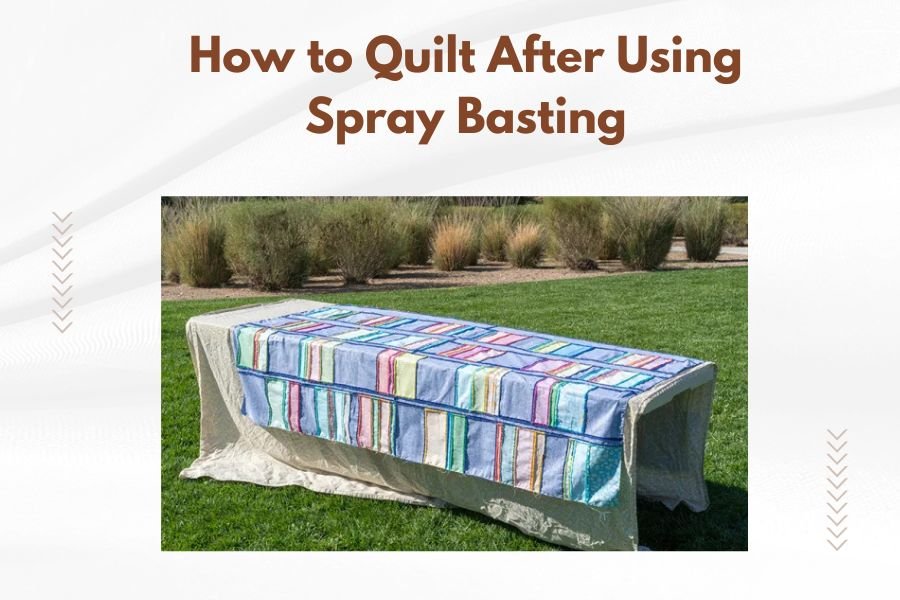
After spray basting your quilt layers, wait 10-15 minutes for the adhesive to set before you start quilting. This waiting period prevents needle gumming and ensures smooth stitching.
You can quilt immediately after spray basting, but letting the adhesive cure slightly gives you better results and less sticky buildup on your machine.
What Happens When You Quilt Too Soon After Spray Basting
Jumping straight into quilting right after spray basting can create problems. The adhesive stays wet and sticky for several minutes.
Your needle picks up this wet adhesive as it moves through the fabric. This creates a gummy buildup that makes stitching harder.
I found that quilters who wait get cleaner stitches and fewer thread breaks. Those who rush often spend more time cleaning their machines.
Signs Your Spray Basting Needs More Time
How do you know if the adhesive is still too wet? Touch the fabric lightly with your finger.
If it feels tacky or sticky, wait longer. The surface should feel dry but still hold the layers together.
Visual Cues to Watch For
Look for these signs that your quilt is ready:
- The fabric surface looks matte, not shiny
- No wet spots or dark patches from the spray
- Layers stay together when you lift a corner
- No sticky residue on your fingers when you touch it
The Right Waiting Time for Different Spray Basting Products
Not all spray basting products work the same way. Some dry faster than others.
From what I read, temporary adhesive sprays typically need 10-15 minutes. Stronger permanent sprays might need up to 30 minutes.
Popular Spray Basting Products and Their Timing
| Product Type | Waiting Time | Best For |
|---|---|---|
| Temporary adhesive | 10-15 minutes | Machine quilting |
| Strong hold spray | 20-30 minutes | Hand quilting |
| Repositionable spray | 5-10 minutes | Small projects |
Temperature and Humidity Effects
Your room conditions change how fast spray basting dries. Hot, dry rooms speed up the process.
Cold or humid rooms slow it down. You might need to wait longer on rainy days.
Preparing Your Quilting Machine After Spray Basting
Even with proper waiting time, some adhesive might transfer to your needle and thread. Getting your machine ready helps prevent problems.
Essential Machine Preparation Steps
Start with a fresh needle designed for quilting. Sharp needles cut through layers more easily.
Keep rubbing alcohol and cotton swabs nearby. You’ll use these to clean sticky buildup as you work.
Needle Selection Tips
Choose needles based on your fabric and thread combination:
- Size 80/12 for cotton fabrics with cotton thread
- Size 90/14 for thicker batting or multiple layers
- Titanium-coated needles resist adhesive buildup better
Thread Considerations
Some threads handle spray basting residue better than others. Cotton thread picks up less adhesive than polyester.
Quality thread also breaks less often when it encounters sticky spots.
Best Quilting Techniques After Spray Basting
Your quilting approach changes slightly when you use spray basting. The adhesive holds layers differently than pins or traditional basting.
Starting Your Quilting Pattern
Begin quilting from the center and work outward. This prevents bunching and keeps your layers smooth.
The spray creates an even hold across the quilt surface. You won’t have pin holes or loose areas like with pin basting.
Machine Quilting Speed and Pressure
Slow down your stitching speed for the first few inches. This lets you feel how the machine handles the adhesive.
Use lighter pressure on your presser foot. The spray holds the layers together, so you don’t need to press down hard.
Hand Quilting After Spray Basting
Hand quilting works well with spray basting too. The adhesive keeps your layers from shifting as you work.
You might find your needle gets slightly sticky. Wipe it with a dry cloth occasionally.
Thimble and Tools Care
Clean your thimble and other tools more often. Adhesive residue builds up on metal surfaces.
A quick wipe with rubbing alcohol keeps everything working smoothly.
Troubleshooting Common Issues
Even with careful preparation, you might run into problems. Here’s how to handle the most common ones.
Needle Gumming and Thread Breaks
Stop quilting immediately if your needle starts collecting adhesive. Clean it with rubbing alcohol before continuing.
Thread breaks often happen when the needle gets too sticky. Regular cleaning prevents this.
Quick Cleaning Method
Keep these supplies at your quilting station:
- Cotton swabs
- Rubbing alcohol (70% or higher)
- Lint-free cloths
- Extra needles
Skipped Stitches
Skipped stitches can happen when adhesive changes how the needle penetrates the fabric. Try a larger needle size first.
If that doesn’t work, check your machine timing. Adhesive buildup can throw off the timing slightly.
When to Stop and Clean
Stop quilting if you notice:
- Three or more skipped stitches in a row
- Thread tension problems
- Visible adhesive on your needle
- Fabric puckering around stitches
Finishing Your Quilt After Spray Basting
The adhesive won’t affect your finished quilt quality. Most spray basting products wash out completely.
Binding and Final Steps
Trim your quilt edges as usual. The spray won’t interfere with binding attachment.
Some quilters worry about adhesive in their binding. I found that proper curing time prevents this problem.
Washing Your Finished Quilt
Wash your completed quilt according to your fabric care instructions. The adhesive will disappear in the first wash.
Use your regular detergent. No special cleaning products are needed to remove spray basting residue.
Alternative Methods to Consider
Spray basting isn’t the only option. Sometimes other methods work better for specific projects.
When Pin Basting Might Be Better
Large quilts sometimes need more flexibility than spray provides. Pin basting lets you adjust layers as you work.
Hand quilters who work very slowly might prefer pins. They don’t have to worry about cleaning needles.
Combination Approaches
Some quilters use spray basting for the center area and pins around the edges. This gives you the best of both methods.
Try different combinations to see what works for your style and projects.
Conclusion
Quilting after spray basting works beautifully when you give the adhesive time to set properly. That 10-15 minute wait makes all the difference between smooth quilting and frustrating problems.
Remember to prepare your machine, choose the right needle, and keep cleaning supplies handy. With these simple steps, spray basting can speed up your quilting process while giving you professional results.
The key is patience at the start and attention to your machine as you work. Your finished quilt will show the care you put into every step of the process.
Can I use spray basting on all types of fabric?
Most cotton and cotton-blend fabrics work well with spray basting. Avoid using it on silk, wool, or very delicate fabrics that might be damaged by the adhesive or cleaning solvents.
How long does spray basting adhesive last before it stops working?
Temporary spray basting typically holds for several days to a week, depending on the product and room conditions. The hold gradually weakens over time, which is normal and expected.
What should I do if my thread keeps breaking even after cleaning the needle?
Try switching to a larger needle size or different thread type. Sometimes the adhesive changes fabric tension enough that you need to adjust your materials rather than just cleaning equipment.
Is spray basting safe to use indoors?
Most quilting spray adhesives are safe for indoor use, but ensure good ventilation. Work near an open window or use a fan to circulate air while spraying and during the curing period.
Can I reposition my quilt layers after spray basting if I make a mistake?
Some repositionable spray adhesives allow gentle repositioning within the first few minutes. After the adhesive sets, repositioning becomes difficult and may damage your fabric or batting.
