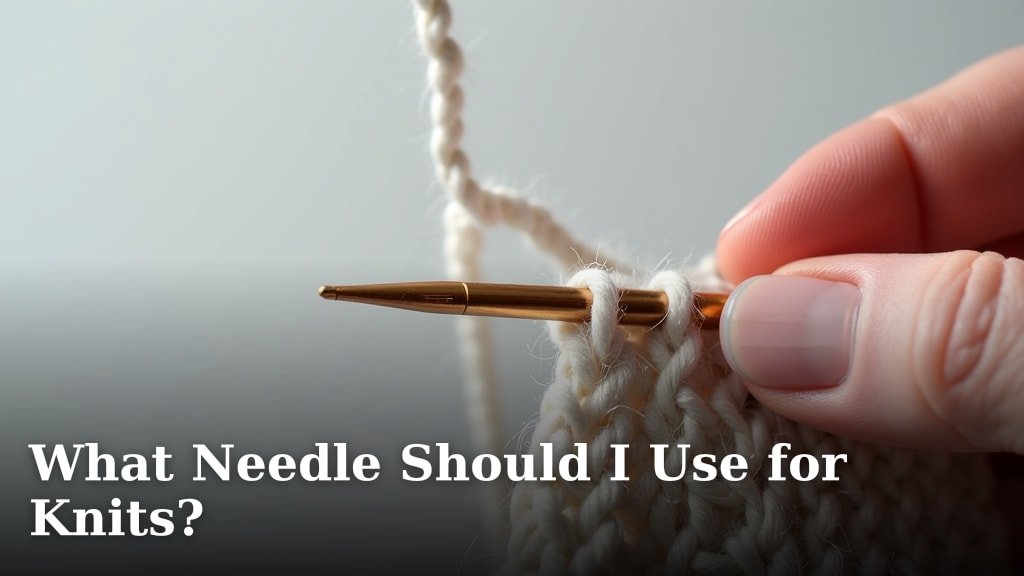
The best needle for your knit fabric depends on the type of knit and your sewing machine. For most knits, a ballpoint or jersey needle is your best bet. These needles have a rounded tip that pushes fabric fibers aside instead of piercing them. This prevents skipped stitches and fabric tears. Always check your machine’s manual too!
Choosing the right needle is like giving your knit fabric a gentle hug. Using the wrong one can lead to frustrating snags and holes. Many sewers have learned this the hard way! We’ve found that a sharp needle is also important, especially for thicker knits. Keep your needles fresh; they don’t last forever!
- Use ballpoint or jersey needles for most knits.
- These needles have a rounded tip to avoid snagging.
- Consider a sharp needle for thicker knit fabrics.
- Replace needles regularly for best results.
- Always check your sewing machine’s recommendations.
Let’s get into the details of choosing the perfect needle for your next knit project.
Picking the Right Needle for Your Knit Projects
You’ve got a gorgeous piece of knit fabric ready for sewing. That’s fantastic! But before you dive in, let’s chat about the needle. Using the wrong needle can turn a fun project into a frustrating mess. It’s like trying to thread a fine needle with a thick rope – it just doesn’t work well. We’re here to help you choose the perfect needle to make your sewing experience smooth and successful.
Understanding Knit Fabric’s Unique Needs
Knits are special. They stretch! This stretchiness is what makes your clothes comfy. But it also means they can easily snag or get holes. Standard sewing needles can pierce the fibers of knit fabric. This creates tiny holes. These holes can then run or unravel. We want to avoid that at all costs!
Think of knit fabric like a soft, woven sweater. It’s made of loops. A sharp, pointy needle will break these loops. A ballpoint needle, on the other hand, gently pushes the loops aside. This keeps the fabric intact. It’s a small difference that makes a huge impact on your final garment. Many sewing experts agree that this is the most critical factor for knit success (Sewing Machine Manufacturers Association).
The Ballpoint vs. Sharp Needle Debate for Knits
So, what’s the go-to needle for knits? For most common knit fabrics, a ballpoint needle is your best friend. Sometimes, these are also called jersey needles. They have a rounded tip. This rounded tip is specifically designed to glide between the fabric fibers. It separates them without breaking them. This means no skipped stitches and no unsightly holes.
However, what about those thicker, denser knits? Like ponte or some heavier interlocks? In these cases, a standard sharp needle might actually be better. A very fine ballpoint needle might struggle to penetrate these denser fabrics. You might end up with skipped stitches. We found that a sharp, universal needle with a good quality point can work well here. Just make sure it’s a fresh needle!
Ballpoint/Jersey Needles: The Everyday Hero
These needles are your workhorses for knits. You’ll use them for t-shirts, leggings, activewear, and most lightweight to medium-weight knits. They come in various sizes, which we’ll discuss next. Their rounded tip is the key feature. This reduces stress on the fabric fibers. It ensures a clean stitch every time you sew.
Sharp Needles: For the Tougher Stuff
When you encounter a knit that feels thicker or has a tighter weave, consider a sharp needle. Think of it like using the right tool for the job. A sharp needle has a more acute point. This allows it to pierce through dense fabric more easily. However, if the knit is very stretchy, a sharp needle can still cause runs. So, it’s a bit of a balancing act. Always test on a scrap piece first!
Understanding Needle Sizes (The Numbers Game)
Needles come in different sizes. These sizes are indicated by numbers. Generally, a higher number means a thicker needle. For knits, you’ll typically see sizes ranging from 60/8 to 90/14. What’s the best size for your project? It really depends on the fabric weight.
Lightweight Knits
For thin, delicate knits like jersey or ITY (Interlock Twist Yarn) knits, you want a finer needle. Sizes like 60/8, 70/10, or 80/12 are usually perfect. A finer needle creates a smaller hole. This is ideal for these delicate fabrics. It prevents them from snagging or tearing.
Medium-Weight Knits
For everyday knits like t-shirt material or most interlocks, a medium-sized needle works well. Sizes 70/10, 80/12, or even 80/14 are good choices. These provide enough strength to handle the fabric without being too heavy.
Heavyweight Knits
If you’re working with thicker knits, like ponte, sweatshirt fleece, or heavy interlocks, you might need a slightly larger needle. An 80/12 or 90/14 needle can be a good option. Remember our earlier discussion about sharp needles for denser fabrics. You might even consider a sharp needle in this size range.
When to Consider Specialty Knit Needles
Beyond the standard ballpoint and sharp needles, there are other options. Some brands offer specialty knit needles. These often have enhanced features. For instance, some have a slightly more pronounced point while still maintaining a rounded tip. Others might have a larger “eye” for easier threading, which is always a bonus!
Stretch Needles
Stretch needles are another great option. They are specifically designed for knits. They have a deep “groove” on the front of the needle. This groove helps prevent skipped stitches. They also have a slightly different eye shape. Many sewists find these particularly helpful for very stretchy fabrics like spandex blends. We found that stretch needles can be a real lifesaver for those tricky activewear fabrics.
Twin/Double Needles
Want that professional-looking hem on your t-shirt? A twin or double needle is your answer. These needles have two points. They create two parallel rows of stitching on top. The bobbin creates a zigzag stitch underneath. This allows for a stretchy seam that won’t break when you move. You’ll need to ensure your machine can handle twin needles. They are usually found in ballpoint styles to protect your fabric.
The Importance of a Fresh Needle
This is a big one! Needles aren’t meant to last forever. A dull or damaged needle is one of the most common causes of sewing problems. This includes skipped stitches, fabric snags, and even broken needles. How often should you change your needle? A good rule of thumb is to change it every 6-8 hours of sewing time. Or, change it after every project. For knit fabrics, this is especially important.
We found that many sewers underestimate how quickly needles become dull. Even if you don’t see visible damage, the microscopic tip can become worn. Think of it like using a dull kitchen knife. It requires more force and doesn’t cut cleanly. A fresh needle glides through fabric effortlessly. It’s a small investment that saves a lot of frustration. Consider it a quick tune-up for your machine!
Quick Checklist: Your Needle-Choosing Guide
Here’s a handy checklist to help you pick the right needle:
- What type of knit fabric are you using? (Lightweight, medium, heavy, stretchy?)
- Do you need a rounded tip (ballpoint/jersey/stretch) or a sharper point?
- What size needle corresponds to your fabric weight?
- Are you aiming for a special finish (like a hem) that might require a twin needle?
- Have you recently changed your machine needle?
When in Doubt, Test It Out!
No matter what needle you choose, always test your stitch on a scrap piece of your actual fabric. This is the ultimate confirmation. Sew a few inches. Check for skipped stitches. Tug gently to see if the seams hold. Look closely for any signs of fabric damage. This little step can save your project from disaster. It ensures your machine and needle are working in harmony with your chosen fabric.
| Fabric Type | Recommended Needle Type | Typical Size Range | Why it Works |
|---|---|---|---|
| Lightweight Jersey, Rayon Knits | Ballpoint or Stretch | 60/8 – 70/10 | Fine point to avoid snags; rounded tip protects delicate fibers. |
| Medium Weight T-shirt Knits, Interlock | Ballpoint or Stretch | 70/10 – 80/12 | Good balance of strength and fiber protection. |
| Ponte, Sweatshirt Fleece, Heavy Interlock | Ballpoint, Stretch, or sometimes Sharp (Universal) | 80/12 – 90/14 | Needs a sturdier needle to penetrate; sharp may be needed for density. |
| Very Stretchy Fabrics (Spandex Blends) | Stretch Needle | 70/10 – 80/12 | Deep groove and eye shape minimize skipped stitches on highly elastic materials. |
Conclusion
You’ve learned that picking the right needle for your knit projects is simple when you know the basics. Ballpoint or jersey needles are your go-to for most knits, thanks to their rounded tips that prevent snags. For denser fabrics, a sharp needle might be better, and always remember that a fresh needle makes a world of difference. Don’t forget to test on a scrap piece before you start sewing!
Your next step is to check your current machine needle. If it’s been a while, or if you’re experiencing issues, swap it out for a fresh one. Then, grab a ballpoint needle in the appropriate size for your fabric. Happy sewing – your knits will thank you!
Frequently Asked Questions
What’s the difference between a ballpoint and a jersey needle?
There’s often no difference! The terms “ballpoint” and “jersey” are frequently used interchangeably for needles designed with a rounded tip. Both are made to push fabric fibers aside rather than piercing them, which is ideal for knits.
Can I use a regular sewing needle on knit fabric?
While you can technically use a regular sharp needle, it’s not recommended for most knits. A sharp needle can pierce and break the fabric fibers, leading to skipped stitches and runs in your fabric. A ballpoint or jersey needle is a much safer choice.
How often should I really change my sewing machine needle?
A good rule of thumb is to change your needle every 6 to 8 hours of sewing time, or after every project. For knits, it’s especially important because a dull needle can easily cause snagging and skipped stitches.
What kind of needle should I use for very stretchy athletic knits?
For very stretchy knits like those used for activewear, a stretch needle is often your best bet. These needles have a special groove and eye designed to prevent skipped stitches on highly elastic fabrics.
Do twin needles work on all sewing machines?
Most modern sewing machines can use twin needles, but it’s always best to check your machine’s manual. Twin needles create two parallel stitches on top and a zigzag underneath, perfect for stretchy hems on knit fabrics.
