
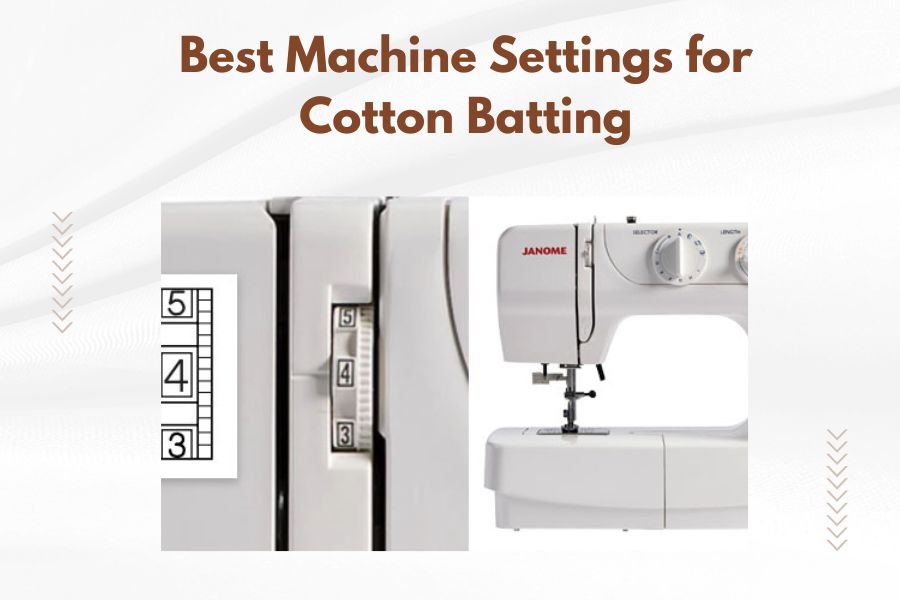
For cotton batting, set your quilting machine to a longer stitch length (8-12 stitches per inch), reduce thread tension slightly, and use a walking foot or quilting foot for even feeding.
Cotton batting works best with moderate presser foot pressure and consistent medium speed to prevent bunching and ensure smooth quilting results.
Quick Settings Guide for Cotton Batting
You want to get your quilting machine settings right the first time. Cotton batting is forgiving, but wrong settings can still create puckering and thread breaks.
Here’s what I found works best for most cotton batting projects:
- Stitch length: 8-12 stitches per inch (2.5-3mm)
- Thread tension: Slightly looser than normal fabric piecing
- Presser foot: Walking foot or free-motion quilting foot
- Speed: Medium, steady pace
- Needle: 90/14 quilting needle
Understanding Cotton Batting Basics
Cotton batting feels different under your machine than polyester or wool. It’s denser and doesn’t compress as much. This means your machine needs to work a bit harder to push through all three layers.
I researched how cotton batting behaves during quilting. It tends to grab onto itself more than synthetic materials. That’s why you need specific adjustments to your usual settings.
Why Cotton Batting Needs Special Attention
Cotton fibers naturally stick together. When you quilt, the needle pushes these fibers around. Without the right settings, they bunch up and create lumps.
Your thread can also get caught in cotton fibers more easily. This leads to tension problems and frustrating thread breaks.
Stitch Length Settings
Stitch length makes a huge difference with cotton batting. Too short, and you’ll get puckering. Too long, and your quilt won’t hold together properly.
Recommended Stitch Lengths
I found that 8-12 stitches per inch works best for most cotton batting. In metric, that’s about 2.5-3mm stitch length.
Here’s how to choose within that range:
- Thin cotton batting (under 1/4 inch): 10-12 stitches per inch
- Medium cotton batting (1/4 to 1/2 inch): 8-10 stitches per inch
- Thick cotton batting (over 1/2 inch): 8 stitches per inch
Testing Your Stitch Length
Always test on a sample sandwich first. Make a small quilt sandwich with your exact fabrics and batting. Try different stitch lengths on the same piece.
You’ll see right away which length gives you smooth, even stitches without puckering.
Thread Tension Adjustments
Thread tension with cotton batting usually needs to be slightly looser than your normal piecing tension. Cotton batting creates more drag on your thread as it passes through.
Finding the Right Tension
Start with your machine’s normal tension setting. Then reduce it by about half a number. If your normal setting is 4, try 3.5.
Look at your test stitches from both sides:
- Perfect tension: Stitches look the same on top and bottom
- Too tight: Bottom thread shows through on top
- Too loose: Top thread shows through on bottom
Bobbin Tension Considerations
Most of the time, you won’t need to adjust bobbin tension for cotton batting. Your top thread tension adjustment should be enough.
If you’re still having problems after adjusting top tension, check that your bobbin is wound evenly and inserted correctly.
Presser Foot Selection
Your choice of presser foot can make or break your cotton batting quilting experience. The wrong foot leads to uneven feeding and frustrated quilting sessions.
Walking Foot for Straight Lines
A walking foot is your best friend for straight-line quilting on cotton batting. It feeds all three layers evenly, preventing the top layer from pushing ahead.
I found that walking feet work especially well on thicker cotton batting. They keep everything moving at the same pace.
Free-Motion Quilting Foot
For curved designs and free-motion work, switch to a quilting foot or darning foot. These allow you to move the fabric in any direction.
Drop your feed dogs when using a free-motion foot. You control the stitch length by how fast you move the fabric.
Specialty Quilting Feet
Some quilting feet have special features for cotton batting:
- Open-toe feet give you better visibility
- Round feet glide more smoothly over textured batting
- Ruler feet help you quilt with templates and guides
Machine Speed Control
Speed matters more with cotton batting than you might think. Going too fast can cause skipped stitches and uneven tension.
Finding Your Ideal Speed
Medium speed works best for most cotton batting projects. Fast enough to maintain good stitch formation, but slow enough to control your work.
Start slower than you think you need. You can always speed up once you get comfortable with how the batting feeds through your machine.
Speed Tips for Different Techniques
| Quilting Technique | Recommended Speed | Why This Speed |
|---|---|---|
| Straight line quilting | Medium-fast | Consistent feeding with walking foot |
| Free-motion quilting | Medium | Better control for curves and details |
| Dense quilting patterns | Medium-slow | Prevents thread buildup and tension issues |
Needle Selection and Maintenance
The right needle makes quilting cotton batting much easier. Cotton fibers can dull needles faster than synthetic materials.
Best Needle Types for Cotton Batting
Quilting needles work best for cotton batting. They have a slightly rounded point that pushes through fibers instead of cutting them.
Size 90/14 handles most cotton batting projects. Go up to 100/16 for very thick batting or multiple layers.
When to Change Your Needle
Change your needle more often when quilting cotton batting. Cotton fibers can build up on the needle and cause problems.
Signs you need a new needle:
- Skipped stitches
- Thread shredding
- Popping sounds when stitching
- Visible burr or damage on needle point
Common Problems and Solutions
Even with the right settings, cotton batting can present challenges. Here are the most common issues I found quilters face.
Puckering and Bunching
Puckering happens when your top fabric gets pushed around by the needle. With cotton batting, this is often a tension or speed issue.
Try these fixes:
- Reduce thread tension slightly
- Increase stitch length
- Slow down your quilting speed
- Check that your batting isn’t too tightly basted
Thread Breaks
Cotton batting can grab thread and cause breaks. This gets worse with old or poor-quality thread.
Solutions that work:
- Use fresh, high-quality quilting thread
- Loosen your thread tension
- Change to a fresh needle
- Clean lint from your tension discs
Skipped Stitches
Skipped stitches often mean your needle isn’t penetrating the batting properly. This can happen when cotton batting is very dense.
Try a larger needle size or check that your presser foot pressure isn’t too light.
Special Techniques for Thick Cotton Batting
Thick cotton batting needs extra consideration. Your machine works harder, and standard settings might not cut it.
Adjusting for Extra Thickness
When your cotton batting is over half an inch thick, make these changes:
- Increase stitch length to 8 stitches per inch
- Use a size 100/16 needle
- Reduce quilting speed
- Take breaks to prevent motor overheating
Basting Thick Cotton Batting
Proper basting becomes more important with thick cotton batting. Spray basting often works better than pin basting because pins can create lumps.
If you pin baste, use longer quilting pins and place them further apart.
Machine Maintenance Tips
Cotton batting creates more lint than synthetic materials. This lint can build up in your machine and cause problems.
Cleaning Schedule
Clean your machine more often when quilting with cotton batting. After every large project, or every 8 hours of quilting time.
Pay special attention to:
- Feed dogs and throat plate area
- Bobbin case and hook assembly
- Thread path and tension discs
Oiling and Lubrication
Follow your machine manual for oiling schedules. Cotton batting lint can mix with old oil and create sticky buildup.
Use only sewing machine oil, never household oils that can attract more lint.
Conclusion
Getting your machine settings right for cotton batting doesn’t have to be complicated. Start with a longer stitch length, slightly looser tension, and the right presser foot. Test these settings on a sample before starting your full project.
Remember that every cotton batting brand feels slightly different. What works for one might need small adjustments for another. Keep notes on what settings work best for your favorite batting brands.
Most importantly, don’t be afraid to experiment. Cotton batting is forgiving, and finding your perfect settings is worth the time investment. Your finished quilts will have better stitch quality and fewer headaches during the quilting process.
What thread works best with cotton batting?
Cotton or polyester quilting thread both work well with cotton batting. Cotton thread blends naturally with cotton fibers, while polyester thread is stronger and less likely to break. Choose based on your project needs and personal preference.
Can I use the same settings for all cotton batting brands?
Different cotton batting brands have varying densities and fiber treatments, so you may need slight adjustments. Start with the basic settings and fine-tune tension or stitch length based on how each specific batting feeds through your machine.
How do I know if my cotton batting is too thick for my machine?
If your machine struggles to penetrate the layers, makes unusual noises, or the motor seems to strain, your batting may be too thick. Most home quilting machines handle up to 3/4 inch total thickness comfortably, including all three quilt layers.
Should I pre-shrink cotton batting before quilting?
Most modern cotton batting is pre-shrunk, but check the manufacturer’s instructions. If pre-shrinking is needed, soak the batting in cool water, gently squeeze out excess water, and lay flat to dry. Never wring or twist wet cotton batting.
Why does my cotton batting bunch up during quilting?
Bunching usually happens from incorrect basting, wrong presser foot pressure, or quilting too fast. Make sure your quilt sandwich is smooth and evenly basted, use appropriate presser foot pressure for your batting thickness, and maintain steady medium speed while quilting.
