
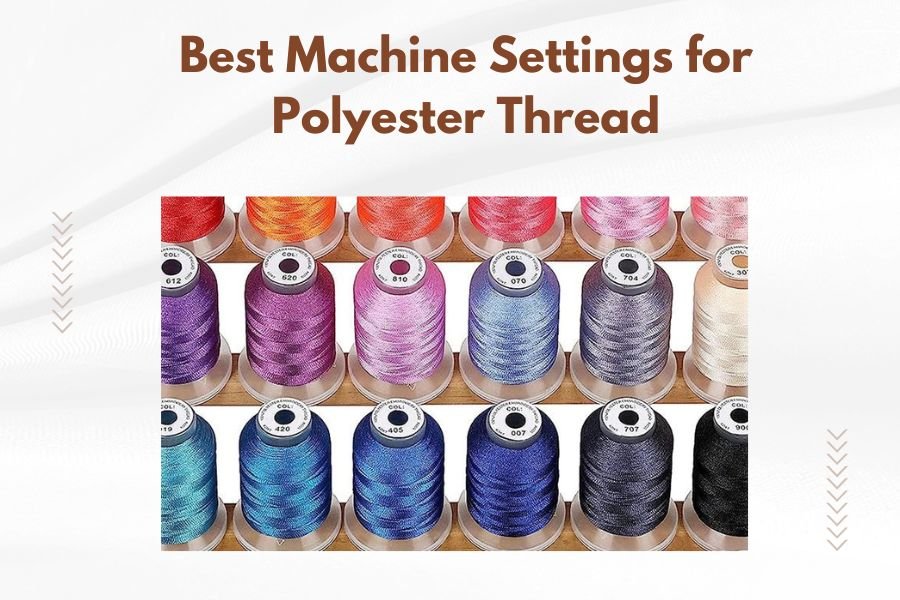
The best machine settings for polyester thread include setting your tension between 3-5, using a 75/11 or 90/14 needle, and adjusting your stitch length to 2.5-3mm for most projects.
Your machine’s thread path should be smooth, your presser foot pressure moderate, and your speed consistent to prevent polyester thread from stretching or breaking during sewing.
Why Polyester Thread Settings Matter
Getting your machine settings right for polyester thread makes the difference between smooth sewing and constant frustration. I researched quilting forums and found that most thread breaks happen because of wrong tension settings.
Polyester thread behaves differently than cotton. It stretches more and has a slick surface. Your machine needs different settings to handle these properties well.
Essential Machine Settings for Polyester Thread
Let me walk you through each setting that matters. These work for most quilting and sewing projects with polyester thread.
Tension Settings
Start with tension between 3 and 5. Most machines work best at 4 for polyester thread. If your bobbin thread shows on top, lower the tension. If your top thread shows underneath, raise it slightly.
Test on scraps first. Make a few stitches and check both sides of your fabric.
Signs Your Tension Is Wrong
- Loops of thread on the fabric surface
- Thread breaking repeatedly
- Uneven stitches
- Puckering fabric
Needle Selection
Use a 75/11 needle for lightweight fabrics and thin polyester thread. Switch to 90/14 for medium-weight fabrics and thicker thread. The needle eye should be large enough for smooth thread flow.
Sharp or universal needles work well with polyester thread. Ballpoint needles can cause skipped stitches with this thread type.
When to Change Needles
Change your needle every 8 hours of sewing time. Dull needles cause thread shredding and poor stitch quality. You’ll hear a popping sound when the needle penetrates fabric if it’s too dull.
Stitch Length Adjustments
Set your stitch length to 2.5-3mm for regular sewing. Use shorter stitches (2-2.5mm) for curves and detailed work. Longer stitches (3-3.5mm) work for basting or gathering.
Polyester thread holds well with standard stitch lengths. You don’t need tiny stitches like you might with some other threads.
Speed Control for Polyester Thread
Sew at medium speed when using polyester thread. High speeds can cause the thread to stretch and create weak seams. I found that consistent, moderate speed gives the best results.
If your machine has speed settings, try 60-70% of maximum speed. This gives you control while maintaining good stitch formation.
Why Speed Matters
Fast sewing creates heat from friction. This heat can weaken polyester thread or cause it to melt slightly. Slower sewing keeps the thread cool and strong.
Presser Foot Pressure Settings
Use moderate presser foot pressure with polyester thread. Too much pressure can stretch the thread as it feeds through. Too little pressure causes uneven feeding.
Most machines have adjustable pressure. Start at the middle setting and adjust based on your fabric thickness.
Testing Pressure Settings
Sew a test seam on your project fabric. The fabric should feed smoothly without pulling or bunching. Adjust pressure up or down as needed.
Thread Path and Guides
Check that your thread flows smoothly through all guides and tension discs. Polyester thread’s slick surface can slip out of guides more easily than cotton.
Make sure the thread spool sits properly on your machine. Some machines need horizontal spools, others vertical. Wrong positioning causes uneven thread flow.
Threading Tips for Polyester
Thread your machine with the presser foot up. This opens the tension discs fully. Lower the presser foot before you start sewing to engage proper tension.
Pull some thread through by hand before starting. This ensures smooth flow from the beginning.
Bobbin Settings and Setup
Wind your bobbin at medium speed. Fast winding can stretch polyester thread and cause tension problems later. The thread should lay evenly on the bobbin without overlapping.
Use polyester thread in both the needle and bobbin for best results. Mixing thread types can cause tension issues.
Bobbin Tension Check
Hold your bobbin case and let it drop. The bobbin should unwind slowly under its own weight. If it drops fast, the tension is too loose. If it doesn’t drop, it’s too tight.
Machine Maintenance for Polyester Thread
Clean lint from your machine regularly. Polyester thread creates more static than cotton, attracting more dust and lint. This buildup affects thread flow and stitch quality.
Oil your machine according to the manual. Well-maintained machines handle polyester thread better.
Static Control
Use anti-static spray on your thread occasionally. This reduces lint attraction and helps thread flow smoothly. Don’t overdo it – a little goes a long way.
Troubleshooting Common Problems
Even with correct settings, you might face some issues. Here’s how to fix the most common problems.
Thread Breaking
Lower your tension first. Check for burrs on the needle or thread guides. Replace the needle and re-thread the machine completely.
Persistent Breaking Issues
Try a larger needle size. Check that your thread quality is good – cheap polyester thread breaks more often. Slow down your sewing speed.
Skipped Stitches
Replace your needle with a fresh one. Make sure you’re using the right needle type – sharp or universal, not ballpoint. Check that the needle is inserted correctly.
Uneven Stitches
Clean and oil your machine. Check bobbin winding quality. Test different tension settings on scraps until you find the right balance.
Settings for Different Projects
Different quilting projects need slightly different settings. Here’s what works best for common project types.
| Project Type | Tension | Needle Size | Stitch Length |
|---|---|---|---|
| Piecing | 3-4 | 75/11 | 2-2.5mm |
| Quilting | 4-5 | 90/14 | 2.5-3mm |
| Applique | 3-4 | 75/11 | 2-2.5mm |
| Binding | 4-5 | 90/14 | 2.5mm |
Free Motion Quilting
Drop your feed dogs and use a darning foot. Keep moderate tension and consistent speed. Practice smooth movements to avoid thread breaks.
Quality Polyester Thread Makes a Difference
Good quality polyester thread works better with these settings. Cheap thread often has inconsistent thickness and weak spots that cause problems.
Look for thread that feels smooth and even. It should unwind cleanly from the spool without fuzzing or tangling.
Storage and Handling
Store polyester thread away from direct sunlight. Keep spools in a cool, dry place. Old thread becomes brittle and breaks more easily.
Handle thread gently. Don’t yank it or let it twist excessively. Smooth thread flow starts with careful handling.
Conclusion
Setting up your machine correctly for polyester thread takes just a few minutes but saves hours of frustration. Start with tension at 4, use a 75/11 or 90/14 needle, and set your stitch length to 2.5-3mm. Keep your speed moderate and your machine clean.
Test these settings on scraps before starting your project. Small adjustments make big differences in stitch quality. With the right settings, polyester thread gives you strong, beautiful stitches that last.
What tension setting works best for thick polyester thread?
Use tension between 4-6 for thick polyester thread. Start at 4 and increase gradually until your stitches look balanced. Thick thread needs slightly higher tension than regular weight polyester.
Can I use cotton thread in the bobbin with polyester on top?
Yes, but matching thread types gives better results. Different threads have different stretch properties that can cause tension issues. Use polyester in both positions when possible.
Why does my polyester thread keep jamming in the machine?
Thread jamming usually means your tension is too tight or your machine needs cleaning. Lower the tension slightly, clean lint from the bobbin area, and check that you threaded correctly with the presser foot up.
How often should I change the needle when using polyester thread?
Change your needle every 8 hours of sewing time or when you notice poor stitch quality. Polyester thread is harder on needles than cotton, so don’t try to extend needle life too long.
What’s the best way to prevent polyester thread from creating static?
Keep humidity levels moderate in your sewing room and use a light anti-static spray occasionally on your thread. Clean your machine regularly since static attracts more lint and dust to the mechanisms.
