
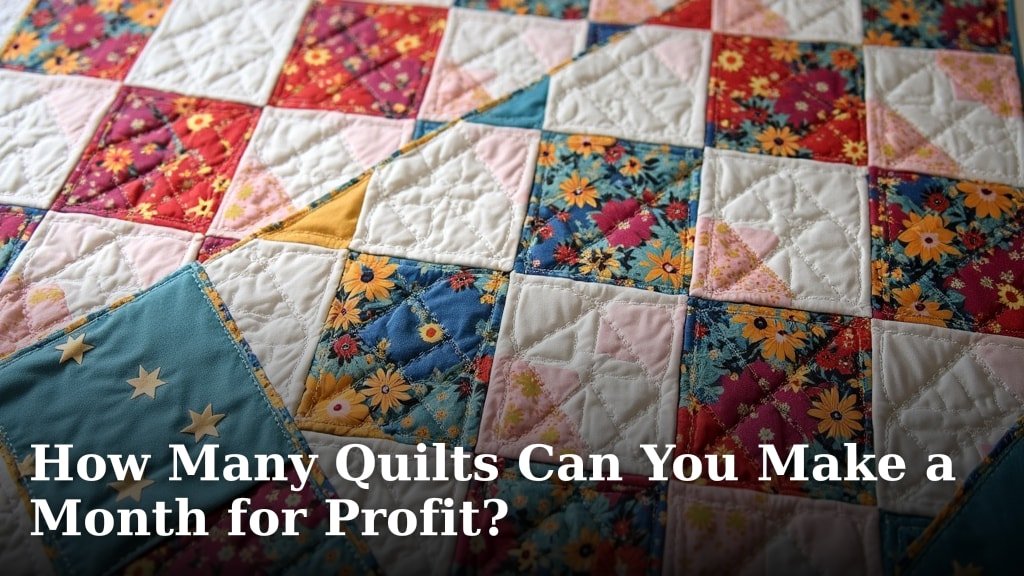
Yes, you can make a profit selling handmade quilts, but the number of quilts you can make a month for profit really depends on your speed, efficiency, and pricing. Many quilters find they can complete between 1 to 4 quilts per month, ranging from simple baby quilts to more intricate king-size creations. It’s a balance between how much time you dedicate and the complexity of each project.
Your potential profit hinges on more than just how many pieces you finish. We found that pricing your quilts correctly is essential. This includes factoring in the cost of materials, your time spent sewing, and the unique artistry you bring. Many consider the learning curve and the dedication to quality as key factors for success in this creative business.
- Profitability depends on skill and time.
- Most makers complete 1-4 quilts monthly.
- Pricing is vital for covering costs and time.
- Consider material costs and your labor.
- Quality and uniqueness boost earning potential.
Let’s break down the factors that will help you figure out how many quilts you can realistically aim to make each month for a profit.
Estimating Your Monthly Quilt Production for Profit
So, you’re wondering how many quilts you can realistically churn out each month to make some money. It’s a common question for aspiring quilt entrepreneurs! The answer isn’t a simple number; it’s a blend of your personal pace, the types of quilts you make, and how you manage your time. We’ve found that most makers aim for somewhere between **1 to 4 finished quilts per month**. This range accounts for the huge variety in quilt complexity and size.
Understanding Your Personal Quilting Speed
Your own hands and your available hours are the biggest drivers here. How quickly do you move through the steps? Think about piecing, quilting the layers together, and binding. Are you a speed demon or do you prefer a more deliberate approach? Your natural pace is a **foundational element** in determining your output. Your natural pace is a foundational element in determining your output, and understanding your sewing machine’s capabilities is also key.
Factors Affecting Piecing Time
Piecing the quilt top is where a lot of time goes. Simple patterns with large squares or strips will go much faster than those with tiny pieces or intricate shapes. We found that a simple block pattern might take you an hour or two to piece a few. More complex blocks can easily double or triple that time. The accuracy of your cuts also plays a role; precise cuts make for faster assembly.
The Quilting Process Itself
Next comes the actual quilting—stitching the layers together. Will you be hand-quilting intricate designs, or using a domestic machine for straight lines or free-motion quilting? Hand-quilting is beautiful but significantly slower. Machine quilting can be much faster, especially if you have a longarm quilting machine. The density of the quilting also matters. A simple stitch-in-the-ditch takes less time than all-over intricate patterns.
Binding: The Finishing Touch
Binding is often the last step, and it can be done by hand or machine. Machine binding is quicker, while hand-binding offers a neat, traditional finish. We found that binding a quilt can take anywhere from 1 to 4 hours, depending on the method and your experience. It’s a detail that shouldn’t be rushed, as it significantly impacts the overall finished look.
The Impact of Quilt Size and Complexity
Let’s be honest, a baby quilt is a different beast than a king-size quilt. The size directly influences how much fabric you need, how much area you have to quilt, and how much binding is required. We’ve seen that a small wall hanging might take only a weekend. A large, complex king-size quilt can easily be a month-long project all on its own.
Baby Quilts vs. Lap Quilts vs. Bed Quilts
A typical baby quilt (around 36″ x 48″) is a great starting point for many. You might be able to complete one of these in a week or two, depending on your skills. A lap quilt (around 50″ x 65″) is a bit larger and will naturally take more time. Bed quilts, especially queen or king sizes (80″ x 90″ and up), are substantial undertakings. These larger sizes can easily push your production to one a month, or even less if they are very complex.
Pattern Choice: Simple vs. Complex
The pattern you choose is a massive factor. Simple patterns like checkerboards, stripes, or basic blocks are generally faster to piece. Think about using pre-cut fabric squares, which can save a lot of cutting time. More advanced patterns, such as those involving appliqué, Y-seams, or very small, precise pieces (like English paper piecing for smaller projects), will demand significantly more time and patience. We found that complex patterns can add days or even weeks to the total project time.
Calculating Your Time Investment Per Quilt
To figure out how many quilts you can make, you need to get a handle on how long each stage actually takes you. Don’t guess; track your time for a few projects. This is where the real numbers emerge.
Time Tracking for Realistic Estimates
Set a timer! For your next quilt project, meticulously track how long you spend on each part: cutting fabric, piecing the top, layering and basting, quilting the layers, and binding. Many quilters are surprised at how much time certain steps consume. We found that a typical lap quilt might realistically take 20-40 hours of dedicated work. Larger or more complex quilts can easily stretch to 50-80 hours or more.
Accounting for Non-Sewing Time
Remember to include all the related tasks. This means time spent selecting fabric, washing and pressing it, winding bobbins, choosing thread, and even the trips to the fabric store. Don’t forget setup and cleanup time for your sewing space. All these little bits add up and impact your overall production capacity.
The Role of Your Workspace and Tools
Your sewing environment and the tools you use can significantly impact your speed. A dedicated, organized space where you can leave projects out and ready to go saves precious minutes each day. Having a good quality sewing machine, sharp rotary cutters, and a comfortable setup can make a huge difference.
Efficiency Through Organization
Are your notions neatly stored? Is your cutting mat easily accessible? A well-organized workspace means less time searching for things and more time sewing. We found that quilters who keep their tools and fabrics organized tend to be more efficient. It’s like having a well-oiled machine, but for your craft!
Investing in Better Equipment
While not always necessary to start, better equipment can speed things up. A sewing machine with a walking foot or a longarm quilting machine can dramatically reduce quilting time. Accurate cutting tools, like a good rotary cutter and ruler, also help speed up the preparation process. Think about what upgrades might genuinely save you time and improve your workflow.
Pricing Your Quilts for Profitability
Once you have an idea of how many quilts you can make, the next big question is how to price them so you actually turn a profit. This is where many makers stumble. You need to cover your costs and pay yourself for your skill and time. We found that pricing is often underestimated.
Calculating Material Costs
Start with the obvious: fabric. You’ll need to calculate the yardage for the top, the backing, and the binding. Don’t forget batting! Add in the cost of thread, any specialty notions, and even the use of your sewing machine (consider an hourly rate for its wear and tear). Researching average prices for these items will give you a clear picture of your base expenses.
Valuing Your Time and Skill
This is the trickiest part. What is your time worth? Many experts suggest setting an hourly rate for yourself, similar to other professional services. If a quilt takes you 30 hours and you decide your time is worth $25/hour, that’s $750 for your labor alone. Add your material costs to this. Remember, your skill and artistry are what make your quilts special. You are not just assembling fabric; you are creating unique works of art. Pricing should reflect that.
Market Research for Competitive Pricing
Look at what other quilters are charging for similar items. Are you selling baby quilts or custom heirloom pieces? Your pricing needs to be competitive but also reflect the quality and uniqueness you offer. A simple, machine-quilted baby quilt will command a different price than a hand-quilted, custom-designed queen-size quilt. We found that successful sellers often have a tiered pricing structure based on size and complexity.
Sample Production and Profitability Checklist
Let’s put it all together. Use this checklist to see if your production goals are realistic and profitable.
- Track Your Time: Honestly log hours for a few different quilt types.
- Calculate Material Costs: Itemize fabric, batting, thread, etc.
- Set Your Hourly Rate: Decide what your skill and time are worth.
- Estimate Monthly Output: Based on time tracking, how many can you finish?
- Calculate Potential Profit: (Hourly Rate x Hours) + Material Costs – Quilt Sale Price.
- Adjust Pricing/Goals: Does your profit make sense? Do you need to adjust your speed or prices?
Conclusion
So, how many quilts can you realistically make for profit each month? We’ve seen it boils down to your unique speed, the types of quilts you choose, and how well you manage your time and resources. Most quilters find their sweet spot between 1 to 4 finished quilts monthly, but this is just a starting point. Your real success comes from accurately tracking your time, understanding your costs, and pricing your beautiful creations fairly. The next step is yours: start tracking your own production today and see where your personal pace leads you!
Frequently Asked Questions
What’s the average profit margin for handmade quilts?
Profit margins can vary widely. After covering your material costs and setting a fair hourly rate for your time, you might see a profit margin anywhere from 20% to 50% or more. This depends heavily on your pricing strategy and efficiency.
Can I make a full-time income selling quilts?
It’s possible, but it requires consistent production and strong sales. Many full-time quilt makers create 3-5 quilts a month and have multiple sales channels. You’ll need to dedicate significant time and build a customer base.
How do I price quilts when material costs fluctuate?
It’s wise to build a small buffer into your pricing for material cost changes. You could also update your prices seasonally or whenever a significant cost increase occurs. Clearly stating your pricing policy upfront can help manage customer expectations.
Should I specialize in a certain type of quilt for more profit?
Specializing can help you become more efficient and build a niche market. For example, focusing on high-demand baby quilts or custom memory quilts might streamline your process and attract specific buyers.
What if my quilting speed is slower than average?
If your speed is naturally slower, focus on the quality and uniqueness of your work. You can command higher prices for intricate, heirloom-quality quilts. Consider specializing in custom orders where clients appreciate the artistry and are willing to pay for it.
