
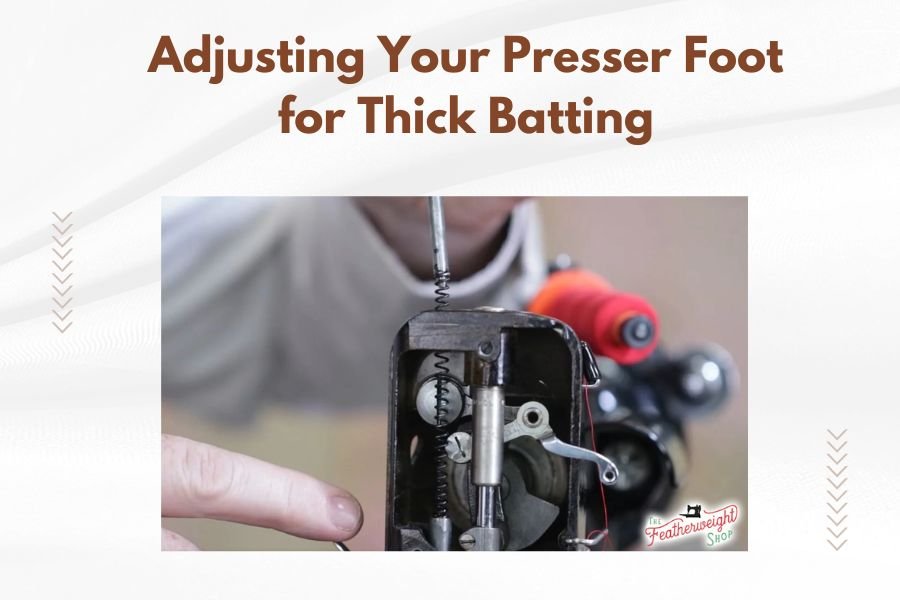
Adjusting your presser foot for thick batting requires raising the presser foot pressure and sometimes switching to a walking foot or quilting foot designed for bulk.
Most quilting machines have a presser foot pressure dial or lever that you can adjust from light to heavy pressure depending on your batting thickness.
Understanding Presser Foot Pressure for Thick Batting
When you’re working with thick batting, your presser foot needs to grip the layers without squashing them flat. Think of it like holding a sandwich – you want enough pressure to keep it together, but not so much that you crush the filling.
I found that many quilters struggle with puckering and uneven stitches when they don’t adjust their presser foot properly. The batting acts like a sponge, and if your foot pressure is wrong, it creates feeding problems.
What Happens When Pressure Is Wrong
Too little pressure lets the fabric layers shift around. You’ll see wobbly stitches and gaps between your quilt sandwich layers.
Too much pressure compresses the batting so hard that it can’t feed smoothly. This creates drag marks and can even damage your batting fibers.
Types of Batting and Pressure Needs
Different batting materials need different approaches. I researched various batting types to understand their pressure requirements better.
Cotton Batting Adjustments
Cotton batting is fairly forgiving. It compresses well but springs back. You can use medium to firm pressure without worry.
Start with your machine’s middle pressure setting and test on a sample piece first.
Polyester Batting Considerations
Polyester batting is bouncy and lightweight. It needs less pressure than cotton because it doesn’t compress as much.
If you press too hard on polyester batting, it can create permanent dents that won’t bounce back.
Wool Batting Requirements
Wool batting is dense and can be tricky. It needs steady, even pressure but not too heavy.
I found that wool responds best to a walking foot with moderate pressure settings.
Step-by-Step Pressure Adjustment Process
Let me walk you through the exact steps to get your presser foot pressure right every time.
Step 1: Locate Your Pressure Control
Look for a dial, knob, or lever on top of your machine. It’s usually marked with numbers or plus/minus signs.
Some machines have electronic pressure controls in their menu systems. Check your manual if you can’t find a physical control.
Step 2: Test Your Current Setting
Make a quilt sandwich with scraps of the same materials you’re using. Include the same batting thickness.
Sew a few lines with your current pressure setting. Look for these problems:
- Puckering or gathering in the top fabric
- Uneven stitch length
- Batting showing through seams
- Difficulty feeding the layers through
Step 3: Make Small Adjustments
If you see feeding problems, increase pressure by one notch. If you see puckering, decrease it by one notch.
Test again after each small change. Don’t jump to extreme settings right away.
Choosing the Right Presser Foot
Sometimes adjusting pressure isn’t enough. You might need a different foot altogether for thick batting success.
Walking Foot Benefits
A walking foot has feed dogs that move with your machine’s feed dogs. This prevents the top layer from shifting.
I came across many quilting experts who say walking feet are essential for anything thicker than standard batting.
Free Motion Quilting Foot Options
Free motion feet sit higher above the fabric. They give thick batting room to move without getting stuck.
These feet work best when you drop your feed dogs and control the fabric movement yourself.
Standard Zigzag Foot Limitations
Your regular zigzag foot can handle thin to medium batting. But it struggles with anything over half an inch thick.
You’ll know it’s not working when you hear the motor straining or see uneven stitching.
Machine Settings That Work with Foot Adjustments
Presser foot pressure works with other machine settings. Getting them all balanced makes quilting thick batting much easier.
Needle Size Considerations
Thick batting needs larger needles. A 90/14 or 100/16 universal needle punches through layers cleanly.
Smaller needles bend or break when pushing through dense batting. They also create tiny holes that can grow over time.
Stitch Length Adjustments
Longer stitches work better with thick batting. Try 3.0 to 3.5mm instead of your usual 2.5mm.
Short stitches pack too tightly in thick layers and can create stiff, uncomfortable quilts.
Thread Tension Balance
Thick batting can affect thread tension. You might need to loosen your top tension slightly.
The extra bulk takes up thread, so your usual tension setting might pull too tight.
Common Problems and Quick Fixes
Even with proper pressure adjustment, you might run into these issues. Here’s how to solve them fast.
Batting Bunching Under the Foot
This usually means your pressure is too light. The batting isn’t getting held down firmly enough.
Increase pressure gradually until the bunching stops. Also check that your batting edges are trimmed evenly.
Top Fabric Puckering
Puckering often means too much pressure. The foot is dragging the top fabric faster than the bottom layers.
Reduce pressure and consider switching to a walking foot if the problem continues.
Uneven Stitch Formation
Inconsistent stitches can come from pressure that’s too heavy or too light. The key is finding the sweet spot.
Make test samples with different pressure settings. Mark each sample so you remember which setting worked best.
Professional Tips for Success
I found these expert techniques that make working with thick batting much smoother.
Basting Techniques
Proper basting keeps your layers aligned even with pressure adjustments. Use safety pins every 4 to 6 inches.
Spray basting works well too, but avoid over-spraying. Too much adhesive can gum up your needle.
Quilting Direction Strategy
Always quilt from the center outward. This prevents the batting from shifting as you work.
Plan your quilting path so you’re not fighting against the bulk. Smooth curves work better than sharp angles.
Maintenance After Heavy Use
Quilting thick batting puts extra strain on your machine. Regular maintenance keeps everything running smoothly.
Cleaning Batting Fibers
Thick batting sheds more fibers than thin batting. Clean your bobbin case and feed dogs after every project.
Use a small brush or canned air to remove lint buildup. Don’t let fibers pack into tight spaces.
Checking Pressure Mechanisms
Heavy use can wear out pressure adjustment parts. If your settings don’t feel consistent, have your machine serviced.
Most repair shops can recalibrate pressure systems quickly and affordably.
Troubleshooting Specific Batting Thicknesses
Different thickness levels need specific approaches. Here’s what works for each range.
| Batting Thickness | Pressure Setting | Best Foot Type | Needle Size |
|---|---|---|---|
| 1/4 inch | Medium | Standard foot | 80/12 |
| 1/2 inch | Medium-Heavy | Walking foot | 90/14 |
| 3/4 inch | Heavy | Walking foot | 100/16 |
| 1 inch+ | Maximum | High-shank walking foot | 110/18 |
Ultra-Thick Batting Challenges
Anything over one inch thick pushes most home machines to their limits. You might need to compress the batting slightly before quilting.
Some quilters pre-compress thick batting by pressing it lightly with a warm iron. This makes it easier to feed through the machine.
Conclusion
Adjusting your presser foot for thick batting doesn’t have to be complicated. Start with your machine’s pressure settings, test on scraps, and make small changes until everything feeds smoothly. Remember that the right combination of pressure, foot type, and machine settings makes all the difference. With practice, you’ll know exactly what adjustments your thick batting projects need. Take time to test each new batting type you try, and keep notes about what settings worked best. Your future quilting self will thank you for the reference.
Can I use regular thread with thick batting?
Regular thread works fine with thick batting, but consider using slightly heavier thread like 40 weight instead of 50 weight. The heavier thread holds up better against the extra bulk and creates more visible quilting lines that complement the thick, puffy texture.
Why does my machine skip stitches with thick batting?
Skipped stitches usually happen when your needle is too small or dull for the batting thickness. Try a larger needle size and make sure it’s sharp. Also check that your presser foot pressure isn’t too light, which can cause the needle to push the fabric down instead of penetrating cleanly.
Should I change my bobbin thread for thick batting projects?
You can use the same bobbin thread, but some quilters prefer slightly heavier bobbin thread to match the top thread weight. The key is making sure your tension is balanced so both threads lock properly in the middle of your thick quilt sandwich.
How do I prevent my thick batting from shifting during quilting?
Use more basting than you would for thin batting – safety pins every 3-4 inches instead of 6 inches. Start quilting from the center and work outward in sections. A walking foot also helps prevent shifting by feeding all layers evenly through the machine.
What’s the maximum batting thickness my home machine can handle?
Most home sewing machines can handle up to 3/4 inch thick batting comfortably. Some heavy-duty machines manage up to 1 inch. Check your machine manual for the maximum fabric thickness, and remember that includes your top fabric, batting, and backing fabric combined.
