
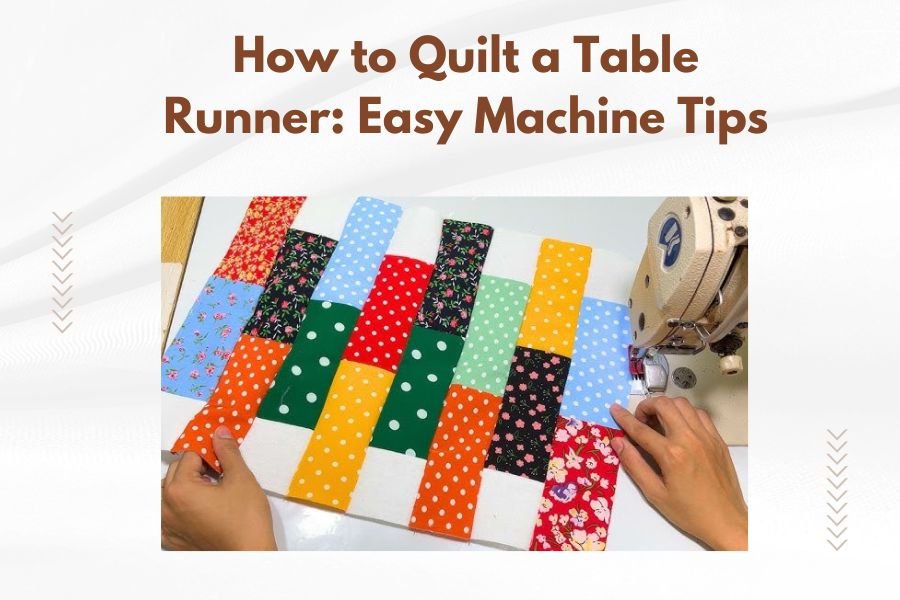
To quilt a table runner using a machine, start by layering your top fabric, batting, and backing, then use straight-line quilting or simple geometric patterns for best results.
Machine quilting a table runner takes about 2-3 hours and works perfectly for beginners who want to practice quilting techniques on a smaller project.
Want to create a beautiful table runner that impresses your guests? You’re in the right place. Machine quilting might seem scary at first, but it’s actually one of the most rewarding ways to make home décor that’s both functional and gorgeous.
I found that table runners are perfect starter projects. They’re small enough to handle easily but large enough to practice different quilting patterns. Plus, you’ll have something stunning for your dining room when you’re done!
What You Need Before Starting
Let’s gather your supplies first. You don’t need fancy equipment to make a great table runner.
Essential Materials
- Top fabric (cotton works best): 1/2 yard
- Backing fabric: 1/2 yard
- Batting: 1/2 yard (cotton or polyester)
- Binding fabric: 1/4 yard
- Thread for quilting and piecing
Required Tools
- Sewing machine with walking foot
- Rotary cutter and cutting mat
- Clear quilting ruler
- Safety pins or spray basting
- Fabric scissors
Pro Tip for Fabric Choice
Choose fabrics that complement your dining room colors. I researched fabric combinations and found that high-contrast colors make quilting lines pop beautifully.
Planning Your Table Runner Size
Size matters when making table runners. You want something that looks balanced on your table.
Standard Table Runner Dimensions
| Table Length | Runner Length | Runner Width |
|---|---|---|
| 4 feet | 5-6 feet | 12-14 inches |
| 6 feet | 7-8 feet | 14-16 inches |
| 8 feet | 9-10 feet | 16-18 inches |
The Drop Rule
Your runner should hang 6-12 inches over each end of your table. This creates that elegant, finished look you see in magazines.
Cutting Your Fabric Pieces
Accurate cutting makes everything else easier. Take your time here.
Step-by-Step Cutting Guide
Cut your top fabric to your finished size plus 2 inches on all sides. This extra fabric gives you wiggle room during quilting.
Cut your batting and backing 4 inches larger than your top fabric. This extra space prevents puckering and gives you something to hold onto while quilting.
Why Bigger is Better
I found online that many quilters skip this step and regret it later. The extra fabric acts like insurance against shifting during the quilting process.
Creating Your Quilt Sandwich
Now comes the fun part. You’re building layers like making a sandwich, but way prettier.
Layer Assembly Process
Lay your backing fabric face-down on a flat surface. Smooth out any wrinkles with your hands.
Place batting on top of the backing. Center it carefully so you have even borders all around.
Add your top fabric face-up. This is your “sandwich” – backing, batting, top.
Basting Your Layers
Safety pin every 4-6 inches across your entire runner. Start from the center and work outward. This prevents bubbles and shifting.
Spray Basting Alternative
Some quilters prefer spray basting. It’s faster but requires good ventilation. I came across mixed reviews about this method – some love it, others stick with pins.
Machine Quilting Techniques for Beginners
Ready to quilt? Let’s start with simple patterns that look amazing but aren’t too tricky.
Straight Line Quilting
This is your best friend as a beginner. Straight lines are forgiving and create beautiful texture.
Use your walking foot and start quilting from the center outward. Keep lines parallel and about 1-2 inches apart.
Diagonal Line Pattern
Try quilting diagonal lines for extra visual interest. Start at one corner and work your way across. The diamond pattern this creates looks professional.
Echo Quilting Method
Pick a shape or design element in your fabric. Quilt around it, then quilt another line 1/4 inch away. Repeat this “echo” effect.
This technique adds dimension without requiring complex patterns. Many experts say it’s perfect for runners with large print fabrics.
Free Motion Quilting Basics
Feeling adventurous? Drop your feed dogs and try simple loops or meandering patterns. Keep your movements smooth and steady.
Managing Your Machine Settings
Your sewing machine needs some adjustments for quilting success.
Thread Tension Tips
Loosen your top tension slightly. Quilting pulls differently than regular sewing, and tight tension causes puckering.
Stitch Length Adjustment
Use a slightly longer stitch length than normal sewing. About 8-10 stitches per inch works well for most quilting.
Needle Selection
Use a quilting needle or universal needle, size 80/12 or 90/14. The right needle prevents skipped stitches and thread breaks.
Troubleshooting Common Problems
Don’t panic if things go wonky. Every quilter faces these issues.
Puckering Solutions
If your fabric puckers, check your tension and slow down your stitching speed. Racing through quilting usually causes problems.
Thread Breaking Fixes
Thread breaks often mean your needle is dull or you’re using old thread. Change your needle after every project.
Uneven Stitches
Keep your hands relaxed and let the machine do the work. Fighting the fabric creates uneven stitches.
Finishing Your Table Runner
You’re almost done! Time to trim and bind your masterpiece.
Trimming to Size
Use your rotary cutter and ruler to trim your quilted runner to the exact finished size. Cut through all three layers at once.
Binding Preparation
Cut binding strips 2.5 inches wide. You’ll need enough length to go around your entire runner plus 6 extra inches.
Applying the Binding
Sew binding to the front of your runner with a 1/4 inch seam. Miter the corners for a professional look.
Fold the binding to the back and hand-stitch it down. This final step takes patience but makes all the difference.
Design Ideas for Your Next Runner
Once you master the basics, try these creative approaches.
Seasonal Themes
Make runners for different seasons. Autumn leaves, winter snowflakes, spring flowers – the possibilities are endless.
Color Blocking Technique
Use solid colors in geometric patterns. This modern approach looks stunning and quilts beautifully.
Care and Maintenance
Your quilted table runner will last years with proper care.
Washing Instructions
Wash in cold water on gentle cycle. Air dry when possible to prevent shrinkage and maintain the batting’s loft.
Storage Tips
Store flat or rolled around a tube. Folding creates permanent creases that are hard to remove.
Conclusion
You now have all the knowledge needed to create stunning quilted table runners using your sewing machine. Remember, every expert quilter started exactly where you are right now – with enthusiasm and basic tools.
Start with simple straight-line quilting patterns and work your way up to more complex designs. Your first runner might not be perfect, but it will be uniquely yours and something to be proud of. The skills you learn making table runners will serve you well in larger quilting projects.
Take your time, enjoy the process, and don’t stress about small imperfections. They add character and prove your runner is handmade with love.
How long does it take to machine quilt a table runner?
Most table runners take 2-4 hours from start to finish, depending on your quilting pattern complexity and experience level. Simple straight-line quilting goes faster than intricate free-motion designs.
Can I quilt a table runner without a walking foot?
While possible, a walking foot prevents fabric shifting and creates much better results. If you don’t have one, use extra safety pins and sew very slowly to minimize puckering.
What’s the best batting for table runners?
Low-loft cotton or cotton-polyester blend batting works best for table runners. It provides structure without too much bulk, and items can still sit flat on your table.
Should I wash my fabric before quilting?
Yes, always pre-wash cotton fabrics to prevent shrinkage and color bleeding after your runner is complete. Press the fabric smooth before cutting your pieces.
How do I keep my quilting lines straight without marks?
Use painter’s tape as a guide, align with your presser foot edge, or invest in quilting guide bars that attach to your machine. These methods avoid marking your fabric permanently.
