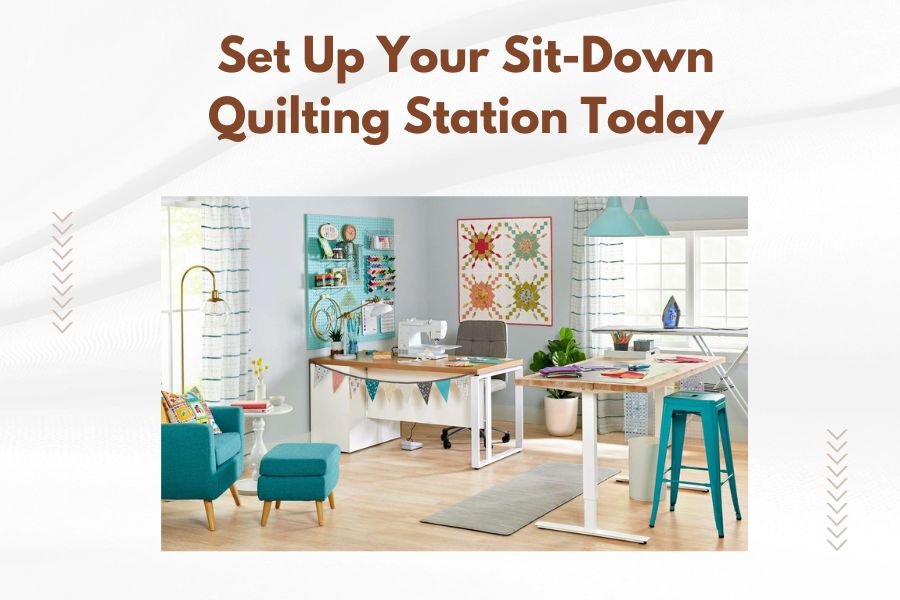
Setting up your sit-down quilting station requires a sturdy table, proper lighting, ergonomic seating, and organized storage within arm’s reach.
Your ideal quilting workspace combines comfort with functionality to prevent fatigue during long sewing sessions.
Essential Components for Your Sit-Down Quilting Station
Creating the perfect quilting station starts with getting the basics right. You need four main components: a quality work surface, proper lighting, comfortable seating, and smart storage solutions.
Think of your quilting station like a kitchen. Everything should be within easy reach so you don’t waste time hunting for tools. Research shows that organized crafting spaces reduce project completion time by up to 30%.
Choosing the Right Table Height
Your table height makes or breaks your quilting experience. The standard sewing table sits at 30 inches, but that doesn’t work for everyone.
Here’s a simple test: sit in your chair with your arms at your sides. Bend your elbows at 90 degrees. Your hands should rest comfortably on the table surface without lifting your shoulders or slouching forward.
Many quilters find success with adjustable-height tables. These give you flexibility to switch between detailed piecing and larger quilting tasks.
Table Size and Surface Requirements
Your table needs enough space for your machine plus at least 18 inches on each side. This prevents fabric from hanging off and creating drag on your seams.
A smooth surface matters too. Rough wood can snag delicate fabrics. Many quilters add a cutting mat or smooth laminate top to protect their work.
Recommended Table Dimensions
| Quilting Style | Minimum Width | Minimum Depth | Height Range |
|---|---|---|---|
| Piecing Only | 48 inches | 24 inches | 28-32 inches |
| Machine Quilting | 60 inches | 30 inches | 28-32 inches |
| Multi-Purpose | 72 inches | 36 inches | 28-34 inches |
Lighting Your Quilting Space
Poor lighting causes eye strain and color matching mistakes. You need both general room lighting and focused task lighting.
Natural light is ideal during the day, but you can’t always quilt when the sun cooperates. LED lights with daylight bulbs (5000K-6500K) give you consistent color accuracy.
Task Lighting Setup
Position your main light source behind and slightly to your non-dominant side. This prevents shadows on your work area.
Add a second light source from the opposite direction to eliminate remaining shadows. Many quilters use adjustable desk lamps for this purpose.
Avoiding Common Lighting Mistakes
Don’t rely on overhead lighting alone. It creates shadows right where you’re working. Also avoid lights that flicker or change color temperature throughout the day.
Yellow-tinted lights make it hard to judge fabric colors accurately. You might think two blues match perfectly, only to discover they clash in natural light.
Selecting Your Quilting Chair
Your chair affects your posture and comfort during long quilting sessions. A good quilting chair supports your back and allows your feet to rest flat on the floor.
Office chairs often work well because they’re designed for extended sitting. Look for adjustable height, lumbar support, and armrests that don’t interfere with your quilting motion.
Chair Features That Matter
Adjustable height lets you match your chair to your table perfectly. Your thighs should be parallel to the floor with your feet flat.
Lumbar support prevents lower back pain during long sessions. Many quilters add a small cushion if their chair lacks this feature.
Armrest Considerations
Armrests can help or hurt your quilting. They should support your arms without restricting movement. Some quilters prefer chairs without armrests for complete freedom of motion.
If you keep armrests, they should be at the same height as your table surface. This prevents your shoulders from hunching up or dropping down.
Organizing Your Tools and Supplies
Smart storage keeps your most-used tools within arm’s reach. The goal is to minimize getting up and down while you work.
Create zones around your work area. Keep cutting tools in one spot, measuring tools in another, and thread organized by color or project.
Essential Storage Solutions
Rolling carts work well for frequently used items. You can move them as needed and roll them away when not quilting.
Pegboards maximize vertical space and keep tools visible. No more digging through drawers to find your seam ripper.
Thread Storage Options
Thread racks keep spools organized and prevent tangling. Wall-mounted racks save desk space while keeping colors visible.
Some quilters prefer drawer organizers with individual compartments for each spool. This protects thread from dust and fading.
Fabric Storage Near Your Station
Keep current project fabrics within easy reach. A small bookshelf or cubby system works well for fat quarters and smaller cuts.
Larger fabric pieces can live in bins under your table. Label everything so you don’t waste time searching.
Setting Up Your Sewing Machine
Your machine placement affects your comfort and sewing accuracy. The needle should align with your body’s center when you sit naturally.
Some quilters prefer their machine slightly to the right, especially when piecing. This gives more support for the bulk of the quilt as it grows.
Machine Height Adjustment
Your machine bed should sit flush with your table surface. This lets fabric move smoothly without catching on height differences.
Many quilting tables have cutouts designed for specific machines. If yours doesn’t fit perfectly, you can add shims or padding to level everything out.
Extension Tables and Throat Space
Extension tables give you more support for large quilts. They attach to your machine and expand your work surface significantly.
The throat space (distance from needle to machine body) determines how much quilt you can maneuver. Larger throat space makes machine quilting easier.
Creating Workflow Efficiency
Arrange your station to match your quilting process. If you typically cut, then piece, then press, set up stations that flow in that order.
Keep your iron and pressing station close but not so close that steam damages your machine or fabrics.
Managing Cord and Cable Clutter
Power cords create trip hazards and visual clutter. Use cord organizers or under-desk trays to keep them tidy.
Consider adding a power strip with surge protection under your table. This gives you plenty of outlets without extension cords snaking everywhere.
Safety Considerations
Make sure electrical outlets can handle your equipment load. Sewing machines, lights, and irons draw significant power.
Keep a small fire extinguisher nearby, especially if you’re using multiple heating tools like irons and fabric steamers.
Personalizing Your Space
Your quilting station should inspire creativity. Add elements that make you happy to spend time there.
Many quilters display finished projects or works in progress. This provides motivation and lets you spot potential issues from a distance.
Color and Design Elements
Choose colors that energize you without being distracting. Neutral backgrounds help fabrics stand out during color selection.
Good ventilation keeps the space comfortable during long sessions. A small fan can help circulate air without creating fabric-moving drafts.
Maintaining Your Quilting Station
Regular cleaning keeps your space functional and pleasant. Fabric lint builds up quickly around sewing areas.
Weekly tidying prevents supply chaos. Put tools back in their designated spots after each session.
Deep Cleaning Schedule
Monthly deep cleaning includes vacuuming under furniture and wiping down all surfaces. This prevents dust buildup that can affect your machine’s performance.
Check your lighting regularly. Dim bulbs strain your eyes and make color matching difficult.
Conclusion
Setting up your sit-down quilting station takes some planning, but the payoff in comfort and efficiency is worth it. Start with the basics: proper table height, good lighting, comfortable seating, and organized storage. Then personalize the space to match your style and workflow.
Remember that your perfect setup might take some tweaking. Try your initial arrangement for a few weeks, then adjust what isn’t working. Your quilting station should make your hobby more enjoyable, not create new challenges.
What’s the ideal height for a quilting table?
The ideal height allows your arms to rest at 90-degree angles when seated, typically 28-32 inches. Test by sitting with elbows bent naturally – your hands should rest comfortably on the surface without shoulder strain.
How much space do I need around my sewing machine?
Allow at least 18 inches on each side of your machine for fabric support. For machine quilting larger projects, 24-30 inches provides better maneuverability and prevents fabric drag.
What type of lighting works best for quilting?
LED lights with daylight color temperature (5000K-6500K) provide the best color accuracy. Use both overhead lighting and focused task lights positioned to eliminate shadows on your work surface.
Should I choose a chair with or without armrests?
Armrests can provide support but may restrict movement during quilting. If you choose armrests, ensure they’re the same height as your work surface to maintain proper shoulder position.
How can I organize my quilting supplies efficiently?
Create zones for different tool types and keep frequently used items within arm’s reach. Rolling carts, pegboards, and drawer organizers work well for maintaining an organized, accessible workspace.