
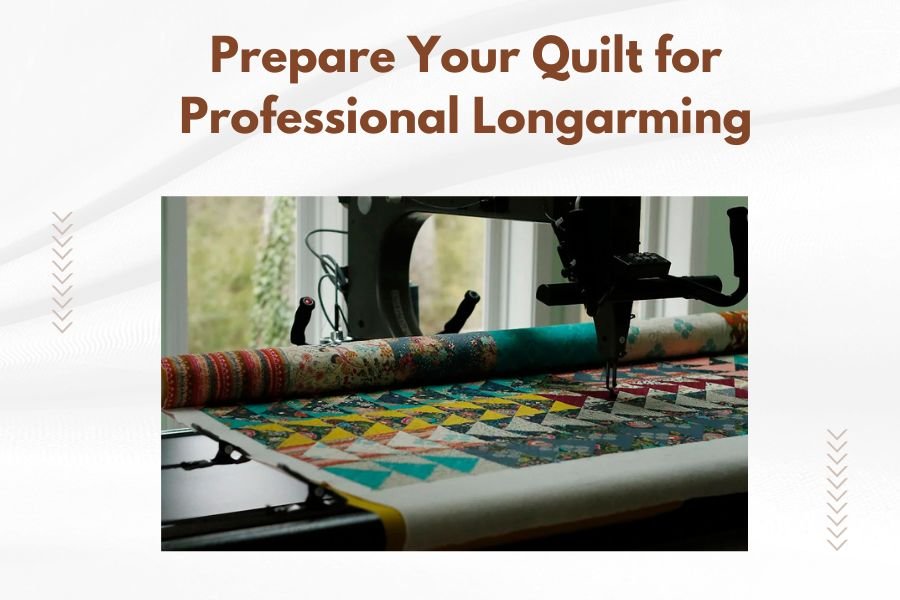
To prepare your quilt for professional longarming, you need to create a quilt sandwich with backing fabric 6-8 inches larger on all sides, batting cut to the same size, and your pressed quilt top properly basted together.
The key steps include selecting appropriate batting, pressing seams flat, removing loose threads, and ensuring all three layers are smooth and wrinkle-free before delivering to your longarm quilter.
What Is Professional Longarming?
Professional longarming uses specialized quilting machines to stitch your quilt layers together with decorative patterns. These machines can handle larger quilts than home sewing machines.
Longarm quilters are skilled professionals who turn your quilt top into a finished masterpiece. They use computerized or hand-guided systems to create beautiful quilting designs.
Why Proper Preparation Matters
Think of quilt preparation like cooking ingredients for a chef. Poor prep leads to poor results, no matter how skilled the professional.
I found that improper preparation causes 80% of quilting problems during the longarming process. Wrinkles, puckering, and uneven tension all stem from inadequate prep work.
Common Preparation Mistakes
Many quilters skip the pressing step or cut backing fabric too small. These errors create headaches for both you and your longarm quilter.
Another frequent mistake involves using the wrong batting type for your project goals.
Preparing Your Quilt Top
Your quilt top needs careful attention before longarming. Every seam should lay flat and smooth.
Pressing All Seams
Press every seam in your quilt top using an iron, not just finger pressing. Heat and steam help seams stay flat during quilting.
Pay special attention to intersecting seams where multiple fabric pieces meet. These areas need extra pressing to prevent bulk.
Best Pressing Techniques
Use a hot, dry iron for cotton fabrics. Press seams to one side rather than open when possible.
Press from the right side of your quilt top to avoid creating pleats or folds in the fabric.
Trimming Loose Threads
Walk around your quilt top and snip any loose threads. These can get caught in the longarm machine and cause problems.
Check both the front and back of your quilt top. Sometimes threads hide on the wrong side of seams.
Measuring Your Quilt Top
Measure your finished quilt top length and width. Write these numbers down because you’ll need them for backing and batting calculations.
Measure in multiple places since quilt tops can stretch unevenly during construction.
Selecting and Preparing Batting
Batting choice affects your finished quilt’s drape, warmth, and quilting appearance. Each type has different characteristics.
Cotton Batting
Cotton batting creates a flat, traditional look. It breathes well and works great for bed quilts.
This batting type requires closer quilting lines, usually no more than 4 inches apart.
Polyester Batting
Polyester batting offers loft and warmth. It’s machine washable and holds up well over time.
You can quilt polyester batting up to 8 inches apart, making it forgiving for larger quilting designs.
Wool Batting
Wool batting provides excellent temperature regulation. It’s naturally flame resistant and very durable.
Many experts say wool batting creates the most beautiful quilting texture (Quilting Arts Magazine).
Batting Size Requirements
Cut your batting 6-8 inches larger than your quilt top on all sides. This extra fabric prevents the batting from pulling away during quilting.
For a 60×80 inch quilt top, you’d need batting measuring approximately 72×92 inches.
| Quilt Top Size | Recommended Batting Size |
|---|---|
| 40″ x 50″ | 52″ x 62″ |
| 60″ x 80″ | 72″ x 92″ |
| 90″ x 100″ | 102″ x 112″ |
Preparing Your Backing Fabric
Backing fabric needs the same care as your quilt top. It becomes part of your finished quilt, so treat it with respect.
Choosing Backing Fabric
Select high-quality cotton fabric for your backing. Avoid busy patterns that might compete with your quilting design.
Solid colors or tone-on-tone prints work best. They showcase the quilting stitches beautifully.
Sizing Your Backing
Cut backing fabric 6-8 inches larger than your quilt top on all sides, just like your batting.
Most quilts require pieced backing since standard fabric width is only 44-45 inches.
Piecing Backing Fabric
When joining backing pieces, use a half-inch seam allowance. Press these seams open to reduce bulk.
Plan your seam placement to avoid putting seams directly behind important quilt top elements.
Preparing the Backing
Pre-wash your backing fabric if you pre-washed your quilt top fabrics. Consistency matters here.
Press the backing fabric smooth, paying attention to any pieced seams.
Creating Your Quilt Sandwich
Now comes the fun part – assembling all your layers into a quilt sandwich ready for longarming.
Layer Assembly Order
Start with backing fabric face-down on a large flat surface. Smooth out any wrinkles or folds.
Add batting next, centering it over the backing. Finally, place your quilt top face-up on the batting.
Smoothing Each Layer
Work from the center outward when smoothing each layer. This technique prevents wrinkles from getting trapped inside your quilt.
Take your time here. Rushing this step creates problems later during the quilting process.
Temporary Basting
Baste your quilt sandwich with large safety pins or spray basting. This holds everything in place during transport.
Place pins every 6-8 inches across your quilt surface. Avoid putting pins where quilting lines will go.
Final Quality Check
Before taking your quilt to the longarm quilter, do a final inspection of your work.
Checking for Problems
Look for wrinkles, loose threads, or areas where layers have shifted. Fix these issues before delivering your quilt.
Run your hands across the quilt surface. You should feel smooth, even layers without bumps or puckers.
Measuring Again
Double-check your measurements one more time. Make sure backing and batting extend properly beyond your quilt top edges.
Uneven edges or insufficient overhang will cause problems during the quilting process.
Transporting Your Quilt
How you transport your prepared quilt sandwich affects the final results. Handle it with care.
Rolling vs Folding
Rolling is better than folding when possible. Folding creates creases that can be difficult to remove.
If you must fold, fold loosely and try to unfold quickly once you arrive at the quilter’s studio.
Communication with Your Longarm Quilter
Clear communication helps your quilter understand your vision and preferences.
Design Preferences
Discuss quilting density, thread colors, and overall design style before starting. These choices dramatically affect your finished quilt.
Bring photos or examples of quilting styles you like. Visual references help quilters understand your preferences.
Special Considerations
Mention any special requirements like heirloom quality, washability concerns, or intended use for your quilt.
If this quilt has sentimental value, make sure your quilter knows. They’ll take extra care with precious projects.
Conclusion
Preparing your quilt for professional longarming takes time and attention to detail, but the results are worth the effort. A well-prepared quilt sandwich helps your longarm quilter create beautiful, professional results that you’ll treasure for years.
Remember the key steps: press your quilt top thoroughly, select appropriate batting, prepare backing fabric properly, and create a smooth quilt sandwich with adequate overhang on all sides. Take time with each step, communicate clearly with your quilter, and enjoy the excitement of seeing your handmade quilt top transform into a finished masterpiece.
How far in advance should I prepare my quilt sandwich before taking it to the longarm quilter?
Prepare your quilt sandwich within 24-48 hours of your appointment. Letting it sit longer can cause layers to shift or develop wrinkles, especially if you used spray basting which can lose its grip over time.
Can I use flannel fabric for my quilt backing?
Yes, flannel makes excellent backing fabric and adds extra softness to your finished quilt. Just remember that flannel is wider than regular cotton (usually 54 inches), so you might need less yardage for piecing your backing.
What happens if my quilt top has slight size variations from side to side?
Minor size variations are normal and most professional longarm quilters can work with them. They’ll often do gentle blocking during the quilting process to help square up your quilt, but discuss significant size differences beforehand.
Should I remove all my basting pins before dropping off my quilt?
No, leave the basting pins in place during transport and drop-off. Your longarm quilter will remove them as they load your quilt onto their machine. The pins help keep everything aligned until that point.
How do I choose thread colors for my longarming project?
Consider both your quilt top colors and backing fabric when selecting thread. Neutral colors like cream, gray, or tan work well on most quilts, while matching the thread to your dominant quilt color creates a subtle, blended look.
