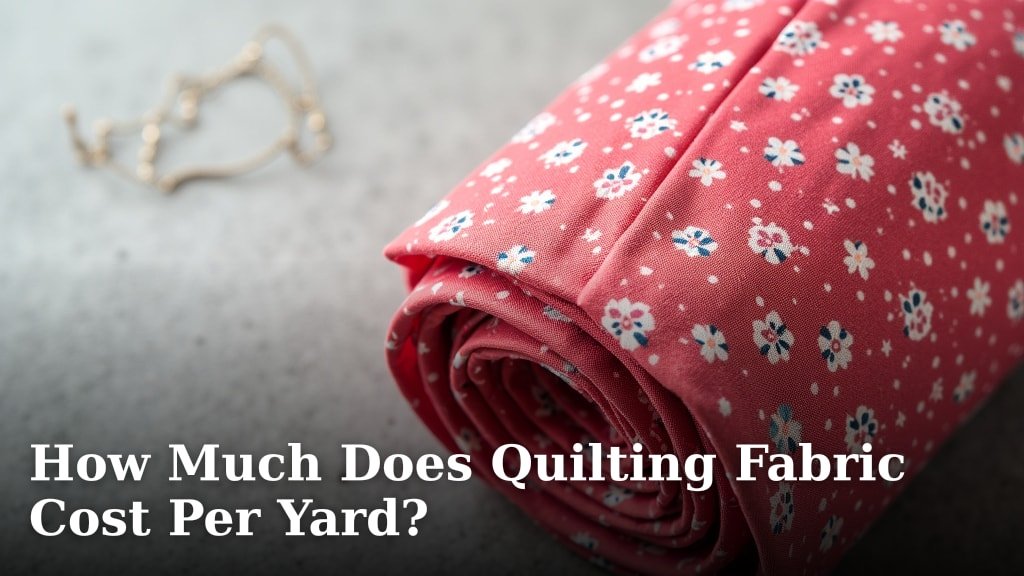
When asking how much does quilting fabric cost per yard, you can expect to pay anywhere from $8 to $15 per yard for standard 100% cotton quilting fabric. This price often depends on the fabric’s quality and where you buy it.
Prices can change based on the brand, its design, and if it’s a specialty fabric. For example, some premium or designer fabrics might cost more. We found that sales and coupons can also make a big difference in your final cost.
- Standard quilting fabric costs $8-$15 per yard.
- Designer fabrics can cost more.
- Sales and coupons impact your final price.
- Buying in bulk often saves money.
- Quality and brand affect the price you pay.
Let’s walk through all the factors that influence quilting fabric prices and help you find the best deals for your projects.
Understanding Quilting Fabric Pricing Per Yard
The price of quilting fabric varies quite a bit, but you can generally expect to pay between $8 and $15 per yard for standard cotton. Many factors influence this range, from the fabric’s quality to where you buy it.
What Makes Quilting Fabric Cost What It Does?
Several elements come together to create the price tag on that beautiful fabric you’re eyeing. It’s not just about the material itself; it’s a whole ecosystem of design, production, and distribution. Thinking about these factors can help you make more informed choices.
Quality of Material
Just like anything else, the quality of quilting fabric can dramatically affect its price. High-quality cotton, often referred to as “quilting cotton,” has a tighter weave and a softer hand feel. This makes it easier to work with, less prone to fraying, and more durable for a quilt that will last for years (National Quilting Association).
Cheaper fabrics might be thinner, have a looser weave, or be made from a lower grade of cotton. They can sometimes fray more easily or even distort when washed. We found that investing a little more in quality often pays off in the long run with a finished project you’re truly proud of.
Brand and Designer Influence
Have you ever noticed how some fabric collections just seem to pop? That’s often the work of a designer. Designer fabrics typically come with a higher price point because you’re paying for their unique artistry and the exclusivity of their patterns. These fabrics are often part of curated collections, which means they are designed to work together harmoniously.
Well-known fabric brands also tend to command a bit more. They’ve built a reputation for consistent quality, beautiful color reproduction, and reliable products. You’re often paying for that assurance and expertise.
Type of Fabric and Special Finishes
While most quilters work with 100% cotton, there are other types of fabrics that can be used, and they come with different price tags. For example, batiks, which are made using a wax-resist dyeing process, often cost more due to their intricate, handmade production. Specialty fabrics like flannel, linen blends, or even silk can also be pricier than basic cotton.
Some fabrics also come with special finishes, like pre-shrunk or stain-resistant treatments. These extra steps in production can add to the cost. If a fabric feels unusually soft or has a unique texture, it might have a special finish contributing to its price.
Where You Buy Matters: Retailers and Pricing
The store you choose to buy your fabric from plays a surprisingly large role in what you’ll pay per yard. Different types of retailers have different business models, which impact their pricing strategies. It’s smart to consider all your options.
Local Quilt Shops
Your local quilt shop is often a treasure trove of beautiful fabrics and expertise. These shops typically have a carefully curated selection of high-quality quilting cottons, including many designer lines. Prices here might be on the higher end, perhaps in the $12-$18 per yard range.
However, what you gain in return is invaluable. You get personalized service, expert advice, and the chance to physically touch and see the fabric. Many shops also offer classes and community events, making them a hub for quilters (Quilter’s Guild of America). Supporting these small businesses helps keep the quilting community vibrant.
Big Box Craft Stores
Stores like Joann or Hobby Lobby are very popular for fabric purchases. They often carry a wide range of fabrics, from basic cottons to some licensed prints. Their standard pricing for quilting cotton might fall in the $8-$12 per yard range.
The real draw here is the sales and coupons. Big box stores frequently offer 40% or 50% off coupons, making their fabric very affordable. If you’re patient and shop the sales, you can get some fantastic deals. Just keep an eye on the quality, as it can vary more widely in these stores.
Online Retailers
Online fabric stores offer an enormous selection, often with thousands of options you might not find locally. Prices can be competitive, sometimes as low as $7-$14 per yard, especially if you’re buying larger quantities. Shipping costs are a factor to consider, though many offer free shipping over a certain order amount.
The main challenge with online shopping is that you can’t feel the fabric before you buy it. Reading reviews and looking at detailed product descriptions can help. Many online stores also offer swatches, which is a great way to check color and texture before committing to a larger purchase.
Wholesale or Bulk Purchases
If you’re planning a very large quilt or have multiple projects in mind, buying fabric in bulk can save you a lot of money. Some online retailers and even a few local shops offer discounts when you purchase an entire bolt of fabric (typically 15 yards). The price per yard can drop significantly, sometimes to $6-$10 per yard.
This approach requires more upfront investment and storage space, but it’s an excellent strategy for dedicated quilters or those making quilts for charity. Consider splitting a bolt with a quilting friend to make it even more economical.
Smart Ways to Save Money on Quilting Fabric
Who doesn’t love a good deal? Saving money on fabric means you can buy more, or simply have more for your crafting budget. Here are some tried-and-true methods that many quilters use to keep costs down without sacrificing quality.
- Look for sales and clearance racks. These are your best friends!
- Use coupons at big box stores; they can drastically reduce prices.
- Buy fabric in larger quantities, like yardage or bolts, for better per-yard pricing.
- Join a store’s loyalty program for exclusive discounts and early access to sales.
- Consider fat quarter bundles or pre-cuts when the per-yard equivalent is good.
- Shop end-of-bolt remnants for small projects or accent pieces.
Sales and Clearance Events
The quilting world has sales events all the time. Major holidays, seasonal changes, and inventory clear-outs are prime times to find fabric at a discount. Keep an eye on your favorite stores’ newsletters or social media. You might find fabric for 50% off or more during these events.
Clearance sections, both online and in physical stores, are fantastic for finding hidden gems. These might be discontinued lines or end-of-roll pieces. While selection can be limited, the prices are often unbeatable. Just be sure to buy enough for your project, as it might not be restocked.
Using Coupons and Loyalty Programs
Big box craft stores are famous for their coupons. If you plan your purchases around these coupons, you can save a lot. Sometimes you’ll find “40% off any regular priced item” or “20% off your entire purchase.” These can turn a $15/yard fabric into a $9/yard fabric easily.
Signing up for loyalty programs also offers benefits. Many stores send out exclusive discounts to members, or you might earn points that convert into future savings. It’s a simple way to get rewarded for your regular fabric shopping.
Buying Pre-Cuts vs. Yardage
Pre-cuts like fat quarters, jelly rolls, and charm packs are convenient and come with coordinating designs, but they can sometimes be more expensive per square inch than buying fabric by the yard. Do the math!
| Fabric Format | Typical Use | Price Consideration |
|---|---|---|
| By the Yard | Large pieces, quilt backs, consistent color. | Generally the most cost-effective for large quantities. |
| Fat Quarters | Small blocks, variety for scraps, testing. | Can be more expensive per square inch; great for variety. |
| Jelly Rolls/Charm Packs | Strip piecing, specific patterns. | Convenient and coordinated; sometimes higher per-yard cost. |
| Scrap Bags/Remnants | Accent pieces, small projects, improv. | Highly variable; can be very cheap per piece. |
Sometimes, pre-cuts are on sale, making them a great deal. For example, a fat quarter bundle might offer a variety of fabrics at a lower price than buying individual fat quarters or yardage of each print. It really depends on the project you have in mind and the current sales.
Conclusion
Understanding quilting fabric costs helps you plan your projects better. We’ve seen that standard cotton typically runs from $8 to $15 per yard, but many things change that price. Quality, brand, and where you shop all play a big part. From local shops to online retailers, each has its pros and cons.
Remember to always look for sales, use coupons, and consider buying in bulk for significant savings. By being a smart shopper, you can acquire beautiful fabrics for your next quilting masterpiece without breaking the bank. Happy quilting!
Frequently Asked Questions
Is cheaper quilting fabric worth it?
Cheaper quilting fabric can be worth it for practice projects or items that won’t see heavy use. However, it might fray more easily or not last as long. We found that investing a bit more in quality often leads to a more satisfying and durable finished quilt.
How much fabric do I need for a basic throw quilt?
For a basic throw quilt (around 50×60 inches), you generally need about 4-5 yards of fabric for the quilt top, depending on your pattern. Don’t forget an additional 3.5-4 yards for the backing and a half-yard for binding. Always check your specific pattern requirements.
What is the difference between quilting cotton and regular cotton?
Quilting cotton is typically a higher quality, 100% cotton fabric with a tighter weave and a softer finish. This makes it more stable and less prone to stretching or fraying when cut and sewn. Regular cottons, like broadcloth, can be thinner and less durable for quilting projects.
Can I mix different types of fabric in one quilt?
Yes, you can mix different types of fabric, but it requires careful planning. Fabrics with different weights, drapes, and washing instructions can create challenges. We recommend pre-washing all fabrics to account for shrinkage and testing how they react together before sewing them into your quilt.
Are pre-cut fabric bundles a good value?
Pre-cut fabric bundles, like jelly rolls or charm packs, offer convenience and coordinated prints. While their “per yard” cost can sometimes be higher than yardage, they save you cutting time and ensure color harmony. They are a great value if they fit your project perfectly and are on sale.
