
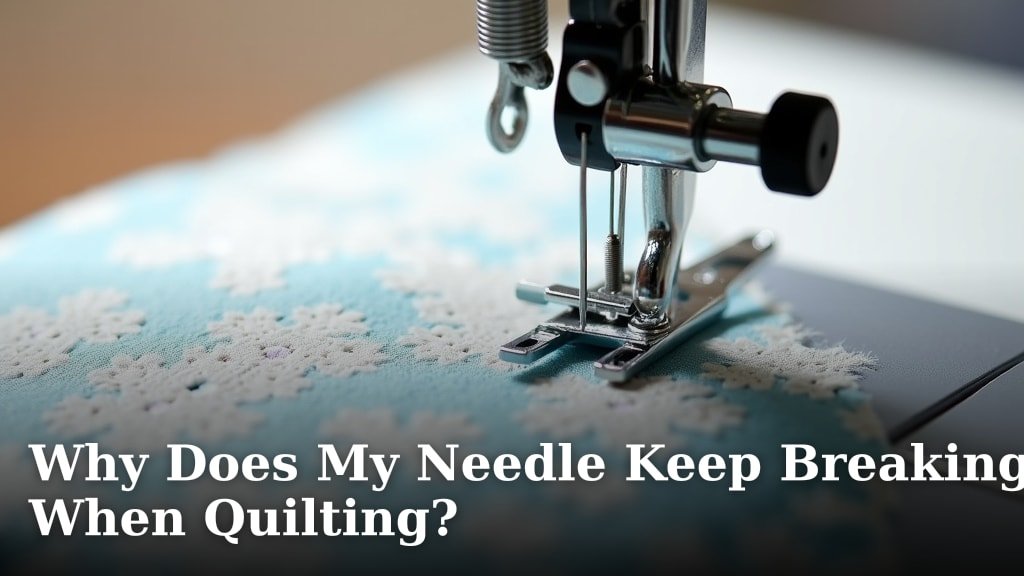
Your needle keeps breaking when quilting because of a few common issues, such as using the wrong needle for your fabric, a bent or dull needle, or incorrect sewing machine settings. Don’t worry, it’s a common quilter’s headache, and we can help you fix it fast!
Many quilters face this frustration. It often comes down to simple adjustments you can make right away. We found that most needle breaks are preventable with the right tools and techniques. You’ll be back to smooth quilting in no time!
- Wrong needle type for your fabric.
- Bent, dull, or damaged needle.
- Incorrect thread tension or bobbin issues.
- Improper sewing machine settings.
- Fabric feed problems or too much force.
Let’s walk through why your quilting needle might be breaking and what you can do to prevent it. We’ll cover all the common culprits and how to solve them easily.
Understanding Why Your Quilting Needle Snaps
Broken needles can be quite frustrating, right? You’re in the middle of a beautiful quilting project, and suddenly, snap! We’ve all been there. Let’s dig into the common reasons why your needle might be breaking and how you can prevent it. It’s often simpler than you think.
Is Your Needle the Right One for the Job?
Using the correct needle is surprisingly important. Think of it like using a screwdriver for a nail; it just won’t work well. The needle you choose needs to match your fabric and thread for optimal performance.
Choosing the Correct Needle Type
Quilting needles are designed for quilting. They have a slightly rounded tip that helps them pass through multiple layers of fabric and batting without damaging the fibers. A sharp needle, for instance, might split threads in your fabric, leading to resistance and breakage.
Universal needles are good for general sewing, but quilting needs a specialist. We found that a quilting-specific needle makes a huge difference. Are you using a specific quilting needle? Or perhaps a universal one?
Needle Size Matters More Than You Think
Just like clothes, needles come in different sizes. A common size for quilting is 75/11 or 80/12. If your needle is too small for thick fabric layers and batting, it will struggle. This struggle creates stress, and eventually, the needle breaks under pressure.
Conversely, a needle that is too large for delicate fabrics can leave big holes. The right size ensures smooth penetration. You want enough strength to push through layers without being overly bulky.
Checking the Health of Your Needle
Even the right needle can cause problems if it’s not in good shape. A tired needle is a common culprit. When was the last time you changed your needle?
Is Your Needle Bent or Dull?
A bent needle is a breaking needle waiting to happen. It won’t enter the fabric straight. This puts pressure on the needle, hitting the bobbin case or needle plate. We found that even a slight bend can cause significant issues.
A dull needle, on the other hand, struggles to pierce the fabric. It tries to force its way through, causing friction and stress. This extra effort can lead to the needle heating up and eventually snapping. Many experts recommend changing your needle after every 8-10 hours of sewing (Schmetz Needles).
Examining for Burrs or Damage
Run your finger over the needle point (carefully!). Do you feel any roughness? A tiny burr on the needle can snag fabric. This snagging can cause resistance, pulling the fabric in an awkward way, and making the needle bend or break. It’s like driving a car with a flat tire; things just aren’t right.
Machine Settings and Thread Issues
Your sewing machine settings play a huge role in how your needle performs. It’s not always the needle’s fault! Sometimes, your machine needs a little adjustment.
Understanding Thread Tension
Too much upper thread tension can pull on the needle. It creates a tight resistance as the needle tries to move up and down. This constant tug-of-war can weaken the needle. Think of it as constantly pulling a rubber band too tight; eventually, it will snap.
We found that balanced tension is key. Check your machine’s manual for recommended tension settings for quilting. A quick tension test on a scrap piece of your quilting sandwich can save you a lot of grief.
Bobbin Problems and Their Impact
Is your bobbin wound unevenly? Or is there too much thread on it? An improperly wound bobbin can cause the lower thread to jam. This jam creates resistance for the needle, pulling it sideways or stopping its motion abruptly. When the upper needle meets this resistance, it can break.
Make sure your bobbin is inserted correctly. Is it the right bobbin for your machine? Using the wrong bobbin can cause internal issues, affecting thread feed and needle alignment.
Common Sewing Machine Malfunctions
Sometimes, the issue isn’t with your technique or needle, but with the machine itself. A well-maintained machine is a happy machine, and a happy machine means fewer broken needles.
Needle Plate and Bobbin Case Alignment
The needle needs a clear path through the needle plate hole. If the needle plate is loose or slightly misaligned, the needle might hit the edge of the hole. This impact can cause immediate breakage. It’s like trying to put a key into a lock that’s slightly crooked; it won’t go in smoothly.
Similarly, if the bobbin case is not seated correctly, the needle might strike it. This often results in a loud “clunk” sound just before the needle breaks. Always double-check these components before you start sewing.
Timing Issues and Burrs
Over time, sewing machine timing can go off. This means the needle and bobbin hook are not meeting at the precise moment they should. When the timing is off, the needle can hit the bobbin hook, leading to breakage. This is a job for a service technician, but it’s worth considering if other fixes haven’t worked.
Also, check for burrs inside your bobbin area or on the needle bar. A tiny metal burr can catch the needle as it moves. We found that even microscopic imperfections can snag and cause problems.
Your Quilting Technique and Fabric Feed
Believe it or not, how you guide your fabric can directly impact your needle’s survival. Your hands are your machine’s best friend, or sometimes, its worst enemy.
Are You Forcing the Fabric?
One of the most common reasons for needle breakage is forcing the fabric through the machine. Your feed dogs are there to do the work. If you pull or push the fabric too hard, you bend the needle as it tries to move up and down. This sideways pressure is a killer for needles.
Let your machine do the feeding. You are there to gently guide the fabric, not to propel it. Imagine trying to run and walk at the same time; it just doesn’t work efficiently.
Using Too Much Batting or Fabric Layers
Are you trying to quilt through a very thick batting or too many layers of fabric? Each layer adds resistance. If your needle isn’t strong enough or the machine isn’t designed for such thickness, the needle will struggle and eventually break. Some machines have a harder time with bulky projects than others.
Consider whether your machine is rated for heavy-duty quilting. If you are regularly quilting through thick projects, a stronger needle (like a Topstitch or Denim needle, even though they are sharp, they are stout) might be necessary, or a machine with more piercing power. Understanding how to Master Presser Foot Pressure can also help when working with thicker materials, ensuring smooth fabric feeding and reducing stress on the needle.
Quick Checklist for Preventing Broken Needles
Before you get started on your next quilting session, run through this quick checklist. It might save you from a lot of frustration!
- Always use a fresh, new quilting needle for each project.
- Ensure your needle size matches the thickness of your fabric layers.
- Check your upper and bobbin thread tension for proper balance.
- Inspect your needle plate for any nicks or burrs.
- Confirm your bobbin is wound evenly and inserted correctly.
- Let the machine’s feed dogs do the work; avoid forcing the fabric.
Needle Type vs. Fabric Type: A Quick Reference
Here’s a simple guide to help you choose the right needle for your quilting adventures. Selecting the correct needle is a fundamental step toward preventing breakage and achieving beautiful stitches (Sewing Parts Online).
| Fabric/Project Type | Recommended Needle Type | Common Sizes |
|---|---|---|
| Standard Quilting (Cotton, Batting) | Quilting Needle | 75/11, 80/12 |
| Machine Embroidery (Stabilizer, Fabric) | Embroidery Needle | 75/11, 90/14 |
| Denim, Canvas, Thick Layers | Denim/Jeans Needle | 90/14, 100/16 |
| Delicate Fabrics (Silks, Rayons) | Microtex/Sharp Needle | 60/8, 70/10 |
| Knits, Stretch Fabrics | Ballpoint/Jersey Needle | 70/10, 80/12 |
Remember, this table is a general guide. Always test on a scrap piece of your actual quilting sandwich first. Your machine and specific fabric combinations might have unique needs.
Conclusion
Don’t let a broken needle ruin your quilting flow. By understanding the common culprits, you can stop this frustrating problem in its tracks. Remember to use the right needle type and size, keep your needles fresh, and ensure your machine settings are balanced. Your quilting technique also makes a big difference.
We found that a few simple checks can prevent most needle breaks. Take a moment before each project to review your setup. You’ll enjoy smoother sewing and beautiful, stitch-perfect quilts. Now go forth and quilt without fear!
Frequently Asked Questions
How often should I change my sewing machine needle when quilting?
You should change your quilting needle after every 8-10 hours of sewing. This prevents dullness and burrs, which are common causes of breakage. Think of it like a fresh start for each major project.
Can old thread cause my needle to break?
Yes, old or poor-quality thread can contribute to needle breakage. It might be weaker, fray more easily, or cause more friction, stressing the needle. Always use good quality thread designed for quilting.
Why does my needle keep hitting the bobbin case?
A needle hitting the bobbin case often points to a bent needle, incorrect bobbin insertion, or a timing issue in your machine. Check these factors first, and if problems persist, consider professional servicing.
Does machine speed affect needle breakage?
Sewing too fast can sometimes lead to needle breaks, especially with thicker materials. High speed can increase vibration and stress on the needle as it pushes through fabric layers. Try reducing your speed slightly for challenging areas.
What’s the difference between a quilting needle and a universal needle?
A quilting needle has a slightly rounded or tapered point to glide through multiple layers of fabric and batting without damaging fibers. A universal needle has a sharper point, suitable for general sewing on woven fabrics.
