
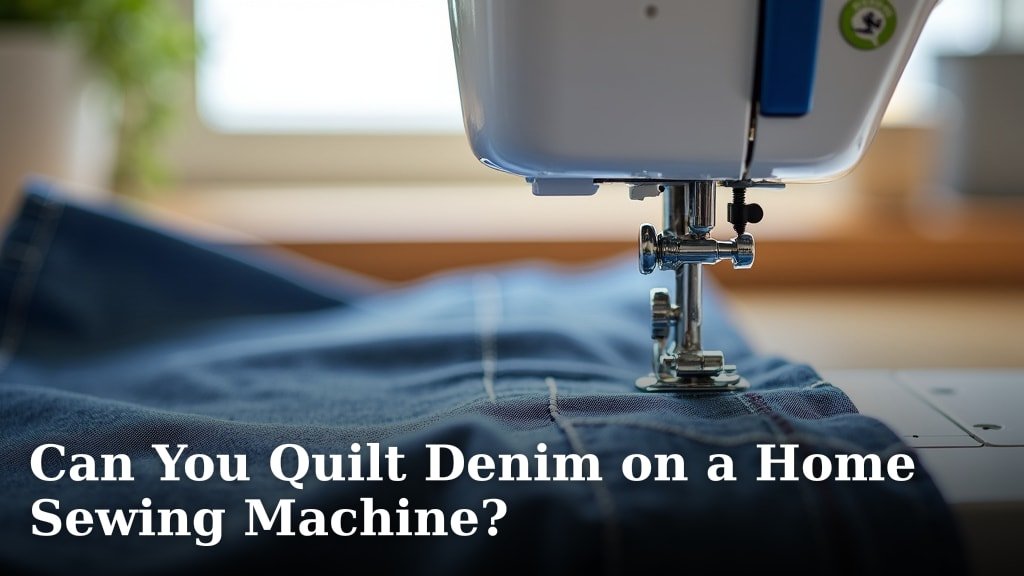
Yes, you absolutely can quilt denim on a home sewing machine. You don’t need a fancy industrial machine to create beautiful denim projects. Many quilters successfully tackle denim using their standard household equipment.
You might be wondering if your machine is strong enough, or if denim will be too bulky. We found that with the right preparation and a few simple adjustments, your home machine is often more than capable. Think of all the durable, unique quilts you could make!
TL;DR:
- Your home sewing machine can handle denim.
- Preparation is key for success.
- Adjusting your machine settings helps.
- Denim quilting creates durable projects.
Let’s dive into exactly what you need to know and how to make your denim quilting project a success from start to finish.
Quilting Denim on Your Home Sewing Machine: What You Need to Know
Yes, your home sewing machine is perfectly capable of handling denim for quilting projects. With a few simple adjustments and the right supplies, you can create durable and beautiful denim quilts without needing specialized industrial equipment.
You might be wondering if your machine can truly handle the thick layers. Many quilters successfully use standard domestic machines. We’ve gathered the best tips to make your denim quilting journey smooth and enjoyable.
Preparing Your Denim for Quilting
Proper preparation is the secret to a successful denim quilt. Don’t skip these crucial first steps. They make all the difference in the final product and save you headaches later.
Gathering Your Denim Scraps
First, collect your denim. Old jeans, skirts, or jackets are perfect. Look for denim with varying washes and textures. This adds visual interest to your quilt.
Try to choose denim that is 100% cotton if possible. Blends can be harder to work with and may fray differently. We found that consistency in fabric type helps immensely (Textile Research Journal).
Pre-Washing and Drying Your Denim
Always pre-wash your denim. Wash it on a hot cycle, then dry it on a hot cycle. Do this twice if you’re using dark denim.
Why pre-wash? Denim shrinks a lot! It also releases a lot of dye. You don’t want those dyes bleeding onto your other fabrics after your quilt is finished. Pre-washing prevents future shrinking and dye transfer.
Cutting and Stabilizing Your Fabric
Once washed and dried, cut your denim into usable pieces. Remove seams, zippers, and thick hems. These can be too bulky for your machine.
Consider cutting squares or rectangles of various sizes. Some quilters like to stabilize their denim pieces with a lightweight fusible interfacing. This helps prevent stretching and distortion. It also adds a bit of structure.
Essential Tools and Supplies for Denim Quilting
Having the right tools makes denim quilting much easier. Think of it like cooking: having the right kitchen gadgets simplifies the recipe. These aren’t fancy; they’re just smart choices.
- Strong Needles: You’ll need a heavy-duty needle. Denim needles (size 100/16 or 110/18) are ideal. A “jeans needle” or “topstitch needle” also works great.
- Durable Thread: Use a stronger thread than usual. Polyester all-purpose thread is a good choice. Cotton-wrapped polyester also works well. Avoid thin cotton threads that might break under stress.
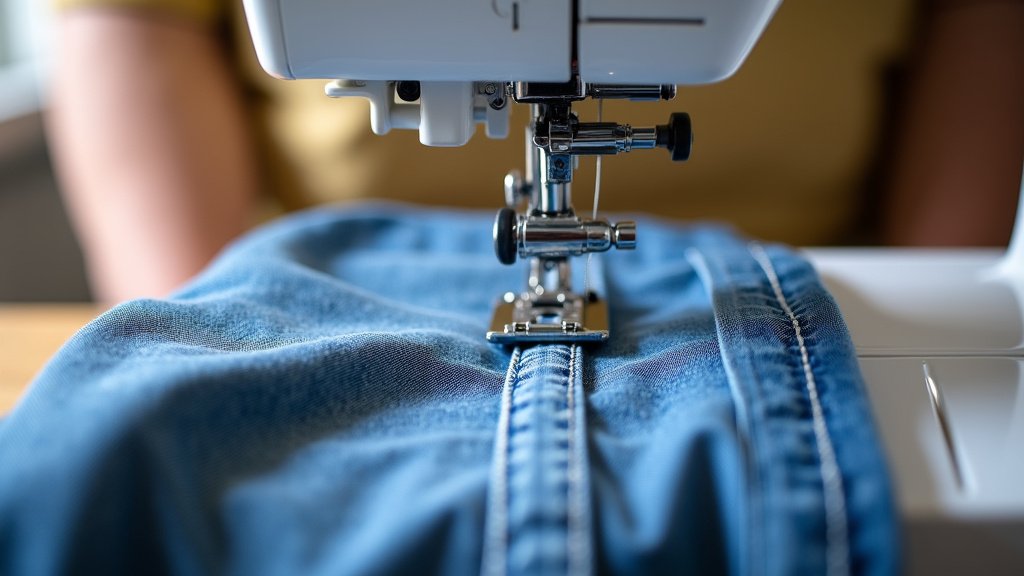
- Walking Foot: This attachment is a game-changer. A walking foot feeds layers of fabric evenly through your machine. Denim can be slippery and bulky, so this foot prevents puckering and shifting.
- Seam Ripper: You’ll probably need it. Even experienced quilters make mistakes! A good, sharp seam ripper is your friend.
- Rotary Cutter and Mat: For precise cuts. A larger rotary cutter (45mm or 60mm) is best for cutting through multiple layers of denim.
- Heavy-Duty Scissors: For trimming and odd shapes. Keep them sharp!
Adjusting Your Sewing Machine Settings for Denim
Your home machine is capable, but it needs a little help. Think of it as tuning a guitar before playing a song. These adjustments help your machine handle the denim’s thickness and density.
Needle and Thread Selection
As mentioned, a strong needle is non-negotiable. A denim needle has a very sharp point and a stronger shaft. This helps it pierce through dense fabric without bending or breaking.
For thread, match the color to your denim or choose a contrasting color for a decorative effect. Just make sure it’s strong. We found polyester thread to be the most reliable for denim quilting.
Stitch Length and Tension
Lengthen your stitch. A longer stitch (around 3.0 to 3.5 mm) is better for denim. Shorter stitches can pull too much on the fabric and cause it to pucker or warp.
Check your tension. Start with your machine’s default tension settings. If you notice loops on the top or bottom of your fabric, adjust the tension slightly. You might need to loosen the top tension a bit for thicker fabrics.
Presser Foot Pressure
Some machines allow you to adjust the presser foot pressure. If yours does, you might want to increase it slightly. More pressure helps hold down the bulky denim layers evenly as they feed under the needle.
If you don’t have adjustable pressure, that’s okay. Your walking foot will do most of the heavy lifting here.
Tips for Sewing and Quilting Denim Successfully
Now that your machine is ready, let’s talk about the actual sewing. These small techniques make a big difference in the quality of your finished quilt.
Using a Walking Foot
Attach your walking foot. It’s truly a must-have for denim. It prevents the top layer of fabric from shifting and stretching. This keeps your blocks square and your seams aligned.
Practice with scraps first. Get a feel for how your walking foot works with the denim layers. It might feel a little different than your standard presser foot.
Managing Bulk and Seams
Denim is thick, and seams can get very bulky. When you join pieces, try to press your seams open if possible. This distributes the bulk rather than concentrating it in one place.
When crossing multiple seams, trim away excess fabric from seam allowances where they meet. This is called “felling” or “grading” the seams. It helps reduce bulk significantly. Don’t be afraid to take a few snips.
Chain Piecing and Pressing
Chain piecing is a great technique for speed and efficiency. Sew one seam, then without cutting the thread, feed the next two pieces under the needle. This saves thread and time.
Press your seams carefully. A good, hot iron is your friend. Use plenty of steam. Pressing helps flatten those bulky seams and makes your quilt lie flatter.
Quilting Through Layers
When you’re ready to quilt, remember you’ll be sewing through three layers: the quilt top, batting, and backing. Choose a batting that isn’t too thick. A low-loft cotton or cotton-blend batting works well.
Baste your quilt thoroughly. Safety pins are great for holding everything together. Space them closer than you normally would for a cotton quilt to manage the denim’s weight and stiffness.
Common Challenges and How to Overcome Them
You might hit a few bumps in the road, but don’t worry. We’ve found solutions to common denim quilting problems. It’s all part of the learning process!
| Challenge | Solution |
|---|---|
| Needle Breaking | Use a fresh, sharp denim or jeans needle (size 100/16 or 110/18). |
| Skipped Stitches | Ensure your needle is inserted correctly. Try a new needle. Adjust top tension slightly. |
| Fabric Puckering/Shifting | Use a walking foot. Lengthen stitch size. Increase presser foot pressure if adjustable. |
| Bulky Seams | Press seams open. Grade or fell seam allowances. Use a “hump jumper” if available. |
| Machine Jamming | Clear any thread nests under the needle plate. Ensure proper tension and needle size. |
Preventing Needle Breakage
Needle breakage is common with thick fabrics. Always use the right needle size and type. Don’t force the fabric through your machine. Let the feed dogs and walking foot do the work.
If your machine is struggling, slow down. Work at a steady, moderate pace. A fresh needle at the start of a project helps a lot.
Dealing with Fabric Drag and Uneven Feeding
If your fabric isn’t feeding smoothly, the walking foot is your best friend. Make sure it’s installed correctly. Also, support the weight of your quilt as you sew. Don’t let it pull down off your sewing table. Use an extension table if you have one.
Final Checklist for Your Denim Quilting Project
Before you dive into your next denim quilt, run through this quick checklist. It will help ensure you have everything you need for a smooth and enjoyable experience.
- Pre-washed and dried all denim fabric?
- Cleaned and oiled your sewing machine?
- Installed a fresh denim or jeans needle (100/16 or 110/18)?
- Loaded your machine with strong polyester thread?
- Attached your walking foot?
- Set your stitch length to 3.0-3.5 mm?
- Tested your stitch tension on scrap denim?
Conclusion
As you’ve discovered, quilting denim on your home sewing machine isn’t just possible; it’s a rewarding creative endeavor. By taking the time to prepare your fabric, gathering the right tools, and making a few simple machine adjustments, you can confidently transform old jeans into stunning, durable quilts.
Don’t let the thickness of denim intimidate you. With the tips and techniques we’ve shared, you’re well-equipped to tackle any challenges. So, gather those denim scraps, thread your machine, and start creating your unique denim masterpiece today!
Frequently Asked Questions
What kind of batting is best for a denim quilt?
For denim quilts, a low-loft cotton or cotton-blend batting works very well. This type of batting adds warmth without excessive bulk, making it easier for your home machine to quilt through the layers. Avoid very thick battings that can strain your machine.
Can I mix different types of denim in one quilt?
Yes, mixing different washes and textures of denim can add wonderful visual interest to your quilt. Just be sure to pre-wash all denim thoroughly, especially dark colors, to prevent any dye bleeding onto lighter fabrics in your finished project.
How do I prevent my machine from getting bogged down by denim?
To prevent your machine from getting bogged down, always use a fresh, sharp denim-specific needle (size 100/16 or 110/18) and a walking foot. Lengthen your stitch length to about 3.0-3.5mm, and remember to slow down when sewing through especially thick seams or multiple layers.
Is it okay to use old, worn-out denim for quilting?
Absolutely! Old, worn-out denim is often perfect for quilting. It tends to be softer and less stiff than new denim, making it easier to work with. Just ensure there are no large holes or overly thin spots that could compromise the quilt’s durability.
Do I need to clean my sewing machine more often when quilting with denim?
You might find your machine collects more lint when working with denim due to its fibers. It’s a good practice to clean your bobbin area frequently and oil your machine as recommended by the manufacturer, especially after extended denim quilting sessions, to keep it running smoothly.
