
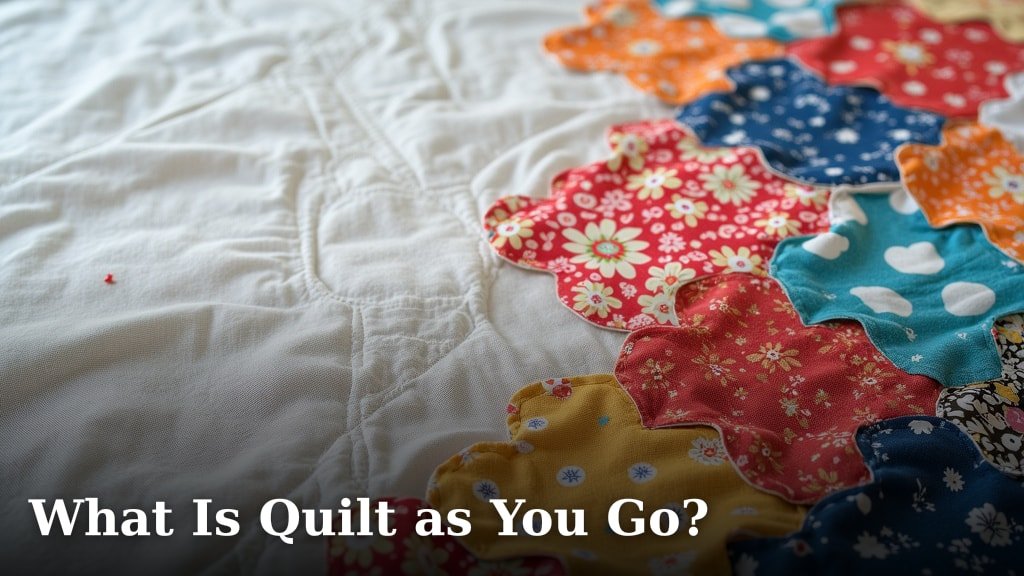
Quilt as You Go (QAYG) is a quilting technique where you quilt individual blocks or sections of your project as you go, rather than quilting the entire finished top at once. This method lets you complete small sections before joining them, making large projects feel much more manageable. We found that quilters use this for speed and ease.
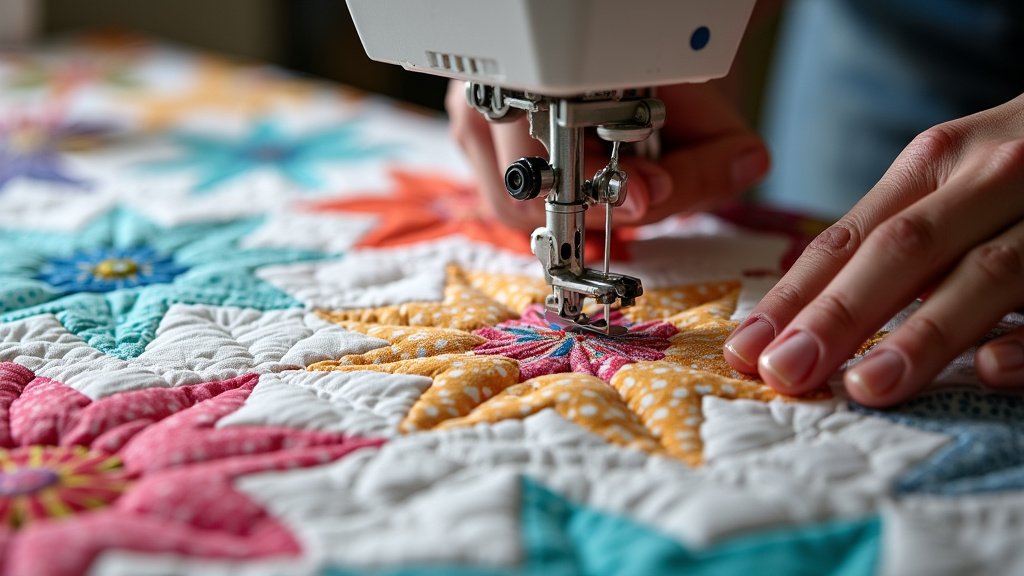
This approach breaks down large quilting tasks into smaller, more achievable steps. You might quilt a single block, then trim it, and then join it to another pre-quilted block. This method is especially helpful for those with smaller domestic sewing machines, as you avoid wrestling a large quilt under the needle.
TL;DR: Quilt as You Go
- Quilting blocks individually.
- Joining pre-quilted sections.
- Great for large projects.
- Easier on domestic sewing machines.
- A time-saving quilting method.
So, why would you choose this method? Let’s explore the ins and outs of Quilt as You Go, including its benefits and how it works.
Understanding the Quilt as You Go Method
Quilt as You Go (QAYG) is a clever quilting technique that helps you manage larger projects with less fuss. You quilt small parts of your project one step at a time.
Instead of struggling with a huge quilt under your machine, you work on individual blocks or sections. You finish quilting these smaller pieces first. Then, you join them together to build your complete quilt top.
The Core Idea Behind QAYG
Think of it like building with LEGOs. You finish one small brick, then another, then you connect them. With QAYG, each “brick” is a quilted block. This method helps you avoid the biggest challenge of traditional quilting: wrestling a large, bulky quilt under your domestic sewing machine.
Why It’s a Game Changer for Many Quilters
We found that many quilters struggle with the sheer size and weight of a finished quilt top when it comes time to quilt it. A typical queen-sized quilt can be heavy and hard to maneuver. QAYG changes all of that by breaking the project into manageable chunks. This makes quilting much less intimidating.
How Quilt as You Go Works: A Step-by-Step Overview
The basic process is quite straightforward. You prepare your quilt blocks or sections as you normally would. This means cutting your fabric, piecing it together, and making your design.
The big difference comes next. Instead of just putting these blocks aside, you add batting and backing to each individual block. Then, you quilt each block. Only after each section is quilted do you join them together.
Choosing Your Method: Block-by-Block vs. Strip-by-Strip
There are a few ways to approach QAYG. You can quilt individual blocks and then join them. Or, you might quilt long strips of blocks together. The method you choose often depends on your quilt design and personal preference.
We found that many beginners start with block-by-block QAYG because it’s easier to visualize. Strip-by-strip QAYG can be faster for certain designs, especially those with repetitive patterns.
What You Need to Get Started with QAYG
The good news is you probably have most of the supplies already. You’ll need your usual quilting tools. This includes your sewing machine, fabric, batting, and backing material.
- Sewing Machine: Your domestic machine will work perfectly.
- Fabric: For your quilt top, backing, and binding.
- Batting: Cut to size for each individual block or section.
- Thread: For piecing and quilting.
- Rotary Cutter, Mat, and Ruler: For precise cuts.
- Pins or Clips: To hold layers together.
The main difference in supplies is how you cut your batting and backing. You’ll cut them into smaller pieces to match your individual quilt blocks or sections.
Key Benefits of Using Quilt as You Go
Many quilters choose QAYG for several compelling reasons. It can make quilting more accessible and enjoyable. We found that these benefits are often cited by those who regularly use the technique.
1. Easier on Your Machine and Body
This is arguably the biggest advantage. You don’t have to push and pull a huge, heavy quilt through your machine. Your shoulders, back, and arms will thank you! This is especially true for those with smaller sewing spaces or physical limitations.
2. Perfect for Domestic Sewing Machines
If you don’t have a long-arm quilting machine, QAYG is a lifesaver. Your standard home sewing machine can easily handle the smaller individual blocks. This means you can achieve beautiful quilting results without investing in expensive equipment.
3. Portability and Manageability
Working on smaller sections means your project is always more portable. You can take a single block with you to quilt on the go. It’s also easier to store a few blocks than an entire quilt top awaiting quilting.
4. Faster Finishing Time (Often)
While you might spend a little more time joining the blocks, the actual quilting process can feel faster. You get the satisfaction of completing small sections quickly. This can keep your motivation high and help you see progress sooner.
5. Great for Beginners and Complex Designs
For beginners, QAYG offers a less daunting entry into quilting. For experienced quilters, it allows for more intricate quilting on individual blocks without the stress of managing a large piece. You can experiment with different quilting motifs on each block.
Potential Downsides to Consider
No technique is perfect for everyone. While QAYG has many advantages, it’s important to be aware of its potential drawbacks. We found these are the most common concerns for quilters.
1. Visible Seams Between Blocks
Because you’re joining pre-quilted blocks, the seams where you connect them will be slightly more prominent. These are often covered with sashing or decorative strips, but they will still be there. Some quilters love this look, while others prefer a seamless finish.
2. Extra Steps for Joining
Joining the quilted blocks together adds extra steps to your process. You’ll need to carefully align them, sew them, and then finish the seams on the back. This can sometimes feel tedious compared to just quilting a finished top.
3. Requires Precision in Cutting and Quilting
To ensure your blocks fit together neatly, precise cutting and quilting are crucial. Any slight variations can make joining them a bit tricky. We found that taking your time with measurements pays off here.
Comparing QAYG to Traditional Quilting
To help you decide if QAYG is right for your next project, let’s look at how it stacks up against traditional quilting methods. Both have their place in the quilting world.
| Feature | Quilt as You Go (QAYG) | Traditional Quilting |
|---|---|---|
| Quilting Process | Quilt individual blocks/sections. | Quilt entire assembled top, batting, and backing at once. |
| Machine Suitability | Excellent for domestic machines. | Easier on long-arm machines; challenging for large quilts on domestic machines. |
| Project Manageability | High; work in small, portable segments. | Can be bulky and heavy, especially for large quilts. |
| Seam Appearance | Connecting seams are visible (often covered with sashing). | Quilting design flows continuously across the top; seams are hidden. |
| Time Investment | Quilting is faster per block; joining takes extra time. | Quilting can be slower and more physically demanding for large quilts. |
| Best For | Large quilts, beginners, complex block-specific quilting. | Seamless overall quilting designs, simple designs, experienced quilters. |
Is Quilt as You Go Right for You?
Consider your comfort level, your machine, and your project size. If you’re tired of fighting with a giant quilt under your needle, QAYG might be your new favorite technique. It offers a fresh perspective on tackling large quilting projects.
We encourage you to give it a try. Maybe start with a small project like a placemat or a baby quilt to get a feel for it. You might find it opens up a whole new world of quilting possibilities!
Checklist for Deciding on QAYG
- Are you quilting a large project (queen, king size)?
- Do you primarily use a domestic sewing machine?
- Do you find traditional quilting physically challenging?
- Are you okay with slightly visible joining seams?
- Do you enjoy seeing progress on smaller sections quickly?
Conclusion
Quilt as You Go truly offers a refreshing way to approach your quilting projects. If wrestling with large quilts has held you back, this technique can transform your experience. You can enjoy the process more, especially with a domestic sewing machine. Remember, visible seams are part of the charm, often hidden with sashing.
We found that many quilters appreciate the manageable steps and quicker sense of accomplishment. It’s perfect for both beginners and seasoned quilters looking for a less strenuous method. Why not try a small QAYG project soon? You might just discover your new favorite quilting technique.
Frequently Asked Questions
Is Quilt as You Go stronger than traditional quilting?
The durability of a QAYG quilt is generally comparable to a traditionally quilted one. The strength comes from the quality of your stitching and materials, not just the method. We found proper seam finishing is key for longevity in both styles.
Can you wash a Quilt as You Go quilt?
Absolutely, you can wash a Quilt as You Go quilt just like any other quilt. We suggest following the care instructions for your fabric and batting. Gentle cycles and air drying often help preserve your quilt for years to come.
Do you need special batting for QAYG?
No, you don’t need special batting for Quilt as You Go. You use the same type of batting you would for traditional quilting. The main difference is cutting it into smaller pieces to fit your individual blocks or sections before quilting.
What kind of thread is best for QAYG?
For Quilt as You Go, we recommend using a good quality 100% cotton thread for both piecing and quilting. This ensures durability and blends well with most quilting fabrics. Choose a thread color that matches or complements your fabrics.
Can I combine QAYG with traditional quilting methods?
Yes, you can certainly combine these methods in one project! For instance, you might quilt a central medallion using traditional methods, then add QAYG borders. This allows for creative flexibility and playing to the strengths of each technique.
