
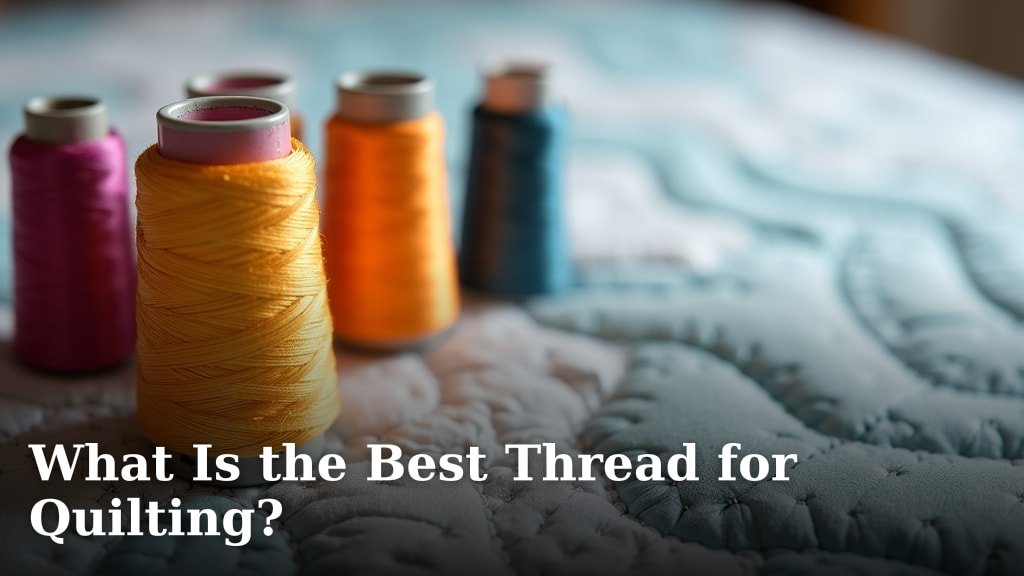
There isn’t one single “best” thread for quilting because the ideal choice depends on your project and personal preferences. We found that 100% cotton thread is generally the most popular and versatile for many quilters due to its natural fibers and strength. However, your fabric, machine, and desired finished look all play a role in selecting the perfect quilting thread.
Choosing the right thread can feel like a puzzle, right? You want something that holds your beautiful quilt together but also looks good and doesn’t cause headaches. We found that quilters often balance factors like thread material, weight, and color. Understanding these differences helps you make a confident decision and avoid common frustrations like thread breaking or skipped stitches. It really comes down to what you’re trying to achieve with your unique quilting project.
- The “best” thread depends on your specific quilt.
- 100% cotton is a popular and versatile choice.
- Consider thread material, weight, and color.
- Match thread to your fabric and machine.
- Avoid common issues by choosing wisely.
Let’s dive into the details so you can confidently pick the perfect thread for your next stunning quilt. We’ll break down the different types and what makes each one special.
Finding Your Perfect Quilting Thread: A Guide
The “best” thread for your quilt ultimately depends on what you’re making and how you’re making it. It’s a personal journey to find what works for you.
You might be wondering, “Where do I even start?” We understand. With so many choices, it can feel overwhelming. Let’s break down the main types of thread you’ll encounter and why each one might be a good fit for your next project. We found that understanding the properties of each thread type is key to making a confident decision.
Understanding Thread Material: What’s It Made Of?
The material of your thread is perhaps the most important factor to consider. It affects everything from strength to how it feels and looks in your quilt. We’ll look at the most common materials quilters use.
Cotton Thread: The Quilter’s Favorite
For many quilters, 100% cotton thread is the go-to choice. Why? We found it behaves beautifully with cotton quilting fabrics, which are also a natural fiber. This creates a harmonious blend that stands the test of time.
- Strength: Cotton thread is strong enough for most quilting tasks.
- Shrinkage: It shrinks at a similar rate to cotton fabric, helping to prevent puckering.
- Feel: It has a soft, matte finish that blends well into the fabric.
- Availability: You’ll find a huge range of colors and weights.
- Versatility: Great for piecing, machine quilting, and even hand quilting.
However, we found that not all cotton threads are created equal. You’ll hear terms like “long-staple cotton.” This just means the cotton fibers are longer, making the thread stronger and less prone to lint (National Cotton Council of America). It’s a good sign of quality.
Polyester Thread: Strong and Smooth
Polyester thread is a synthetic option known for its excellent strength and low lint. If you’ve had issues with thread breaking, polyester might be a good alternative. It’s often thinner than cotton threads of the same weight.
- Strength: Very strong and durable, resisting breakage.
- Smoothness: Glides through fabric and your machine easily.
- Colorfastness: Generally holds its color well.
- Shrinkage: Minimal to no shrinkage, which can sometimes cause puckering if your fabric shrinks a lot.
- Sheen: Can have a slight sheen, which some quilters love and others prefer to avoid.
We found that many quilters use polyester for piecing because of its strength, especially for quilts that will see a lot of use or washing. It’s also a popular choice for machine quilting, particularly for dense quilting where strength is paramount.
Rayon Thread: For Decorative Touches
While less common for construction, rayon thread is beautiful for decorative machine embroidery and quilting. It has a high sheen that really makes designs pop. Think of it as the jewelry for your quilt.
- Lustrous Finish: Creates a beautiful, silky shine.
- Smooth: Runs well through embroidery machines.
- Vibrant Colors: Known for its intense and bright color options.
- Strength: Not as strong as cotton or polyester for piecing; best for surface decoration.
You wouldn’t typically use rayon for piecing your quilt blocks together. We found it’s best reserved for those special embellishment moments where you want a bit of sparkle (Bernina).
Specialty Threads: Metallics, Silks, and More
Beyond the basics, there’s a whole world of specialty threads! These are used for specific effects. We’re talking metallic threads for sparkle, silk threads for a luxurious feel, or even invisible monofilament thread for a “stitch in the ditch” look.
- Metallic: Adds shimmer, but can be tricky to work with.
- Silk: Smooth, strong for its fineness, with a beautiful drape and subtle sheen. Excellent for hand quilting.
- Invisible (Monofilament): Great for blending, but can be stiff or shiny. Comes in nylon or polyester.
When working with specialty threads, you might need to adjust your machine settings, needle type, or even tension. Don’t be afraid to experiment on a scrap piece first!
Understanding Thread Weight: What Do the Numbers Mean?
You’ll see numbers like “40wt” or “50wt” on your thread spools. This refers to the thread’s weight or thickness. Confusingly, a higher number means a thinner thread. So, 50wt is thinner than 30wt.
- 50wt: A common all-purpose weight, great for piecing and general quilting. Blends into the fabric well.
- 40wt: Slightly thicker, offering more definition for machine quilting. Good for both piecing and quilting.
- 30wt: Thicker still, excellent for decorative topstitching or when you want your quilting stitches to stand out.
- 80wt or 100wt: Very fine, often used for delicate machine applique or when you want the thread to disappear completely.
We found that for most general quilting and piecing, a 50wt 100% cotton thread is a fantastic starting point. It offers a good balance of strength and blending ability. If you’re unsure, 50wt is usually a safe bet.
Color Choice: To Blend or to Pop?
Choosing the right thread color can really make your quilt sing. Do you want your stitches to disappear, or do you want them to be a design element? This is where your personal artistic vision comes into play.
Blending Threads
When you want your piecing or quilting stitches to be invisible, pick a thread color that matches the dominant or darkest fabric in that area. Another trick is to use a neutral color like light gray, tan, or even white. We found that these neutrals often blend surprisingly well across a variety of fabrics.
Contrasting Threads
If you want your quilting stitches to stand out and become part of the design, choose a thread color that contrasts with your fabric. For example, a bright yellow thread on a dark blue fabric will really pop. This is especially effective for decorative machine quilting.
Consider the overall feel of your quilt. A subtle, tone-on-tone approach creates a softer look, while high contrast makes a bold statement. There’s no right or wrong, only what you envision!
Matching Thread to Your Machine and Needle
It’s not just about the quilt; your sewing machine has opinions too! We found that a good thread choice works in harmony with your machine and your needle. Using the wrong combination can lead to frustrating issues like skipped stitches or thread breaks.
Needle Size Matters
A simple rule of thumb: thicker thread needs a larger needle eye. If your needle eye is too small for your thread, it will create friction, causing fraying and breakage. For 50wt cotton, a universal 80/12 needle is often a good start. For thicker threads like 30wt, you might need a 90/14 or even a topstitch needle with a larger eye (SCHMETZ Needles).
Machine Tension
Always test your thread and fabric combination on a scrap before you start on your quilt. This lets you adjust your machine’s tension if needed. We found that most machines handle a good quality cotton or polyester thread without much fuss, but specialty threads may require more tweaking.
The Quality Factor: Why It’s Worth It
You’ve poured hours into choosing your fabrics and piecing your quilt top. Don’t skimp on the thread! Investing in good quality thread can save you a lot of headaches in the long run. We found that cheap threads are often made from shorter fibers, which means more lint in your machine and more breakage.
Think of it this way: thread is the foundation holding your beautiful quilt together. A strong, consistent thread will prevent your stitches from breaking and will last longer, ensuring your quilt can be loved for years to come (American Quilter’s Society).
Your Quilting Thread Checklist
To help you decide, here’s a quick checklist to guide your thread choice:
- Fabric Type: Is your fabric cotton? Match with cotton thread for best results.
- Project Goal: Is it for piecing, machine quilting, or decorative touches?
- Desired Visibility: Do you want the stitches to blend or stand out?
- Thread Weight: 50wt is versatile; adjust for thicker or finer stitches.
- Machine Compatibility: Does your needle size match your chosen thread weight?
- Quality: Opt for high-quality, low-lint threads to prevent frustration.
| Thread Type | Best Use Cases | Pros | Cons |
|---|---|---|---|
| 100% Cotton | Piecing, machine quilting, hand quilting | Blends well, shrinks with fabric, natural look | Can generate lint, not as strong as poly |
| Polyester | Piecing, machine quilting, high-wear quilts | Very strong, low lint, smooth running | Slight sheen, minimal shrinkage (potential puckering) |
| Rayon | Decorative machine embroidery, surface quilting | High sheen, vibrant colors, very smooth | Not for construction, less durable than cotton/poly |
| Specialty (e.g., Metallic) | Embellishment, specific visual effects | Unique look, sparkle | Can be tricky to work with, expensive |
Conclusion
You’ve now got a solid understanding of quilting threads! There’s truly no single “best” thread, but rather the ideal choice for your specific project. We found that matching your thread to your fabric, machine, and desired finished look is key. Remember, a good quality thread is an investment in your quilt’s longevity.
Don’t be afraid to experiment with different types and weights. The most important thing is that you feel confident in your choice. Take this knowledge, pull out your fabric, and confidently pick the perfect thread to bring your next stunning quilt vision to life!
Frequently Asked Questions
Can I use all-purpose sewing thread for quilting?
While you technically can, we found it’s not ideal for serious quilting. All-purpose thread is often made of polyester and might have a sheen or strength that doesn’t blend as well with cotton quilting fabrics. It could also be prone to puckering over time.
What’s the difference between machine quilting thread and piecing thread?
Piecing thread (often 50wt cotton) is usually finer and designed to blend invisibly into seams, creating a flat block. Machine quilting thread can be the same, or it might be slightly thicker (like 40wt) to make the stitches stand out more as a design element.
Why does my thread keep breaking while I’m quilting?
Thread breakage can be frustrating! We found common culprits include using a poor quality thread, an old or incorrect needle for your thread weight, incorrect machine tension, or too much friction on the thread path. Try troubleshooting these areas first.
Is it okay to mix different thread brands or types in one quilt?
Yes, you can definitely mix them! For instance, you might use 50wt cotton for piecing and then switch to a 40wt polyester for machine quilting. Just ensure the threads you’re mixing have similar care instructions and will hold up equally well over time.
How do I store my quilting threads to keep them in good condition?
We found that storing threads away from direct sunlight, dust, and extreme temperatures is best. Keep them on their spools in closed containers or drawers. This prevents dust buildup, fading, and keeps them from tangling, ensuring they’re ready when you need them.
