
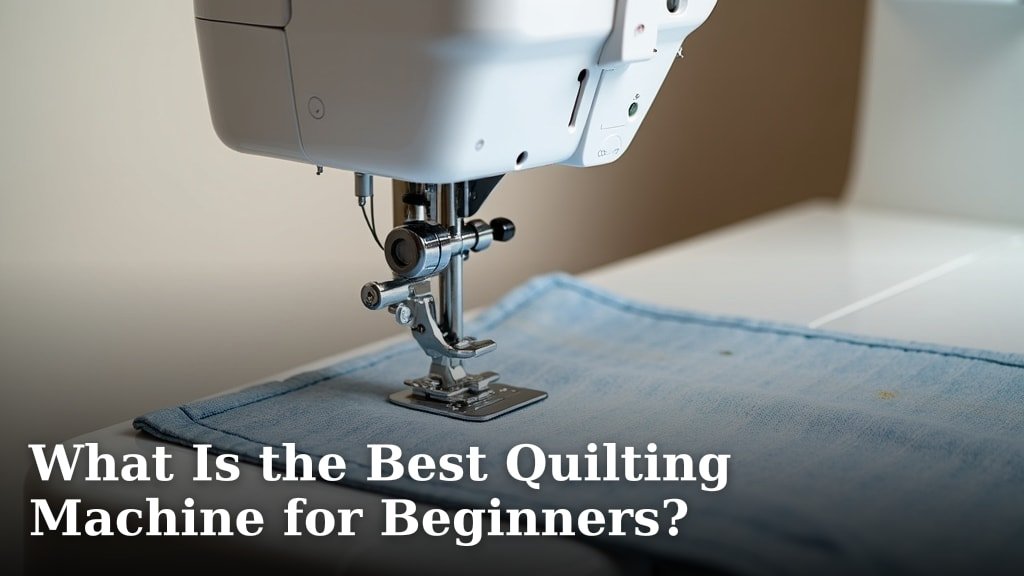
The best quilting machine for beginners is often a simple, mechanical sewing machine that focuses on essential stitches and ease of use. You don’t need fancy features when you’re just starting out.
We found that many beginners find success with machines known for their reliability and straightforward operation. Look for models that offer clear stitch selection and a comfortable workspace. A good beginner machine lets you learn the basics without feeling overwhelmed.
- Simple, mechanical machines are often best.
- Look for easy-to-use controls.
- Reliability is key for new quilters.
- Avoid overly complex features at first.
Ready to find your perfect first quilting machine? Let’s walk through the options and what makes a machine great for new quilters.
Finding Your Ideal First Quilting Machine
The best quilting machine for you, as a beginner, is one that simplifies the learning process. It should be reliable, user-friendly, and focus on fundamental stitching capabilities.
You’re not looking for a machine to launch a quilting empire. You need one to help you take your very first steps. Think of it as training wheels for your creative journey.
Understanding Machine Types: Mechanical vs. Computerized
When you start looking at machines, you’ll see two main categories: mechanical and computerized. What’s the difference, and why does it matter for you?
Mechanical Sewing Machines
These are the workhorses. Mechanical machines use knobs and levers to adjust stitches. They are often less expensive and very durable.
- They are generally easier to repair.
- Controls are typically physical dials you can feel.
- Fewer features mean less to get confused by.
- Many quilters swear by their simplicity and longevity.
If you prefer a hands-on approach and want to understand how each setting changes your stitch, a mechanical machine might be perfect. We found that many beginners appreciate their straightforward nature.
Computerized Sewing Machines
Computerized machines have digital screens and buttons. They offer more stitch options and often include features like automatic needle threading or programmable patterns.
- They can have hundreds of stitch types.
- Often include automatic features.
- May offer precise speed control.
- They can feel more “modern” to use.
For a beginner, the extra features can sometimes be overwhelming. It’s like buying a sports car when you’re still learning to drive. While exciting, it might have too many controls for comfort.
We found that beginners often fare better with mechanical models. They help you build a solid foundation without distraction. The basics are all you need at first.
Key Features to Prioritize for Your First Quilting Machine
What specific things should you look for? Don’t get lost in the sea of specifications. Focus on these critical elements.
Stitch Selection
You truly only need a few stitches for quilting. The most important is a good straight stitch. This is your bread and butter for piecing quilt blocks together.
A zigzag stitch is also useful, perhaps for appliqué or finishing edges. Anything beyond that is a bonus, not a requirement. Don’t pay extra for 500 decorative stitches you won’t use yet.
Adjustable Stitch Length and Width
Being able to adjust your stitch length is super important. You’ll want a shorter stitch for piecing quilts to make sure your seams are strong. Longer stitches are good for basting.
Adjustable width is mainly for zigzag stitches. It lets you control how wide your zigzag is. These simple adjustments give you much more control over your project.
Built-in Needle Threader
Oh, what a small convenience this is! A built-in needle threader can save you a lot of frustration, especially if your eyesight isn’t what it used to be. Many machines, even basic ones, have this now.
It’s not essential, but it’s certainly a feature that makes the process more enjoyable. Think of it as a helpful little assistant built right into your machine.
Top-Loading Bobbin (Drop-in Bobbin)
This is a big one for ease of use. A top-loading or drop-in bobbin is much simpler to access and thread than a front-loading one. You can see how much thread is left, too.
No more fumbling around under your machine. Just drop it in, follow the arrow, and you’re ready to go. We found this feature consistently praised by new quilters.
Free Arm Capability
A “free arm” means you can remove part of the sewing bed to reveal a narrower arm. This is handy for sewing small, circular items like sleeves or pant hems. While not critical for flat quilt blocks, it is useful for other sewing projects you might do.
It adds versatility to your machine, which is always a plus. You might start with quilting, but who knows where your creativity will take you?
What Not to Worry About (Yet!)
Many advanced features sound great, but for a beginner, they can just add to the cost and confusion. Let’s talk about what you can safely ignore for now.
- Automatic Thread Cutter: Nice, but not necessary. Your scissors work just fine.
- Knee Lift: This feature allows you to lift the presser foot with your knee. Useful for hands-free work, but definitely an advanced comfort.
- Speed Control Slider: While helpful, most beginner machines have a foot pedal that gives you plenty of speed control.
- Embroidery or Monogramming Features: These are usually on much more expensive machines. Don’t pay for these if your goal is quilting.
- Hundreds of Decorative Stitches: A few are fun, but you won’t use most of them for traditional quilting.
Focus on functionality first. You can always upgrade later if quilting truly becomes your passion. Your first machine is for learning, not for forever.
Budgeting for Your First Quilting Machine
How much should you expect to spend? You don’t need to break the bank. We found that excellent beginner machines often fall within a specific price range.
You can find a very capable beginner quilting machine for anywhere from $150 to $300. Sometimes even less if you catch a sale. More expensive machines often have features you won’t use yet.
Be wary of extremely cheap machines (under $100). They might lack durability and frustrate you. A slightly higher investment often means a much smoother experience. Quality construction helps with smooth stitching, which is important for even seams (Consumer Reports).
Testing a Machine Before You Buy
If possible, try before you buy! Visiting a local sewing machine dealer is a great idea. They can answer questions and let you sit down at a machine.
Ask if you can sew a few lines on some fabric. Pay attention to how it feels. Is it comfortable? Is the foot pedal responsive? Can you easily see what you’re doing?
Think about these questions during your test drive:
- Does the machine feel sturdy and stable?
- Are the controls easy to understand and reach?
- Does it make a lot of noise?
- Can you thread the needle and bobbin without a struggle?
- Is the workspace well-lit?
Even if you plan to buy online for a better price, trying out models in person can help you narrow down your choices. It’s like test-driving a car before you buy it online.
Recommended Beginner-Friendly Brands
Certain brands consistently get high marks for their beginner models. While specific models change, these brands are known for reliability and user-friendliness:
| Brand | Known For | Why It’s Good for Beginners |
|---|---|---|
| Singer | Affordability, common parts | Many simple, mechanical models; good starting point. |
| Brother | User-friendly, good features for price | Clear instructions, often include top-loading bobbins. |
| Janome | Durability, smooth operation | Solid construction, consistent stitch quality. |
| Bernette (by Bernina) | Quality, entry-level Bernina | Offers Swiss engineering at a more accessible price. |
Choosing a machine from these brands generally means you’re getting a well-supported product. Parts and accessories are often readily available.
Your Beginner Quilting Machine Checklist
Before you commit to a purchase, run through this quick checklist. It will help ensure you’re making a wise choice for your quilting journey.
- Is it a mechanical machine (or a very simple computerized one)?
- Does it have a strong straight stitch?
- Can you easily adjust stitch length?
- Does it have a top-loading/drop-in bobbin?
- Is it within your budget ($150-$300)?
- Does it feel sturdy and easy to use?
If you can answer “yes” to these, you’re likely looking at a fantastic first quilting machine. You’re setting yourself up for success, not frustration.
Conclusion
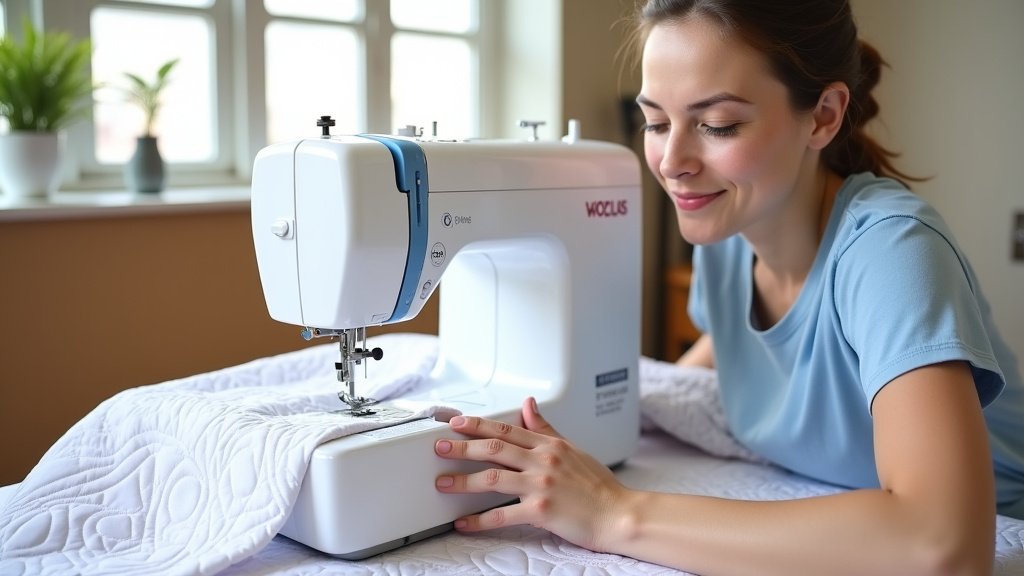
Choosing your first quilting machine doesn’t have to be overwhelming. Remember, the goal is to find a reliable, easy-to-use mechanical machine with essential stitches. We found that focusing on a good straight stitch, adjustable length, and a top-loading bobbin will serve you best. You’re investing in your learning journey, not necessarily your forever machine. Prioritize simplicity and comfort over complex features.
Now, take this knowledge, visit a local dealer if you can, and confidently pick a machine that feels right for you. Your quilting adventure is waiting!
Frequently Asked Questions
How do I maintain my beginner quilting machine?
Regular maintenance is key to a happy machine. We recommend cleaning out lint around the bobbin area after each project. Oiling your machine according to the manufacturer’s instructions is also important. Keep the machine covered when not in use to prevent dust buildup.
Can I quilt on a regular sewing machine?
Absolutely! Most regular sewing machines can handle basic quilting tasks like piecing and straight-line quilting. You might just need a walking foot attachment for better fabric feeding. You don’t need a specialized “quilting” machine to start.
What accessories are essential for a new quilter?
Beyond the machine itself, you’ll want a rotary cutter, a self-healing mat, and an acrylic ruler. These tools make cutting fabric much more precise and enjoyable. A good pair of fabric scissors is also a must-have.
How can I learn to quilt once I have my machine?
There are many resources available! We found that YouTube tutorials, local quilt shops offering classes, and beginner-friendly books are excellent starting points. Practice simple projects first to build your confidence and skills.
Should I buy a new or used quilting machine?
For your first machine, a new one often provides peace of mind with a warranty and support. However, a gently used machine from a reputable dealer can be a great value. Just ensure it’s been serviced and is in good working order.
