
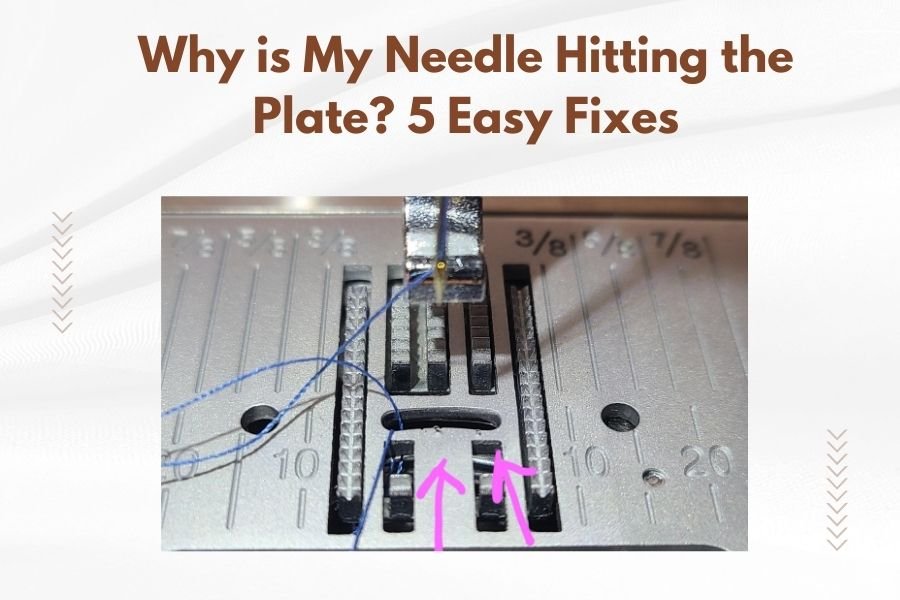
Your needle hits the plate when the timing is off, the needle is bent or wrong size, or the needle bar height needs adjustment.
This common quilting problem can damage your machine, but five simple fixes will get you back to smooth stitching quickly.
What Causes Needle to Plate Contact?
When your needle strikes the throat plate, it makes that awful scraping sound we all dread. Your machine might jam, skip stitches, or break the needle completely.
Think of your sewing machine like a well-choreographed dance. The needle and throat plate must move in perfect harmony. When something throws off this timing, they crash into each other.
The Most Common Culprits
From what I found through research, these five issues cause most needle-hitting-plate problems:
- Wrong needle size or type for your fabric
- Bent or damaged needle
- Incorrect needle bar height
- Machine timing problems
- Throat plate alignment issues
Fix #1: Check Your Needle Size and Type
Are you using the right needle for your project? This simple mistake causes more problems than you might think.
Universal vs. Quilting Needles
Universal needles work for basic sewing. But quilting needles have a special taper that glides through multiple fabric layers better.
I found that many quilters stick with size 80/12 needles for everything. That’s like wearing the same shoes for hiking and dancing – it might work, but it’s not ideal.
Needle Size Chart for Common Fabrics
| Fabric Weight | Needle Size | Best Type |
|---|---|---|
| Light cotton | 70/10 – 80/12 | Quilting or Universal |
| Medium cotton | 80/12 – 90/14 | Quilting |
| Heavy cotton/denim | 100/16 – 110/18 | Denim or Heavy Duty |
| Multiple layers | 90/14 – 100/16 | Quilting |
How to Tell if Your Needle is Wrong
Your machine gives you clues when the needle doesn’t match your fabric:
- Skipped stitches
- Puckered seams
- Thread keeps breaking
- Loud banging noises
Fix #2: Replace Bent or Damaged Needles
Even tiny bends you can’t see with your eyes will throw off your machine’s timing. Needles are cheap – your machine repairs aren’t.
Quick Needle Inspection Test
Remove your needle and roll it on a flat surface. Does it roll smoothly? Or does it wobble like a broken wheel?
A wobbly needle is bent. Replace it immediately.
Signs Your Needle Needs Replacing
- Visible bends or curves
- Dull or damaged point
- Burrs on the shaft
- You’ve been using it for more than 8 hours
Proper Needle Installation
Installing needles wrong causes alignment problems. The flat side of the needle shank must face the back of your machine.
Push the needle up as far as it will go before tightening the screw. A loose needle will shift during sewing and hit the plate.
Fix #3: Adjust Needle Bar Height
Your needle bar might have shifted if you’ve been sewing for years. This adjustment sounds scary, but it’s easier than you think.
How to Check Needle Bar Height
Turn your handwheel until the needle reaches its lowest point. The needle should clear the throat plate by about 1/16 inch.
If the needle goes too low, it scrapes the plate. Too high, and your stitches won’t form properly.
Making the Adjustment
Most machines have a needle bar clamp you can loosen slightly. Adjust the bar up or down, then retighten.
Move in tiny increments. A little adjustment goes a long way.
When to Call a Professional
If you’re not comfortable making this adjustment, take your machine to a repair shop. The cost of professional adjustment beats the cost of a damaged machine.
Fix #4: Address Timing Issues
Machine timing controls when your needle and bobbin hook meet. When timing goes wrong, parts collide.
What Throws Off Timing?
Research from sewing machine technicians shows these common timing disruptors:
- Forcing fabric through the machine
- Pulling fabric while sewing
- Hitting pins with the needle
- Sewing over thick seams without adjustments
Signs of Timing Problems
Your machine tells you when timing is off:
- Skipped stitches
- Loops on the bottom of fabric
- Needle hitting bobbin case
- Thread bunching up
DIY Timing Check
Remove your throat plate and bobbin case. Turn the handwheel slowly and watch the needle and hook timing.
When the needle reaches its lowest point and starts back up, the hook should just catch the thread loop.
Professional Timing Repair
Timing adjustment requires special tools and experience. Most home sewers should leave this to professionals.
A timing repair typically costs $75-150, which is much less than a new machine.
Fix #5: Realign Your Throat Plate
Sometimes the throat plate shifts slightly, creating alignment problems with the needle.
Removing and Cleaning the Throat Plate
Pop out your throat plate and clean away lint buildup. Lint can actually shift the plate position over time.
Look for any cracks or damage while you have it out. A warped throat plate will never align properly.
Proper Throat Plate Installation
When you reinstall the plate, make sure it sits completely flat. The needle hole should be centered under your needle.
Some plates have alignment marks or tabs. Use these to ensure proper positioning.
Checking Needle-to-Plate Clearance
With the plate installed, turn your handwheel by hand. The needle should pass through the center of the hole without touching the sides.
If the needle scrapes one side, your plate alignment is off.
Prevention Tips to Avoid Future Problems
Stopping problems before they start saves you time and money.
Regular Maintenance Schedule
I found that quilters who follow a simple maintenance routine have fewer needle-plate issues:
- Change needles every 8 hours of sewing
- Clean lint from throat plate weekly
- Oil your machine monthly (if required)
- Professional tune-up yearly
Proper Sewing Techniques
How you sew affects your machine’s health:
- Let the feed dogs move the fabric
- Don’t pull or push fabric
- Remove pins before they reach the needle
- Use appropriate presser foot pressure
Quality Thread and Notions
Cheap thread creates more lint and breaks more often. Both problems can throw off your machine timing.
Invest in good cotton or polyester thread from reputable brands. Your machine will thank you.
When to Seek Professional Help
Some problems need expert attention. Don’t risk making things worse.
Red Flags That Need Professional Repair
- Multiple needles breaking in one session
- Loud grinding or clicking noises
- Visible damage to throat plate or needle bar
- Problems persist after trying all five fixes
Cost vs. Replacement Decision
If repair costs exceed 50% of your machine’s current value, consider upgrading instead.
A basic maintenance cleaning usually runs $50-75. Major timing repairs can cost $150-300.
Conclusion
Your needle hitting the throat plate doesn’t have to end your quilting session. Start with the simplest fixes first – check your needle size, replace bent needles, and clean your throat plate.
Most of these problems come from normal wear and basic maintenance neglect. A little prevention goes a long way toward keeping your machine running smoothly.
Remember, your sewing machine is an investment worth protecting. When in doubt, consult a professional rather than risk expensive damage.
Why does my needle keep breaking when it hits the plate?
Broken needles usually indicate timing problems or incorrect needle installation. Check that your needle is fully inserted with the flat side facing back, and verify your machine timing is correct.
Can I sew with a slightly bent needle if it’s not hitting the plate yet?
No, even small bends will worsen quickly and can damage your machine. Needles cost pennies compared to machine repairs, so replace bent needles immediately.
How often should I replace my sewing machine needles?
Replace needles every 8 hours of sewing time or after completing each major project. Also change needles when switching between fabric types or weights.
What’s the difference between universal and quilting needles for this problem?
Quilting needles have a tapered point and stronger shaft designed for multiple fabric layers. They’re less likely to bend or deflect, which reduces plate contact risks.
Should I try to fix timing issues myself or take it to a repair shop?
Timing adjustments require special tools and experience. Unless you’re mechanically skilled, take timing problems to a professional repair shop to avoid costly damage.
