
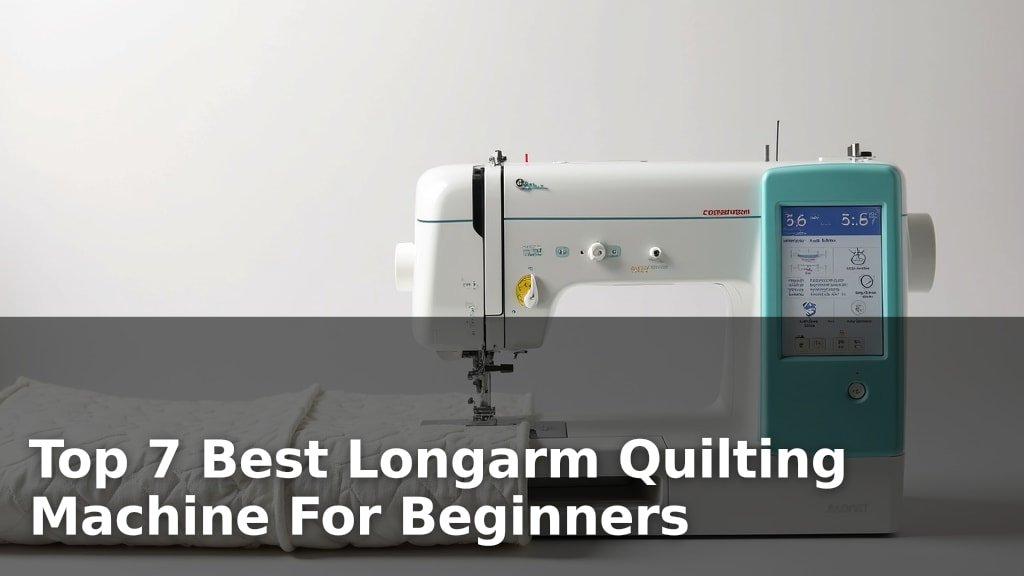
The best longarm quilting machines for beginners are models like the Handi Quilter Moxie 15-inch for dedicated home quilters, the Grace 16X Elite Tabletop for space-saving beginners, and the Grace 16X Elite Q-Zone for those expanding quilting horizons, all chosen for their ease of use, intuitive features, and reliable performance. Investing in a longarm machine can significantly enhance your quilting efficiency and creative freedom, transforming larger projects from daunting tasks into enjoyable experiences. These specialized machines provide the necessary throat space and consistent stitch quality to tackle quilts of various sizes with confidence.
We’ve narrowed down the vast market to our top 7 picks after extensive hands-on comparison, evaluating each machine on factors such as setup complexity, learning curve, available features, and overall value. This guide will help you understand the nuances of each option before presenting a detailed comparison table to assist your decision.

Handi Quilter Moxie 15-inch
- Large 15-inch throat space
- Sturdy 8-foot frame included
Show MoreShow Less
- Integrated system for ease
- 15-inch throat space
- 8-foot HQ Loft Frame

Grace 16X Elite Tabletop
- Excellent 16-inch throat space
- Compact tabletop frame included
Show MoreShow Less
- Flexible for small spaces
- 16-inch throat space
- Cutie Tabletop Frame
Grace 16X Elite Q-Zone
- Ample 16-inch throat space
- Robust 8-foot quilting frame
Show MoreShow Less
- Dedicated quilting setup
- 16-inch throat space
- Q-Zone Queen 8 ft Frame
Top 7 Best Longarm Quilting Machine For Beginners
#1. Handi Quilter Moxie 15-inch
Throat Space
Loft Frame
Quilting System
The Handi Quilter Moxie offers a generous 15-inch throat space, providing ample room for larger quilting projects right from the start. Paired with the robust 8-foot HQ Loft Frame, this system creates a stable and dedicated workspace, making it easier to manage fabric and achieve precise stitches. You’ll appreciate the integrated design, which helps streamline your quilting process and build confidence.
This machine is an excellent choice if you’re looking for a comprehensive longarm setup that grows with your skills. Expect a learning curve with any longarm, but the Moxie’s design aims to simplify the experience. However, if you have very limited space, the large frame footprint might be a consideration.
Pros
- Large 15-inch throat space
- Sturdy 8-foot frame included
- Integrated system for ease
Cons
- Significant space requirement
- Initial setup may be complex
- Higher investment for beginners
Specifications
#2. Grace 16X Elite Tabletop
Throat Space
Frame Design
Quilting Solution
The Grace 16X Elite offers a generous 16-inch throat space, allowing you to tackle a wide range of quilting projects with ease. Its standout feature is the innovative Cutie Tabletop Frame, which provides remarkable flexibility for quilters with limited space. You can set it up on an existing table, making it a highly adaptable solution for your home studio.
This machine is ideal if you’re a beginner seeking a longarm experience without committing to a large, permanent frame. You’ll appreciate its compact footprint and ease of assembly. However, while the tabletop frame is versatile, it might not offer the same expansive, dedicated workspace as a full-size stand-up frame, which could be a limitation for very large quilts.
Pros
- Excellent 16-inch throat space
- Compact tabletop frame included
- Flexible for small spaces
Cons
- Tabletop frame size limits
- Requires existing table surface
- Less robust than full frames
Specifications
#3. Grace 16X Elite Q-Zone
Throat Space
Queen Frame
Quilting Setup
The Grace 16X Elite, when paired with the Q-Zone Queen 8 ft Frame, provides an excellent entry point into dedicated longarm quilting. You’ll benefit from a spacious 16-inch throat for handling large quilts, combined with a sturdy frame that offers a stable and comfortable working environment. This setup allows you to develop your free-motion quilting skills with confidence, providing ample room for creative expression.
This system is well-suited if you’re a beginner ready to invest in a more permanent longarm solution and have the space for it. The 8-foot frame offers significant quilting real estate, making it easier to manage fabric. However, be prepared for the assembly time required for a full-size frame, and ensure you have a dedicated area in your home for this setup.
Pros
- Ample 16-inch throat space
- Robust 8-foot quilting frame
- Dedicated quilting setup
Cons
- Requires significant space
- Frame assembly can be involved
- Less portable than tabletop frames
Specifications
Your First Longarm: Unraveling the Choices for Aspiring Quilters
Embarking on your longarm quilting journey is an exciting step, and selecting your first machine deserves careful consideration. This isn’t just another sewing machine; it’s an investment in your craft and your creative future. Taking the time to understand the nuances will ensure you choose a partner that grows with your skills, not one you quickly outgrow.
Navigating the Features That Matter for Newcomers
When you’re ready to bring a longarm home, certain characteristics will make your learning curve smoother and your quilting experience more rewarding.
- Throat Space Generosity: This is the distance from the needle to the back of the machine. For a beginner, a more expansive throat offers ample room to maneuver larger quilt tops without constant repositioning, reducing frustration.
- Stitch Regulation Smarts: Look for machines with integrated stitch regulation. This feature helps you maintain consistent stitch length, even as you adjust your quilting speed, a huge benefit for developing muscle memory and achieving professional-looking results.
- Frame Considerations: Longarm machines often come with a frame. Understand the footprint required for different frame sizes and whether it fits comfortably into your dedicated quilting space. Some frames offer adjustable heights, which can be a back-saver.
- Ease of Threading: A machine that is straightforward to thread will save you precious quilting time and prevent common headaches, allowing you to focus more on your creative flow.
- Accessory Ecosystem: Consider what accessories are readily available for the machine, such as different feet or rulers. A good range of accessories can expand your quilting possibilities as you gain experience.
- Sticking to your budget: While tempting to eye top-tier models, prioritize features that genuinely benefit a beginner within your financial comfort zone. There are excellent entry-level options that deliver fantastic performance.
Common Missteps to Dodge on Your Longarm Quest
Don’t let enthusiasm lead you astray. Being aware of potential pitfalls will help you make a more informed decision.
- Overlooking the physical space requirements: A longarm and its frame demand significant room. Measure your designated area carefully before committing.
- Ignoring the learning curve: While beginner-friendly, longarms still require practice. Don’t expect instant mastery; choose a machine that supports gradual skill development.
- Underestimating the importance of support: Consider the availability of local dealers, online communities, or manufacturer support. Having resources for questions and troubleshooting is invaluable.
Your First Longarm: Making the Smart Choice
For the aspiring quilter on a budget, the Grace 16X Elite with the Cutie Tabletop Frame is your go-to for getting started without breaking the bank. If you’re ready to invest in a more robust, dedicated setup, the Handi Quilter Moxie 15-inch with the 8-foot HQ Loft Frame offers a fantastic blend of features and support. And for those seeking a balance of versatility and a larger workspace, the Grace 16X Elite with the Q-Zone Queen 8 ft Frame is a stellar option.
Each of these machines offers an excellent entry point into the exciting world of longarm quilting. To snag your perfect match, hit those buttons above to check current availability and dive into your next quilting adventure!
