
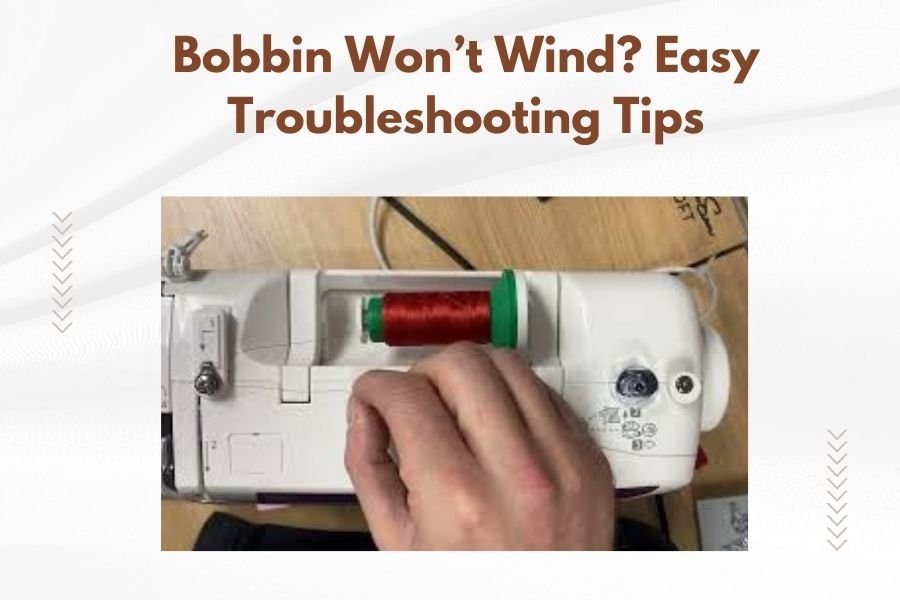
When your bobbin won’t wind, the most common causes are incorrect bobbin placement, tangled thread, or tension issues that prevent the winding mechanism from working properly.
You can fix most bobbin winding problems by checking the bobbin position, clearing thread tangles, and adjusting the bobbin winder tension dial.
Quick Fixes That Work Most of the Time
Let’s start with the solutions that solve 80% of bobbin winding problems. These are the steps I found work best when your machine decides to be stubborn.
Check Your Bobbin Placement First
Your bobbin might not be sitting right on the winder spindle. Remove it completely and place it back on. Make sure it clicks into place.
The bobbin should sit flat and not wobble when you spin it by hand. If it moves around, that’s your problem right there.
Look for Thread Tangles
Thread wrapped around the bobbin winder spindle stops everything. Turn off your machine and check under the bobbin area.
Pull out any loose threads you see. Sometimes thread gets caught in tiny spaces where you can’t see it easily.
Test the Bobbin Winder Position
Your bobbin winder needs to be pushed all the way to the right to engage. If it’s halfway, the machine won’t wind.
Push it firmly until you hear a small click. That sound means it’s locked in the winding position.
Thread Path Problems
Wrong threading causes more bobbin problems than most people think. The thread has to follow a specific path to wind correctly.
Follow Your Machine’s Threading Guide
Each machine threads differently for bobbin winding. Check your manual or look for the small diagrams on your machine.
Many machines have a separate threading path just for winding bobbins. Don’t use the normal sewing thread path.
Check Thread Tension During Winding
Hold the thread with light tension as the bobbin starts winding. Too much tension breaks the thread. Too little creates loose, messy winding.
Think of it like holding a dog’s leash. You want control without yanking.
Thread Quality Matters
Old thread breaks easily during winding. Thread that’s been sitting in sunlight or damp areas becomes weak and fuzzy.
Try winding with new thread to see if that fixes the problem.
Mechanical Issues to Check
Sometimes the problem isn’t threading or placement. Your machine might need a small mechanical adjustment.
Clean the Bobbin Winding Area
Lint builds up around the bobbin winder just like it does in the needle area. This stops the mechanism from moving smoothly.
Use your machine’s cleaning brush or a small paintbrush to clear out lint and dust.
Test the Bobbin Winder Clutch
The clutch disconnects the needle from moving while the bobbin winds. If it’s not working, neither is your winding.
When you push the bobbin winder to the right, your handwheel should feel loose. If it still feels tight, the clutch isn’t engaging.
Listen for Grinding Sounds
Grinding or clicking sounds during winding mean something is catching or broken inside the mechanism.
Stop using the machine and check for visible problems before continuing.
Bobbin Type and Size Issues
Using the wrong bobbin causes winding problems that seem mysterious until you figure out the real cause.
Match Your Bobbin to Your Machine
Bobbins that look similar might be different sizes. Even a 1mm difference stops proper winding.
Check your manual for the exact bobbin model number. Generic bobbins sometimes work and sometimes don’t.
Metal vs Plastic Bobbins
Some machines work better with metal bobbins, others prefer plastic. Using the wrong type creates tension and winding problems.
I found that many quilting machines work best with the exact bobbin type they came with.
Damaged Bobbin Signs
Cracked or warped bobbins won’t wind evenly. Check your bobbin for small cracks around the edges.
Replace damaged bobbins even if the crack seems tiny.
Advanced Troubleshooting Steps
If the basic fixes didn’t work, these steps target less common but still fixable problems.
Check the Bobbin Winder Spring
A small spring controls tension during bobbin winding. If it’s bent or missing, winding becomes impossible.
Look for a tiny metal spring near the bobbin winder. It should have some bounce when you press it gently.
Test with Different Thread Weights
Heavy threads like upholstery thread might be too thick for your machine’s bobbin winder. Light threads sometimes slip and don’t wind properly.
Try medium-weight all-purpose thread to see if that works better.
Adjust Winding Speed
Winding too fast causes thread to bunch up or break. Winding too slow sometimes doesn’t engage the mechanism properly.
Use medium speed for most bobbin winding. Fast speed works for thin threads, slow speed for thick threads.
When to Call for Professional Help
Some bobbin winding problems need professional repair. Don’t feel bad about getting help when these issues come up.
Internal Gear Problems
If you hear grinding sounds even after cleaning, internal gears might be damaged or misaligned.
This repair requires taking apart the machine, which most people shouldn’t attempt at home.
Electrical Issues
The bobbin winder motor might be separate from the main sewing motor. If it’s not getting power, winding won’t work.
Electrical problems need professional diagnosis and repair for safety reasons.
| Problem Type | DIY Fix | Professional Help Needed |
|---|---|---|
| Thread tangled | Yes | No |
| Wrong bobbin size | Yes | No |
| Grinding sounds | Clean first | If cleaning doesn’t help |
| Broken internal parts | No | Yes |
| Electrical issues | No | Yes |
Prevention Tips That Save Time
Preventing bobbin winding problems is easier than fixing them. These habits keep your machine running smoothly.
Regular Cleaning Schedule
Clean the bobbin area every few projects or once a month, whichever comes first. Lint builds up faster than you think.
Include the bobbin winder area in your regular cleaning routine.
Use Quality Thread
Cheap thread creates more lint and breaks more often. This leads to tangles in the bobbin winding mechanism.
Good thread winds more smoothly and creates fewer problems overall.
Store Bobbins Properly
Keep wound bobbins in a case or drawer where they won’t get dusty or damaged.
Don’t leave bobbins on the machine between sewing sessions.
Conclusion
Most bobbin winding problems have simple solutions once you know where to look. Start with checking bobbin placement and thread path, since these cause most issues. Clean your machine regularly and use the right bobbin type for your machine model. If mechanical problems persist after basic troubleshooting, professional repair might be needed, but you can fix the majority of bobbin winding issues yourself with these steps.
Why does my bobbin wind unevenly?
Uneven bobbin winding usually happens when you hold too much or too little thread tension while winding, or when the bobbin winder tension dial needs adjustment. Try guiding the thread with light, steady pressure.
Can I wind a bobbin while sewing?
No, most sewing machines are designed to either sew or wind bobbins, not both at the same time. The bobbin winder clutch disconnects the needle mechanism during winding to prevent damage.
How full should I wind my bobbin?
Wind your bobbin until it’s about 90% full, leaving a small gap at the top. Overfilled bobbins cause tension problems and might not fit properly in the bobbin case.
Why does my thread keep breaking during bobbin winding?
Thread breaks during winding when you’re pulling too hard, the thread is old or poor quality, or the bobbin winder is running too fast. Try reducing speed and using lighter thread tension.
Should I remove the needle when winding bobbins?
You don’t need to remove the needle for bobbin winding, but make sure the bobbin winder clutch is properly engaged so the needle doesn’t move. Some quilters prefer removing it as a safety precaution.
