
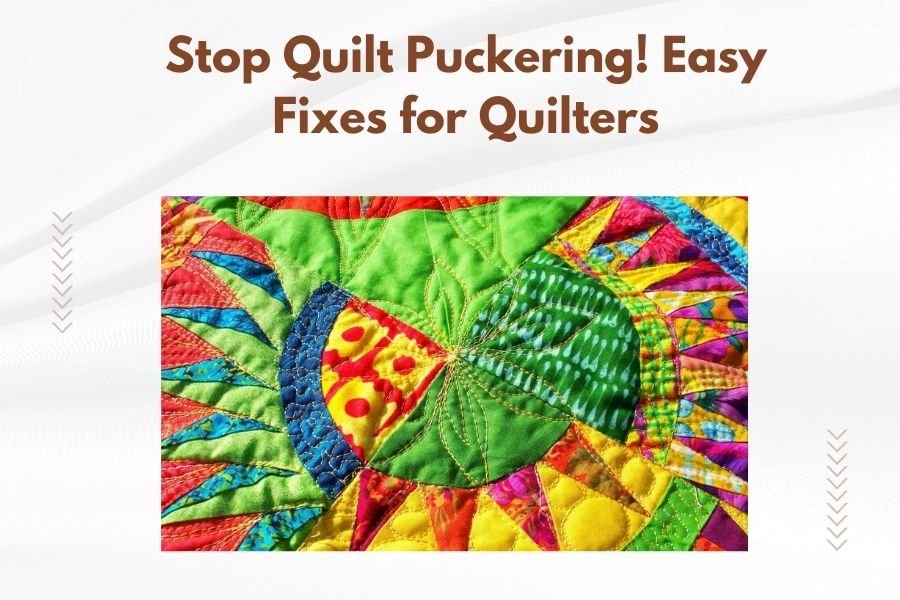
Quilt puckering happens when fabric layers shift during stitching, creating unwanted wrinkles and bumps that ruin your beautiful quilting work.
You can prevent quilt puckering by using proper basting techniques, maintaining correct thread tension, and ensuring your quilt layers are smooth before stitching.
What Causes Quilt Puckering?
Picture this: you’ve spent hours piecing together your quilt top. You’re ready for the final step. But when you finish quilting, you see ugly wrinkles everywhere. Sound familiar?
Puckering ruins the flat, smooth look you want. It makes your quilt look amateur instead of professional. The good news? It’s totally fixable once you know what went wrong.
Tension Problems
Thread tension causes most puckering issues. When your top thread is too tight, it pulls the fabric layers together. This creates those annoying wrinkles.
Your machine might also have bobbin tension problems. I found that many quilters never check their bobbin tension. Big mistake.
Poor Basting
Basting holds your quilt sandwich together while you stitch. Skip this step or do it poorly, and your layers will shift around. That shifting creates puckers faster than you can say “quilting disaster.”
Safety pins spaced too far apart won’t hold things steady. Spray basting that’s applied unevenly causes the same problem.
Fabric Issues
Different fabrics behave differently under your machine. Cotton quilting fabric usually plays nice. But mixing fabric types can spell trouble.
Stretchy fabrics pull and distort easily. Batting that’s too thick for your machine creates drag and uneven feeding.
Quick Fixes for Existing Puckers
Steam Method
Got minor puckers? Steam can be your best friend. Hold a steam iron about 2 inches above the puckered area. Let the steam relax the fibers.
Don’t press down with the iron. Just let the steam do its work. Gently smooth the fabric with your hands while it’s still warm and damp.
When Steam Works Best
This method works great for small puckers in cotton fabrics. I researched this technique and found it works because heat and moisture relax the fiber tension that causes puckers.
Steam won’t fix major puckers or those caused by poor basting. But for minor issues, it’s worth trying before more drastic measures.
Gentle Stretching
Sometimes you can work out small puckers by hand. Lay your quilt flat on a large surface. Gently stretch the puckered area in opposite directions.
Work slowly and carefully. You don’t want to distort the rest of your quilt or damage the stitching.
The Right Way to Stretch
Use both hands to grip the fabric on either side of the pucker. Pull very gently and gradually. Hold for a few seconds, then release.
Repeat this process from different angles around the pucker. Think of it like working out a muscle knot.
Prevention Strategies That Actually Work
Master Your Basting Game
Good basting prevents 90% of puckering problems. You have several options, and each has its place.
Safety Pin Basting
Place safety pins every 4-6 inches across your entire quilt. Start from the center and work outward. This keeps everything aligned as you quilt.
Use curved safety pins designed for quilting. They go through the layers easier and won’t snag your thread while quilting.
Spray Basting
Quilting spray creates a temporary bond between your layers. Apply it evenly in light coats. Too much spray makes your quilt stiff and hard to handle.
I found that many quilters love spray basting because it’s fast. But it only works if you apply it correctly and smooth out all wrinkles before the spray sets.
Thread Basting
Old school but effective. Use long running stitches to hold your layers together. Space your basting lines about 6 inches apart in a grid pattern.
This takes more time than other methods. But you get complete control over how your layers lie together.
Get Your Tension Right
Thread tension adjustment scares many quilters. But it’s not as hard as you think.
Testing Tension
Make a quilt sandwich using scraps of your actual fabrics and batting. Test your stitches before starting the real thing.
Good tension creates stitches that look balanced on both sides. The threads should meet in the middle of your quilt sandwich, not on the top or bottom surface.
Top Thread Adjustments
If you see puckers, try loosening your top tension slightly. Most machines have numbered dials. Go down by half a number and test again.
Keep testing until your stitches look even and your fabric lies flat.
Don’t Forget the Bobbin
Bobbin tension affects your stitches too. Many quilters never touch this setting, but sometimes you need to adjust it.
If loosening top tension doesn’t help, your bobbin tension might be too tight. This adjustment is trickier, so take it slow.
Machine Setup for Pucker-Free Quilting
Choose the Right Needle
Your needle makes a bigger difference than you might think. Size 80/12 or 90/14 needles work well for most cotton quilts.
Smaller needles create smaller holes and less fabric distortion. But they can break if your layers are too thick.
Needle Condition Matters
Dull or damaged needles pull and drag your fabric. This creates puckers even when everything else is perfect.
Change your needle after every project or every 8 hours of sewing. Sharp needles cut through cleanly instead of pushing fibers around.
Walking Foot Advantage
A walking foot feeds all your layers through at the same rate. This prevents the shifting that causes puckers.
I researched walking foot benefits and found that quilting experts recommend them for straight-line quilting and borders. The even feeding action keeps everything aligned.
When to Use Your Walking Foot
Use a walking foot for:
- Straight-line quilting
- Large meandering patterns
- Border quilting
- Any time you’re fighting puckers
Switch back to a regular presser foot for detailed free-motion work where you need more control.
Fabric and Batting Choices
Stick with Quality Cotton
Cotton quilting fabrics behave predictably. They don’t stretch much and they press well. This makes them less likely to cause puckers.
Avoid mixing cotton with stretchy fabrics like jersey or fleece in the same quilt. The different stretch rates cause uneven pulling and puckering.
Batting Selection Tips
Low-loft batting works better for machine quilting. High-loft batting is harder for your machine to handle and more likely to cause feeding problems.
Cotton and cotton-blend battings are easier to quilt than polyester. They have less stretch and create less drag under your presser foot.
Batting Size Matters
Cut your batting and backing 2-3 inches larger than your quilt top on all sides. This gives you room to adjust if things shift during quilting.
Skimping on batting size sets you up for problems. You need that extra material to keep everything smooth.
Advanced Pucker Prevention
Quilting Pattern Strategy
Your quilting pattern affects pucker formation. Dense quilting in some areas and sparse quilting in others creates uneven shrinkage.
Try to keep your quilting density fairly even across the whole quilt. This prevents some areas from puckering more than others.
Start from the Center
Always start quilting from the center and work outward. This pushes any excess fabric toward the edges where you can deal with it.
Quilting from the edges inward traps excess fabric in the middle. That trapped fabric has nowhere to go except into puckers.
Speed and Handling
Quilting too fast can cause feeding problems and puckers. Slow down, especially on curves and detailed areas.
Don’t pull or push your quilt through the machine. Guide it gently and let your machine do the work.
Support Your Quilt Weight
Large quilts are heavy. If they hang off your sewing table, that weight pulls and distorts your stitching area.
Use extra tables or a quilting frame to support the weight. Your stitching will be much more even and pucker-free.
Troubleshooting Common Situations
Border Puckering Problems
Borders are pucker magnets. The long straight seams and multiple fabric layers create extra challenges.
Take extra care with border basting. Use more pins or spray than usual. The edges of quilts get the most handling and stress.
Corner Solutions
Corners bunch up easily because of the extra fabric layers. Stop quilting before you reach each corner. Adjust and smooth the layers, then continue.
Don’t try to power through bunched-up corners. Stop, fix, and restart. It saves time in the long run.
Binding Area Issues
The binding area is another trouble spot. All that folding and handling can create new puckers even in a previously smooth quilt.
Work slowly when attaching binding. Keep everything smooth and properly aligned. Use plenty of pins to hold things in place.
When to Start Over
Major Pucker Assessment
Sometimes puckers are too bad to fix. If your quilt looks more like a relief map than a flat textile, you might need to start the quilting over.
Look at your quilt from across the room. If the puckers are obvious from that distance, they won’t disappear with minor fixes.
Salvage What You Can
You don’t always have to start completely over. Sometimes you can remove quilting from problem areas and re-do just those sections.
Use a seam ripper to carefully remove stitching from puckered areas. Smooth out the layers, re-baste if needed, and quilt again with better technique.
| Problem Level | Best Solution | Success Rate |
|---|---|---|
| Minor puckers | Steam and gentle stretching | High |
| Moderate puckers | Remove and re-quilt problem areas | Medium |
| Severe puckers | Start quilting process over | High |
Conclusion
Quilt puckering doesn’t have to ruin your projects. With proper basting, correct tension settings, and careful technique, you can create smooth, professional-looking quilts every time.
Remember that prevention is easier than fixing puckers after they happen. Take time to set up your quilt sandwich properly. Test your tension settings on scraps before starting the real quilting.
Most puckering problems come from rushing through the preparation steps. Slow down, be methodical, and your quilting will improve dramatically. Your future self will thank you when you’re admiring a perfectly flat, gorgeous finished quilt instead of wrestling with wrinkles and puckers.
Why does my quilt pucker even with a walking foot?
Walking feet help with feeding but don’t solve tension or basting problems. Check your thread tension settings and make sure your quilt layers are properly secured with adequate basting before quilting.
Can I fix puckers without removing all the quilting stitches?
Minor puckers can often be improved with steam and gentle manipulation. For severe puckers, you’ll need to remove stitches from problem areas and re-quilt those sections with corrected technique.
How tight should my quilting stitches be?
Quilting stitches should be snug but not tight. They should hold the layers together without pulling or distorting the fabric. If you see dimpling around your stitches, your tension is too tight.
What’s the best batting to prevent puckers?
Low-loft cotton or cotton-blend batting works best for preventing puckers. These battings have less stretch and create less drag under your presser foot compared to high-loft polyester options.
How many safety pins should I use for basting?
Place safety pins every 4-6 inches across your entire quilt surface. For a lap-sized quilt, you’ll typically need 80-100 pins. This might seem like a lot, but proper basting prevents much bigger problems later.
