
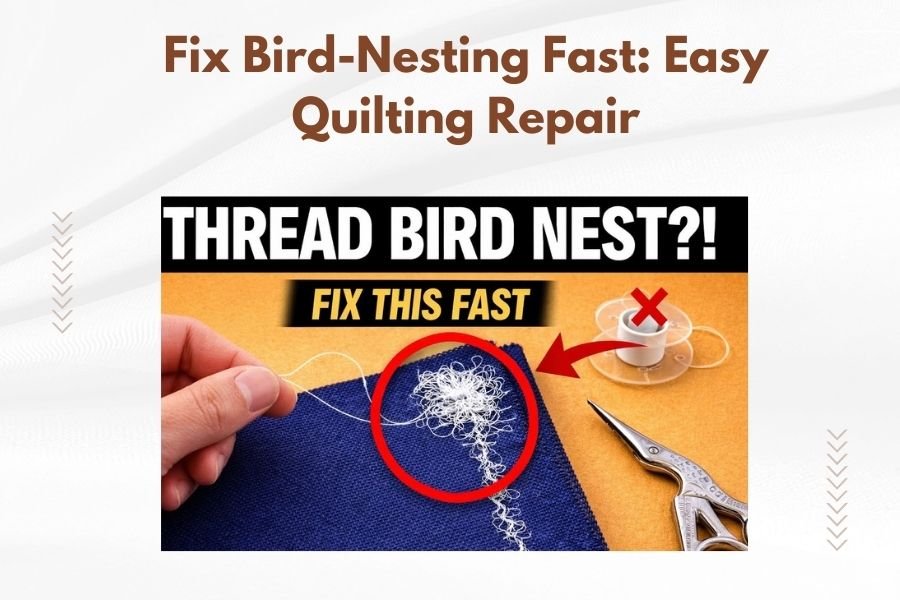
Bird-nesting in quilting happens when thread bunches up underneath your fabric, creating a tangled mess that looks like a bird’s nest.
You can fix bird-nesting fast by rethreading your machine, adjusting tension settings, and checking your needle condition before continuing your quilting project.
What Causes Bird-Nesting in Your Quilting Machine
Bird-nesting drives quilters crazy. One minute you’re making perfect stitches, the next you’re staring at a knotted disaster on the back of your quilt.
The main culprit is usually tension problems. When your upper thread tension is too loose compared to your bobbin tension, the threads don’t lock properly between fabric layers. Instead, they create loops and tangles underneath.
Threading Issues That Create Tangles
Improper threading causes most bird-nesting problems. If your upper thread isn’t seated correctly in the tension discs, it won’t pull evenly. This makes the thread bunch up below your fabric.
Check these threading spots first:
- Thread guide at the top of your machine
- Tension discs (thread must sit between them completely)
- Take-up lever (thread goes through from front to back)
- Last thread guide before the needle
Bobbin Problems You Can’t Ignore
Your bobbin might be the sneaky troublemaker. Uneven bobbin winding creates loose spots that mess with thread flow. Old or damaged bobbins can also cause tension issues.
Wind your bobbin at medium speed for even thread distribution. Fast winding creates loose, uneven layers that lead to bird-nesting.
Quick Diagnostic Steps Before You Start Fixing
Before diving into repairs, you need to figure out what’s wrong. Smart diagnosis saves time and prevents more tangles.
Check Your Thread Quality
Old thread breaks easily and creates inconsistent tension. Thread that’s been sitting in sunlight or humid conditions becomes weak and fuzzy.
Quality thread should feel smooth when you run it through your fingers. If it feels rough or sheds fibers, replace it.
Examine Your Needle Condition
Dull or damaged needles punch ragged holes in fabric. This creates drag that throws off your thread tension balance.
Change your needle if you see:
- A bent or hooked tip
- Nicks or burrs on the shaft
- Thread shredding as it passes through
Right Needle Size for Your Project
Using the wrong needle size creates tension problems. Heavy threads need larger needles. Delicate fabrics need smaller ones.
Match your needle to your thread weight and fabric thickness. A 90/14 universal needle works for most cotton quilting projects.
Step-by-Step Bird-Nesting Repair Process
Now let’s fix that bird-nesting problem for good. Follow these steps in order for best results.
Step 1: Remove All Tangled Thread
Cut away the bird’s nest with small scissors. Don’t pull on tangled threads – you might damage your machine’s timing or bend parts.
Remove both the upper thread and bobbin. Clean out any thread bits stuck in the bobbin case or around the feed dogs.
Step 2: Rethread Your Entire Machine
Start fresh with new thread. Threading mistakes cause most bird-nesting, so take your time here.
Make sure your presser foot is up when threading. This opens the tension discs so thread can seat properly between them.
Upper Threading Checklist
Follow your machine’s threading path exactly:
- Place thread spool with thread pulling from the back
- Guide thread through all guides in correct order
- Snap thread firmly into tension discs
- Pull thread through take-up lever completely
- Thread needle from front to back
Bobbin Installation Tips
Your bobbin direction matters. Most machines want the thread pulling counterclockwise, but check your manual.
Leave about 4 inches of bobbin thread tail. Too short and it might get pulled into the machine. Too long and it tangles with your upper thread.
Step 3: Adjust Your Tension Settings
Start with your machine’s default tension setting (usually around 4 on a scale of 1-9). Test on scrap fabric first.
Perfect tension creates stitches that lock between fabric layers. You shouldn’t see upper thread on the bottom or bobbin thread on top.
When to Increase Upper Tension
If you see bobbin thread on top of your fabric, your upper tension is too loose. Turn the tension dial up by half numbers until threads balance.
When to Decrease Upper Tension
Upper thread showing on the bottom means tension is too tight. Lower the setting gradually until stitches look even on both sides.
Advanced Troubleshooting for Stubborn Cases
Sometimes basic fixes don’t work. These advanced steps handle tricky bird-nesting problems.
Bobbin Case Cleaning and Adjustment
Lint and thread bits build up in your bobbin case over time. This debris affects thread flow and creates uneven tension.
Remove the bobbin case and brush out all debris with a small brush. Pay attention to the curved track where your bobbin sits.
Bobbin Tension Screw Adjustments
Your bobbin case has a small screw that controls bobbin thread tension. Turn it tiny amounts – we’re talking quarter turns here.
Clockwise tightens bobbin tension. Counterclockwise loosens it. Test after each small adjustment.
Feed Dog and Throat Plate Issues
Damaged feed dogs don’t move fabric evenly. This creates uneven stitches that can lead to bird-nesting.
Check your throat plate for nicks or burrs. A damaged throat plate can catch thread and cause tangles.
Prevention Strategies That Actually Work
Preventing bird-nesting is easier than fixing it. These habits keep your quilting smooth and tangle-free.
Regular Maintenance Schedule
Clean your machine after every major project. Oil it according to your manual’s schedule. I found that consistent maintenance prevents most threading problems.
Replace your needle every 8-10 hours of sewing time. Mark your needle package with the date so you remember when to change it.
Quality Supply Choices
Cheap thread might save money upfront, but it costs time when it creates problems. Quality thread reduces bird-nesting and creates better stitches.
Store thread in a cool, dry place away from direct sunlight. Thread deteriorates in heat and humidity.
Thread and Needle Combinations
Match your supplies properly for best results:
| Thread Weight | Needle Size | Best Use |
|---|---|---|
| 50 weight cotton | 80/12 or 90/14 | General quilting |
| 40 weight cotton | 90/14 | Decorative stitching |
| 30 weight cotton | 100/16 | Bold quilting lines |
Proper Quilting Speed
Sewing too fast stresses your machine’s timing. This can cause tension problems that lead to bird-nesting.
Keep a steady, moderate pace. Your machine will stitch more evenly, and you’ll catch problems before they become disasters.
When to Call a Professional
Sometimes bird-nesting indicates bigger problems. Machine timing issues or damaged parts need professional attention.
Call a technician if bird-nesting continues after you’ve tried all these fixes. Internal timing problems require special tools and training to repair safely.
Warning Signs of Serious Problems
Watch for these red flags:
- Bird-nesting happens on every project despite proper threading
- Thread keeps breaking even with new supplies
- Unusual noises during sewing
- Stitches skip or look uneven consistently
Conclusion
Bird-nesting doesn’t have to ruin your quilting projects. Most cases come from simple threading or tension problems you can fix in minutes. Start with proper rethreading, check your tension settings, and make sure your needle and thread match your project needs.
Remember that prevention beats repair every time. Keep your machine clean, use quality supplies, and maintain steady sewing speeds. With these habits, bird-nesting becomes a rare annoyance instead of a regular frustration. Your quilts deserve smooth, even stitches – and now you know how to make that happen.
Why does my quilting machine keep bird-nesting even after rethreading?
Persistent bird-nesting after proper rethreading usually means your bobbin tension is off or your needle needs changing. Check that your bobbin is wound evenly and installed correctly, then try a fresh needle that matches your thread weight.
Can old thread cause bird-nesting problems?
Yes, old thread becomes weak and inconsistent, creating uneven tension that leads to bird-nesting. Thread that’s been exposed to sunlight or humidity deteriorates faster and should be replaced every 2-3 years.
How tight should my upper thread tension be for quilting?
Most quilting machines work best with upper tension between 3.5 and 4.5. Start at your machine’s default setting and adjust up or down based on test stitches on scrap fabric until threads lock evenly between layers.
What’s the difference between bird-nesting and normal thread tangles?
Bird-nesting creates large loops and knots underneath your fabric that look like a bird’s nest. Normal tangles are usually smaller and happen on top of the fabric or in the thread path, not in the bobbin area.
Should I adjust bobbin tension to fix bird-nesting?
Only adjust bobbin tension as a last resort after trying upper thread solutions first. Bobbin tension changes affect all your projects, while upper tension adjustments only affect your current thread combination. Make tiny quarter-turn adjustments if needed.
