
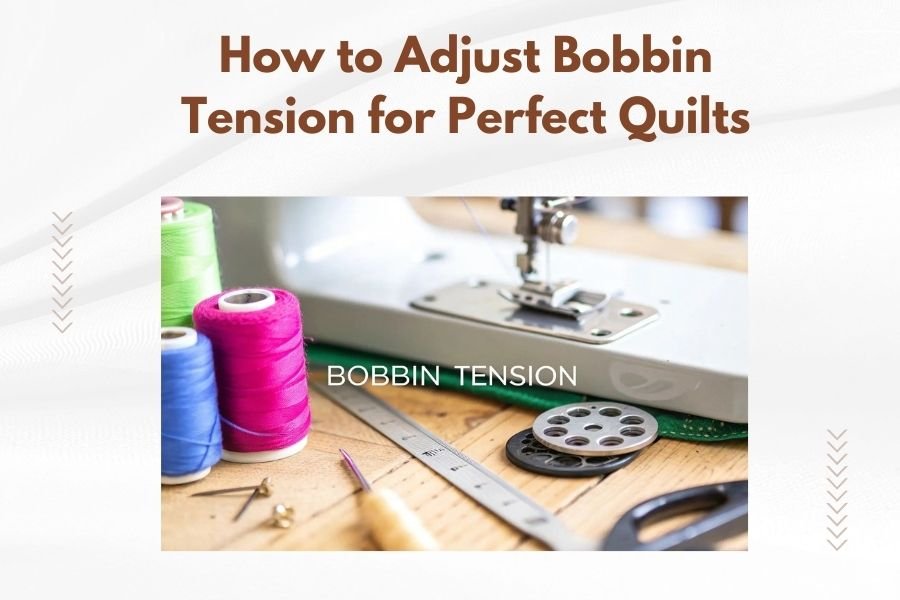
Bobbin tension controls the bottom thread in your quilting machine, and adjusting it properly prevents puckering, loose stitches, and thread breaks.
Most quilting problems stem from incorrect bobbin tension – getting this right will transform your quilting quality immediately.
What Is Bobbin Tension and Why Does It Matter?
Think of bobbin tension like the grip on a handshake. Too loose, and your threads won’t hold together. Too tight, and something’s going to snap.
Your quilting machine uses two threads – the top thread from your spool and the bottom thread from the bobbin. These threads need to meet and lock perfectly in the middle of your quilt layers.
When bobbin tension is off, you’ll see loose loops on your quilt’s back, puckered fabric, or threads that break constantly. I found that most quilters blame their machine when the real problem is simply tension settings.
Signs Your Bobbin Tension Needs Adjustment
Visual Clues on Your Quilt
Your quilt will tell you exactly what’s wrong if you know what to look for.
Loops of bobbin thread showing on top mean your bobbin tension is too loose. The bottom thread is being pulled up where it doesn’t belong.
Tight, puckered seams usually signal bobbin tension that’s too tight. The fabric gets pulled and bunched because the thread won’t give.
Thread Behavior Problems
Thread breaks are another dead giveaway. If your bobbin thread keeps snapping, the tension is probably too tight.
Stitches that look uneven or skip randomly often point to tension issues too. The threads can’t form proper loops when the tension balance is wrong.
Tools You’ll Need for Bobbin Tension Adjustment
Good news – you don’t need expensive tools for this. Most adjustments require items you already have.
- Small screwdriver (usually Phillips head)
- Tweezers for handling small parts
- Test fabric scraps
- Thread snips
- Good lighting or magnifying glass
Some machines include a small screwdriver in the accessory kit. Check your manual – it might be hiding in that little compartment you never opened.
How to Test Current Bobbin Tension
The Drop Test Method
Here’s a simple way to check if your bobbin tension is in the right range.
Hold your threaded bobbin case by the thread. The bobbin should drop slowly when you give it a gentle bounce. If it falls fast, tension is too loose. If it won’t drop at all, it’s too tight.
The Sewing Test
Set up a test sandwich with two fabric scraps and a piece of batting. Use contrasting thread colors so you can see what’s happening.
Sew a straight line. Look at both sides. Perfect tension means you can’t see the opposite thread color on either side.
Step-by-Step Bobbin Tension Adjustment
Locate the Tension Screw
Your bobbin case has a small screw on the side. This tiny screw controls how tightly the thread gets gripped as it leaves the bobbin.
Warning – this screw is easy to lose. Work over a towel or tray to catch it if it falls out completely.
Making Small Adjustments
Turn the screw clockwise to tighten tension. Turn it counterclockwise to loosen.
Make tiny turns – we’re talking quarter-turns or even less. A little adjustment goes a long way with bobbin tension.
If Bobbin Thread Shows on Top
Tighten the bobbin tension slightly. Turn the screw clockwise just a smidge and test again.
If Top Thread Shows on Bottom
Loosen the bobbin tension. Turn counterclockwise and test.
Testing Your Adjustments
The Proper Test Setup
Use the same thread weight and fabric type you’ll quilt with. Different materials behave differently, so test with realistic conditions.
Make your test sandwich at least 6 inches square. Small scraps don’t give you the full picture of how tension works.
What Perfect Tension Looks Like
When you nail the tension, your stitches will look identical on both sides. The threads lock together right in the middle of your quilt layers.
Run your finger over the stitches. They should feel smooth and flat, not raised or puckered.
Common Bobbin Tension Mistakes
Over-Adjusting the Screw
The biggest mistake quilters make is turning that screw too far. I found online that most tension problems need less than half a turn to fix.
If you’ve made several big turns and things are getting worse, go back to your starting point and try smaller adjustments.
Ignoring Thread Quality
Cheap thread causes more tension headaches than worn machines do. Old thread gets weak and fuzzy, making consistent tension nearly impossible.
Invest in quality thread. Your machine will thank you, and your quilts will look better.
Different Thread Weights and Tension
Not all threads are created equal. Heavier threads need looser tension. Lighter threads need it tighter.
| Thread Weight | Tension Adjustment Needed | Common Uses |
|---|---|---|
| 40 weight | Standard setting | General quilting |
| 50 weight | Slightly tighter | Detailed work |
| 30 weight | Looser | Decorative stitching |
Troubleshooting Persistent Problems
When Adjustment Doesn’t Work
Sometimes the problem isn’t tension at all. A bent needle, wrong needle size, or timing issues can mimic tension problems.
Try changing your needle first. A dull or damaged needle creates all sorts of stitching nightmares.
Bobbin Case Issues
Bobbin cases wear out over time. If you’ve quilted thousands of yards, that little spring might be getting weak.
Check for scratches or rough spots in the bobbin case. These can grab thread and cause uneven tension.
Maintaining Proper Bobbin Tension
Regular Cleaning
Lint buildup affects tension more than you might think. Clean your bobbin area every few projects.
Use a small brush or compressed air to get lint out of tight spaces. A clean machine maintains better tension.
Proper Threading
Make sure your bobbin thread follows the correct path through the tension spring. Wrong threading makes adjustment pointless.
Advanced Tension Tips
Multiple Bobbin Cases
Many experts suggest keeping separate bobbin cases for different thread weights. This saves time and prevents constant readjustment.
Mark each case with tape or a permanent marker so you know which is which.
Environmental Factors
Humidity affects thread tension. Dry conditions make thread more brittle. High humidity makes it stretchy.
Store your thread in a consistent environment. Wild temperature swings can mess with your carefully adjusted tension.
Machine-Specific Considerations
Drop-In Bobbins
Drop-in bobbin machines adjust differently than front-loading ones. The tension mechanism is usually built into the machine rather than the bobbin case.
High-Speed Quilting Machines
Longarm and high-speed machines may need different tension settings at different speeds. What works at slow speed might not work when you’re flying.
When to Seek Professional Help
Sometimes you need backup. If you’ve tried everything and tension still won’t cooperate, a good repair shop can diagnose deeper problems.
Timing issues, worn parts, or internal damage need professional attention. Don’t feel bad about getting help when you need it.
Conclusion
Getting bobbin tension right transforms your quilting from frustrating to fantastic. Remember to make small adjustments, test thoroughly, and keep notes about what works for different threads and fabrics.
Most tension problems need tiny tweaks, not major overhauls. Be patient with the process, and soon you’ll have that perfect stitch quality you’ve been chasing. Your quilts deserve the best, and proper bobbin tension is the foundation that makes everything else possible.
Why does my bobbin tension keep changing by itself?
Bobbin tension doesn’t actually change on its own, but thread quality variations, lint buildup, or a worn bobbin case spring can make it seem inconsistent. Check these factors first before adjusting the tension screw again.
Can I use the same bobbin tension for all types of quilting?
Different quilting styles may need slight tension adjustments. Free-motion quilting often requires looser tension than straight-line quilting because of the varied thread angles and speed changes during stitching.
What happens if I lose the bobbin case tension screw?
Contact your machine manufacturer or a sewing machine repair shop for a replacement screw. Using the wrong size or type can damage your bobbin case permanently. Many shops keep common screws in stock.
How often should I clean my bobbin area to maintain good tension?
Clean your bobbin area after every 8-10 hours of quilting or whenever you notice lint accumulation. Heavy quilting with batting that sheds more fibers may require more frequent cleaning to maintain consistent tension.
Is it normal for metallic threads to need different bobbin tension?
Yes, metallic and specialty threads often behave differently than cotton threads. They may need looser bobbin tension and slower sewing speeds to prevent breakage and achieve proper stitch formation.
