
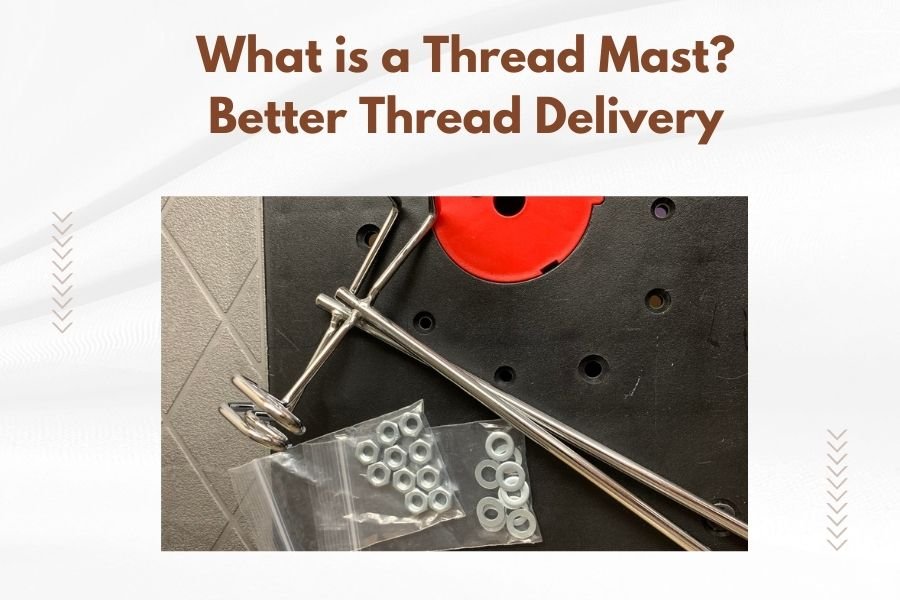
A thread mast is a vertical support tower that holds thread spools above your quilting machine. It delivers smooth thread flow from the cone to your needle without tangling or tension issues.
The thread mast creates better thread delivery by reducing friction and keeping multiple threads organized during complex quilting projects.
Why Your Quilting Machine Needs a Thread Mast
You know that frustrating moment when your thread keeps breaking mid-stitch? Or when multiple threads get tangled into a mess that looks like spaghetti gone wrong? That’s where a thread mast saves the day.
Think of a thread mast as a traffic controller for your threads. It keeps everything moving smoothly in the right direction. Without one, your threads can twist, catch, and create tension problems that ruin your beautiful quilting work.
What Makes Thread Delivery Better
From what I found in quilting forums, the main benefit is consistent thread tension. When thread comes straight down from above, it flows more naturally than when it unwinds sideways from a spool on your table.
The vertical position lets gravity help pull the thread smoothly. No more jerky movements or sudden stops that break your rhythm.
How Thread Masts Work
Picture a flagpole in your backyard. A thread mast works the same way, just smaller and designed for thread spools instead of flags.
The mast stands tall beside your quilting machine. Thread spools sit on arms that stick out from the pole. Thread feeds down through guides and goes straight to your machine’s tension discs.
The Physics Behind Smooth Thread Flow
When thread unwinds from above, it follows a straight path with minimal twisting. Research from textile engineering shows that vertical thread delivery reduces rotational stress on the thread fibers.
This means fewer breaks, less lint buildup, and smoother stitching. Your thread stays stronger when it doesn’t fight against awkward angles.
Types of Thread Masts Available
You’ll find several styles when shopping for a thread mast. Each type serves different quilting needs and budgets.
Single Spool Thread Masts
These basic models hold one spool at a time. Perfect if you mostly do simple quilting with one thread color. They’re affordable and take up minimal space.
I found that beginners often start with single spool masts. They’re less overwhelming and help you learn proper thread handling techniques.
Multi Spool Thread Masts
Multi-spool versions can hold 3, 6, or even 12 spools simultaneously. Great for complex projects that use many thread colors or decorative techniques.
Professional quilters love these because they can load all project threads at once. No more stopping to change spools every few minutes.
Rotating Multi Spool Models
Some fancy models rotate so you can access different spools easily. They spin like a lazy Susan to bring the thread you need to the front.
Fixed Multi Spool Models
Fixed models stay in one position. They cost less but you might need to walk around them to reach certain spools.
Key Features That Matter
Not all thread masts work the same way. Here are the features that make the biggest difference in your quilting experience.
Adjustable Height
Your thread mast should adjust to match your quilting setup. Too short and the thread angle gets weird. Too tall and it becomes unstable.
Most quality masts adjust between 24 and 48 inches high. This range works for most quilting tables and machine heights.
Stable Base Design
A wobbly thread mast causes more problems than it solves. Look for wide, heavy bases that won’t tip over when you pull thread.
Some masts clamp onto your quilting table. Others have weighted bases that sit on the floor. Both work well if designed properly.
Thread Guides and Tensioners
Good thread masts include guides that direct thread smoothly from spool to machine. These little rings or hooks prevent tangling and maintain proper thread angle.
Some models add light tensioners that give just enough resistance to prevent thread from flying everywhere.
Installation and Setup Tips
Setting up your thread mast correctly makes all the difference. A few simple steps ensure optimal performance.
Positioning Your Thread Mast
Place the mast so thread feeds directly into your machine’s thread path. Usually this means positioning it slightly behind and to the right of your machine.
The thread should flow in a gentle curve, not at sharp angles that create friction.
Height Adjustment Guidelines
Set the mast height so thread spools sit about 12-18 inches above your machine’s thread guides. This gives optimal thread angle without excess slack.
Test different heights with scrap fabric. You’ll feel when the tension is just right.
Thread Types That Work Best
Different threads perform differently with thread masts. Some combinations work like magic, others need extra attention.
Cone Threads vs Spool Threads
Large cone threads work perfectly with masts. The thread unwinds smoothly from the cone’s top, following the natural thread lay.
Regular spools work too, but you might need spool caps to prevent thread from catching on the spool edges.
Thread Weight Considerations
Heavier threads like 12-weight need less mast height because they have more body. Lighter threads like 60-weight need higher positioning to maintain proper tension.
Common Problems and Solutions
Even with a thread mast, you might face some challenges. Here’s how to fix the most common issues.
Thread Still Breaking
If thread keeps breaking, check your mast height first. Too high creates excess tension. Too low causes slack that leads to tangles.
Also inspect your thread path for rough spots or sharp edges that might cut the thread.
Uneven Thread Tension
Uneven tension often means your thread isn’t following a smooth path from mast to machine. Adjust the mast position or add thread guides to smooth the flow.
Thread Tangling on the Mast
Multiple threads can wrap around each other on multi-spool masts. Space your active spools apart and use thread nets on slippery threads like rayon.
Maintenance and Care
Thread masts need minimal maintenance, but a little care keeps them working smoothly for years.
Regular Cleaning
Wipe down the mast weekly to remove lint and dust. Pay special attention to thread guides where lint loves to accumulate.
Use a soft brush to clean thread guides without scratching the surface.
Lubrication Points
If your mast has moving parts, apply a tiny drop of sewing machine oil to pivot points every few months. Don’t over-oil or you’ll attract more lint.
Cost vs Benefit Analysis
Thread masts range from $50 for basic models to $300+ for professional versions. Is the investment worth it?
Time Savings
I found that quilters report 30-50% fewer thread breaks with quality thread masts. That’s less time re-threading and restarting stitching lines.
On large projects, this adds up to hours of saved time.
Thread Waste Reduction
Better thread handling means less waste from breaks and tangles. Quality thread costs money, so reducing waste pays for the mast over time.
Alternatives to Traditional Thread Masts
Not everyone needs a full thread mast. Some alternatives might work better for your situation.
Thread Stands
Shorter thread stands sit on your quilting table. They provide some vertical thread delivery benefits without taking up floor space.
Ceiling-Mounted Systems
Some quilting studios use ceiling-mounted thread delivery systems. These work great for permanent setups but aren’t practical for home sewers who share space.
Conclusion
A thread mast transforms your quilting experience by delivering smooth, consistent thread flow from above your machine. Whether you choose a simple single-spool model or a professional multi-spool version, you’ll notice fewer thread breaks, better tension control, and more enjoyable quilting sessions. The investment pays off through saved time, reduced thread waste, and higher quality finished projects. Start with a basic model if you’re unsure, then upgrade as your quilting projects become more complex.
What’s the difference between a thread mast and thread stand?
A thread mast is taller (usually 30+ inches) and mounts to the floor or table edge, while a thread stand is shorter and sits directly on your work surface. Masts provide better thread angle and stability for serious quilting.
Can I use a thread mast with any quilting machine?
Yes, thread masts work with all quilting machines since they simply change how thread is delivered to your existing machine threading system. You don’t need to modify your machine at all.
How many spools do I really need on my thread mast?
Most quilters find 3-6 spools handle their typical projects well. Single-spool masts work for basic quilting, while 6+ spool masts benefit people doing complex thread painting or multi-color designs.
Do thread masts work with metallic and specialty threads?
Thread masts actually help difficult threads like metallic, rayon, and polyester run more smoothly because the vertical delivery reduces twisting and friction that causes these threads to break.
Where should I position my thread mast for best results?
Position the mast so thread feeds into your machine at a gentle angle, usually slightly behind and to the side of your machine. The thread path should form a smooth curve without sharp bends or excessive slack.
