
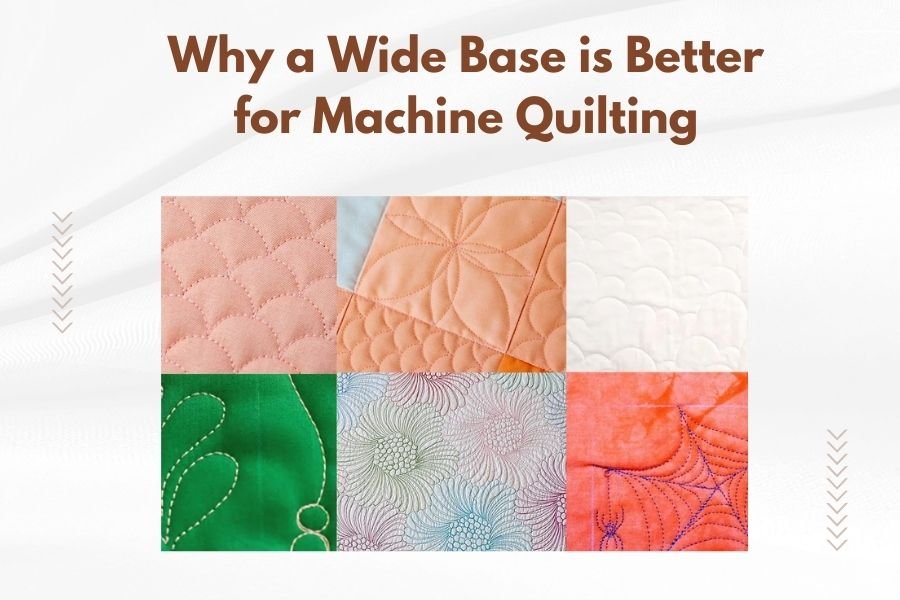
A wide base provides superior stability for machine quilting, reducing vibrations that can cause uneven stitching and fabric puckering.
The wider footprint distributes the machine’s weight more evenly, preventing movement during high-speed quilting operations.
The Physics Behind Wide Base Stability
Think of your quilting machine like a tall building. Would you rather build it on a narrow foundation or a wide one? The same principle applies here.
When your machine has a narrow base, all that vibration from the needle punching through layers gets concentrated into a small area. This creates what engineers call “resonance” – basically, your machine starts dancing around on your table.
A wide base spreads that energy out. Instead of all the force going into one spot, it gets distributed across a larger surface area.
Weight Distribution Makes the Difference
I found that most quilting machines weigh between 25-40 pounds. When that weight sits on a narrow base, you get pressure points that can make your table flex or bounce.
With a wide base, that same weight gets spread out like butter on toast. Your work surface stays steady, and you get cleaner stitches.
How Base Width Affects Stitch Quality
Ever notice how some quilts have perfectly straight lines while others look like they were sewn during an earthquake? The base width plays a huge role in this.
When your machine wobbles even slightly, that movement transfers directly to your needle. A tiny shake at the base becomes a big wobble at the needle point.
Tension Consistency Improves
Here’s something I learned from talking to quilting experts: unstable machines create inconsistent thread tension.
When your machine rocks back and forth, the thread path changes slightly with each movement. This makes some stitches tight and others loose.
A stable, wide-base machine keeps that thread path consistent. Your tension stays even from start to finish.
Feed Dog Performance Gets Better
Your feed dogs are those little metal teeth that move your fabric through the machine. They work best when they can grab and release fabric smoothly.
Machine vibration interferes with this process. The fabric might skip or bunch up instead of moving evenly.
Comparing Narrow vs Wide Base Machines
| Feature | Narrow Base | Wide Base |
|---|---|---|
| Stability | Poor at high speeds | Excellent stability |
| Vibration | High vibration | Minimal vibration |
| Stitch Quality | Can be inconsistent | More consistent |
| Table Space | Less space needed | Requires more room |
Real-World Benefits You’ll Notice
When you switch to a wide-base machine, the differences show up immediately in your quilting.
Less Hand Fatigue
You won’t have to grip your fabric as tightly. When the machine isn’t fighting you with vibrations, you can relax your hands and let the machine do the work.
Many quilters tell me their hands and shoulders feel much better after long quilting sessions with stable machines.
Faster Quilting Speed
Stable machines let you quilt faster without losing quality. You don’t have to slow down to compensate for wobbling or shaking.
Some quilters report increasing their speed by 30-40% when they switch to wide-base models.
Better Free-Motion Control
Free-motion quilting demands precise control. When your machine stays perfectly still, you can focus on moving the fabric exactly where you want it.
Think of it like trying to draw while sitting at a wobbly table versus a solid desk. Which one gives you better results?
What Counts as a “Wide Base”
Not all wide bases are created equal. Here’s what to look for when shopping.
Base Measurement Guidelines
From my research, I found that most narrow-base machines have footprints around 12-15 inches wide. Wide-base machines typically measure 18-24 inches across.
The depth matters too. Look for machines that are at least 12-15 inches deep from front to back.
Shape Matters Too
A rectangular base usually works better than a square one for quilting machines. The extra length front-to-back helps prevent the machine from tipping when you’re working with large quilts.
Rubber Feet vs Solid Base
Some wide-base machines have rubber feet at the corners. Others have a solid platform that sits flat on your table.
Both can work well, but solid platforms often provide better stability for heavy-duty quilting.
Common Wide Base Design Features
Manufacturers use different approaches to create stable wide bases.
Cast Iron Construction
Many professional quilting machines use cast iron bases. This material is heavy and doesn’t flex under vibration.
The weight actually helps with stability. It’s like having a paperweight that keeps your machine planted firmly on the table.
Extended Platform Design
Some machines extend the base platform beyond the machine body. This gives you extra surface area without making the actual machine bigger.
These extended platforms often include ruler guides and measurement markings too.
Adjustable Feet
Look for machines with adjustable feet on each corner of the base. These let you level the machine perfectly on uneven tables.
Even a slight tilt can affect stitch quality, so being able to adjust each corner independently helps a lot.
Installation and Setup Tips
Getting the most from your wide-base machine requires proper setup.
Table Requirements
Your quilting table needs to support the full base area. A narrow table that only supports part of the base defeats the whole purpose.
Make sure your table can handle the machine’s weight too. Wide-base machines are often heavier than narrow models.
Room Planning
Measure your sewing space before buying. Wide-base machines need more room, especially if you plan to quilt large projects.
Allow at least 12 inches of clearance on all sides for fabric movement.
Storage Considerations
Wide-base machines take up more storage space when not in use. Some models have fold-down extensions that help with storage.
Consider whether you’ll leave the machine set up permanently or need to store it between projects.
Maintenance Benefits
Stable machines actually require less maintenance over time.
Reduced Wear and Tear
When your machine doesn’t vibrate constantly, the internal parts last longer. Bearings, gears, and motor mounts all benefit from reduced stress.
Many repair technicians report that stable machines need fewer adjustments and part replacements.
Easier Cleaning Access
Wide bases often provide better access to cleaning areas. You can reach the bobbin case and feed dogs more easily when the machine stays steady during cleaning.
Cost Considerations
Wide-base machines typically cost more than narrow models, but the investment often pays off.
Initial Price Difference
Expect to pay 15-25% more for a wide-base version of the same machine. The extra materials and engineering add to the cost.
However, the improved performance and reduced maintenance can offset this over time.
Long-term Value
Stable machines hold their value better in the resale market. Quilters recognize the benefits and are willing to pay more for proven stability.
Conclusion
A wide base transforms your quilting experience by providing the stability your machine needs to perform at its best. The reduced vibration leads to better stitch quality, less fatigue, and faster quilting speeds.
While wide-base machines cost more upfront and require more space, the benefits in stitch quality and user comfort make them worthwhile for serious quilters. Your quilts will look more professional, and you’ll enjoy the process much more when your machine stays rock-solid steady.
Why do some quilting machines have narrow bases if wide is better?
Narrow bases cost less to manufacture and take up less storage space. Some quilters prioritize portability over stability, especially for occasional use or small projects.
Can I add stability to a narrow-base machine?
You can improve stability by adding weight to the base or using vibration-dampening pads, but these modifications won’t match the performance of a purpose-built wide base.
How much table space does a wide-base machine need?
Plan for at least 24-30 inches of table width and 18-20 inches of depth to accommodate most wide-base quilting machines with room for fabric movement.
Do wide-base machines work better for longarm quilting?
Yes, longarm machines especially benefit from wide bases because of their size and the large quilts they handle. The extra stability becomes even more important with bigger machines.
Will a wide base help with thread breaking issues?
If thread breaks are caused by tension inconsistency from machine vibration, a wide base can help. But thread breaks can have many causes, so stability alone might not solve all thread problems.
